Showing posts with label 17 usc 301. Show all posts

Monday, April 18, 2011

Trade Secrets and Copyright Infringement


In ATPAC Inc. v. Aptitude Solutions, Inc., (EDCA April 12, 2011), the court considered the issue of whether computer source code that had been registered with the copyright office could be considered a trade secret.  Plaintiff ATPAC creates software and imaging solutions for county clerks.    Under Section 301 of the Copyright Act, any state law claims that are "equivalent" to copyright are preempted by federal law.

Here is the operative language of the Copyright Act:

§ 301. Preemption with respect to other laws


(a) On and after January 1, 1978, all legal or equitable rights that are equivalent to any of the exclusive rights within the general scope of copyright as specified by section 106 in works of authorship that are fixed in a tangible medium of expression and come within the subject matter of copyright as specified by sections 102 and 103, whether created before or after that date and whether published or unpublished, are governed exclusively by this title. Thereafter, no person is entitled to any such right or equivalent right in any such work under the common law or statutes of any State.

(b) Nothing in this title annuls or limits any rights or remedies under the common law or statutes of any State with respect to —
(1) subject matter that does not come within the subject matter of copyright as specified by sections 102 and 103, including works of authorship not fixed in any tangible medium of expression; or
(2) any cause of action arising from undertakings commenced before January 1, 1978;
(3) activities violating legal or equitable rights that are not equivalent to any of the exclusive rights within the general scope of copyright as specified by section 106;

17 USC 301.

Under the preemption doctrine, if a claim brought under state law is brought that is "equivalent" to a right or remedy under the Copyright Act, it fails.  Thus court look at state law claims and analyze them to see whether the claim adds an "extra element".  If so, it may survive a preemption challenge.

In ATPAC, the plaintiff had registered its source code with the copyright office in such a manner as to keep it confidential.  This is a special procedure designed to preserve computer code as a potential trade secret.

On a summary judgment motion, the district court permitted the "misappropriation of trade secrets" claim to survive because the "extra element" of the plaintiff preserving the secrecy of the trade secrets is qualitatively different from mere copyright infringement and its application would not conflict with copyright law.

In Chapter 10 of Copyright Litigation Handbook, Removal from State Court and Preemption, I cover the preemption doctrine and how it can be used to remove proceedings from state to federal court.

More on the ATPAC suit here and here.

More on trade secrets here.


 http://www.dunnington.com/rdowd_bio.html
 Purchase Copyright Litigation Handbook 2010 by Raymond J. Dowd from West here  

Sunday, June 27, 2010

SDNY: Bernie Madoff Videos and the Copyright Act's Preemption of State Law Claims

"...it is virtually impossible for violations to go undetected on Wall Street today..."  Bernie Madoff, in the 2007 YouTube interview I posted below.   Watching the video is really like a punch in the stomach, and I didn't even lose any money.

Another Bernie Madoff video was at issue in Stadt v. Fox News Network, 2010 WL 2540957 (S.D.N.Y. June 22, 2010)(SAS).   Stadt had a 2003 copyrighted video of Madoff on vacation.  He licensed it to Fox for a period to be labelled as a "Fox Business Exclusive" for $10K.  After the license ran out, he caught Fox still using it and licensed it for an additional $50K.   After that license ran out, he caught Fox using it again.  After he contacted them, they stopped using it, but wouldn't tell him how many times it was downloaded after the license expired or give any information on how much money they'd made from it.   He sued for copyright infringement and the following seven claims.

1. breach of contract;
2. conversion;
3. breach of fiduciary duty and an accounting;
4. deceptive trade practices in violation of section 349 of New York General Business Law
6. unjust enrichment; and
7. unfair competition

Fox moved to dismiss pursuant to Rule 12(b)(6) of the Federal Rules of Civil Procedure, raising the issue of preemption.  "Preemption" comes about because the Copyright Act says basically that the Copyright Act exclusively governs copyrights in 17 USC 301.   So if the Copyright Act governs copyrights, how can state law govern copyrights?

State law comes up when someone enters into a contract for the sale (assignment) or rent (license) of copyrightable subject matter.   So a person's act may be both a copyright infringement AND a breach of contract.  Sorting out which state law claims are "equivalent" to copyright infringement claims sounds easy, but in fact requires a careful, fact-based analysis.

Practice Tip:   Where a plaintiff has thrown in the kitchen sink in a copyright pleading and realizes that certain state law claims may not be worth fighting for, prior to any answer or summary judgement motion being filed, the plaintiff may simply file a notice of dismissal without prejudice under Rule 41(a) of the Federal Rules of Civil Procedure.   This is a good idea in copyright litigations because at the end of the day, if one forces a court to resolve weak claims against you, it may affect/reduce an ultimate assessment of attorneys fees.  An alternative, if you see that your Complaint failed to plead necessary elements (your adversary's motion to dismiss is likely to point this out to you, is to cross-move for leave to amend pursuant to Rule 15 of the Federal Rules of Civil Procedure with a Proposed Amended Complaint attached to your papers.

In Stadt v. Fox Network, the district court, Judge Scheindlin considered whether each claim was preempted by copyright or whether Stadt had failed to state a claim:

The Copyright Act expressly provides for preemption of state law.FN29 In Briarpatch Ltd. v. Phoenix Pictures, Inc., the Second Circuit held;


FN29. See 17 U.S.C. § 301(a).

The Copyright Act exclusively governs a claim when: (1) the particular work to which the claim is being applied falls within the type of works protected by the Copyright Act ..., and (2) the claim seeks to vindicate legal or equitable rights that are equivalent to one of the bundle of exclusive rights already protected by copyright law.... The first prong of this test is called the “subject matter requirement,” and the second prong is called the “general scope requirement.” ... The general scope requirement is satisfied only when the state-created right may be abridged by an act that would, by itself, infringe one of the exclusive rights provided by federal copyright law.... [T]he state law claim must not include any extra elements that make it qualitatively different from a copyright infringement claim.... To determine whether a claim is qualitatively different, we look at “what [the] plaintiff seeks to protect, the theories in which the matter is thought to be protected and the rights sought to be enforced.” FN30

FN30. Briarpatch Ltd. v. Pheonix Pictures, Inc., 373 F.3d 296, 305-06 (2d Cir.2004) (emphasis added) (citations omitted).

The court takes a “restrictive view” of what qualifies as an extra element sufficient to shield the claim from copyright preemption.FN31 Nevertheless, “a state law claim is qualitatively different if it requires such elements as breach of fiduciary duty, or possession and control of chattels.” FN32
FN31. Id. at 306. FN32. Id.

Although the court looked only to 17 USC 301(a), let me quote both 301(a) and (b) for you, with screaming loud bold to make reading the statute easier, full statute here:

§ 301. Preemption with respect to other laws:


(a) On and after January 1, 1978, all legal or equitable rights that are equivalent to any of the exclusive rights within the general scope of copyright as specified by section 106 in works of authorship that are fixed in a tangible medium of expression and come within the subject matter of copyright as specified by sections 102 and 103, whether created before or after that date and whether published or unpublished, are governed exclusively by this title. Thereafter, no person is entitled to any such right or equivalent right in any such work under the common law or statutes of any State.


(b) Nothing in this title annuls or limits any rights or remedies under the common law or statutes of any State with respect to —
(1) subject matter that does not come within the subject matter of copyright as specified by sections 102 and 103, including works of authorship not fixed in any tangible medium of expression; or
(2) any cause of action arising from undertakings commenced before January 1, 1978;
(3) activities violating legal or equitable rights that are not equivalent to any of the exclusive rights within the general scope of copyright as specified by section 106; or
(4) State and local landmarks, historic preservation, zoning, or building codes, relating to architectural works protected under section 102(a)(8).

The Judge's conclusion:

IV. CONCLUSION


For the reasons set forth above, Fox's motion to dismiss the breach of contract claim is denied. Fox's motion to dismiss the breach of fiduciary duty and an accounting, section 349, unjust enrichment, and unfair competition claims is granted. These claims are dismissed with prejudice. Fox's motion to dismiss the conversion claim is granted, and this claim is dismissed with leave to replead.

Stadt v. Fox News Network LLC, 2010 WL 2540957, 7 (S.D.N.Y. 2010).

Conversion under New York State law requires a demand for the return of a chattel, and the holder's refusal to return the chattel.  The court found that plaintiff's hadn't alleged a demand or refusal, so was granted leave to replead.  In copyright cases a conversion claim usually involves something like masters or high quality originals from which copies can be made that the defendant failed or refused to give back.

Chapter 10 of my Copyright Litigation Handbook is titled "Removal from State Court and Preemption".  In it I discuss the preemption doctrine and how it applies in litigation involving copyrighted works.

Will plaintiff really demand the return of the Bernie Madoff video?  Stay tuned.


Purchase Copyright Litigation Handbook from West here

Saturday, June 5, 2010

9th Cir: Hollywood Creative Pitches Ghostbusted By Preemption Under Copyright Act

If you "pitch" a "concept" for a film or television show to a Hollywood producer, can you protect yourself? The general question of whether you can get paid for pitching an idea is impossible to answer in the abstract, some of the factors are: who are you, what is the industry, how concrete is the "concept", is the recipient of the pitch already secretly working on the same thing. A general answer is that if you can get the recipient of the pitch to sign a non-disclosure/non-compete OR if you can create a pre- and post-meeting paper trail, then MAYBE, depending on a wide range of factors, such as who you are, is the idea or an aspect of it original, and the circumstances/industry in which the pitch occurred. Litigation over these matters is notoriously tricky and if you wait too long, your leverage and chances of success drop dramatically.


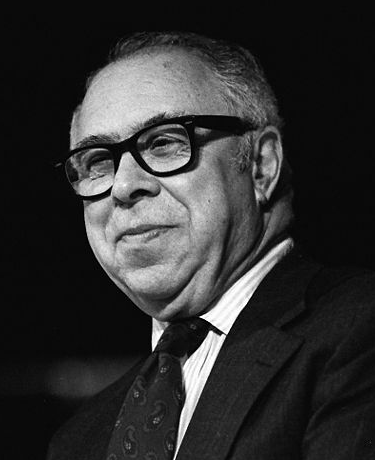
R.I.P. - Art Buchwald - Hollywood Concept Pitch Man

Photo: Wikimedia Commons - Art Buchwald, Miami Book Fair International, 1989  Date 17 November 1989(1989-11-17) MDCarchives (cropped)

But the general wisdom has been that if you were going to make a pitch and had to rely on a handshake, fly to Los Angeles because under California law, you had a better shot at getting paid and finding an implied contract, since entire industries and professions are founded on pitching ideas, even dumb ones, even recycled ones whose time has come, and that California law was somehow more friendly to creatives.

The Ninth Circuit's decision in Montz v. Pilgrim Films & Television, 2010 WL 2197421 (May 4, 2010) puts the old wisdom, such that it was, in jeopardy.


Montz's facts are as follows:  Plaintiff parapsychologist and a publicist conceive of idea for reality show featuring "paranormal investigators".   Each hour long show would feature a team going out and using science to investigate and maybe debunk reports of paranormal activity.

Plaintiffs wanted to partner and co-produce.  NOT sell.

(Ok, Mr. Ghostbuster,  I didn't say "original").

Plaintiffs pitched NBC, Pilgrim and the Sci Fi (now SyFy) Channel.  Defendants were not interested.  Shortly thereafter, Defendants launched Ghost Hunters.

Plaintiffs sued on copyright law and California law of implied contracts.  Plaintiffs lost on copyright claims. So the issue is whether there was an implied contract under California state law.  Under Desny v. Wilder, 299 P.2d 257 (Cal. 1956), to state a claim, plaintiff must:

1. prepare the work at issue;
2. disclose the work for sale;
3. do so under conditions showing that offeree voluntarily accepted disclosure knowing conditions on which it was tendered and the reasonable value of the work.

Rather than find that the complaint didn't state a cause of action under California law, or that since there was no federal question remaining there was lack of supplemental jurisdiction, the Ninth Circuit decided that the Plaintiff's implied-in-fact contract claim was preempted by the Copyright Act.

This decision is clearly incorrect.  The Ninth Circuit's discussion of copyright law is incorrect because copyright related only to the tangible expression in the works of authorship created by the Plaintiffs.  Plaintiffs clearly alleged that they tried to pitch a "concept" for a television show.

The Ninth Circuit reasoned that since the pitch was for a kind of partnership, rather than a "sale", Plaintiffs had not stated a Desny claim.

This is a very strange decision, a strange result, and it is a troubling overreaching by a federal court into traditional state contract law.  If California wishes to modify its law of implied-in-fact contracts involving ideas to embrace idea pitches involving partnerships rather than sales, it should be free to do so.  The decision that the Copyright Act preempts state law in this area means that California is POWERLESS to do so.  The preemption statute 17 USC 301 states:

§ 301. Preemption with respect to other laws2


(a) On and after January 1, 1978, all legal or equitable rights that are equivalent to any of the exclusive rights within the general scope of copyright as specified by section 106 in works of authorship that are fixed in a tangible medium of expression and come within the subject matter of copyright as specified by sections 102 and 103, whether created before or after that date and whether published or unpublished, are governed exclusively by this title. Thereafter, no person is entitled to any such right or equivalent right in any such work under the common law or statutes of any State.

Here, the Plaintiffs clearly allege an attempt to monetize an "idea" - not necessarily copyrightable subject matter, although that was part of the proffered package.

Since the lifeblood of Silicon Valley and Hollywood is the ability to buy, sell, partner, traffic in and otherwise sell and be compensated for ideas, this decision should be deeply troubling to my West Coast confreres.

So if you want to sell an idea, come back to New York, my friends, and I'll lend you a conference room and we have better subways.  Your ideas are not welcome in California.

I discuss the scope of copyright law and the fact that ideas, concepts and scenes a faire are not protectable under copyright law in Chapter 1 of Copyright Litigation Handbook and I discuss the marvelous workings of the preemption doctrine in Chapter 10:  Removal From State Court and Preemption.

For a peek at the full contents of Copyright Litigation Handbook, go here.

 Purchase Copyright Litigation Handbook from West here