Showing posts with label alfred flechtheim. Show all posts

Sunday, July 17, 2011

Alfred Flechtheim Scandal at Museum of Modern Art - MoMA - Continues

I reported previously that the MoMA published a catalog called German Expressionism:The Graphic Impulse by Starr Figura that COMPLETELY eliminated mention of Alfred Flechtheim.

Image of Rudolph Belling's sculpture Portrait of Alfred Flechtheim (1927)
More on Alfred Flechtheim and MoMA's attempts to write him out of art history hereand here

MoMA has perpetrated the fiction that Alfred Flechtheim's gallery was not Aryanized in 1933 because MoMA wishes to shield its collection, particularly the items that were stolen from Alfred Flechtheim, from public scrutiny.   More information on the Nazi taking of Flechtheim's inventory here.

MoMA's website does not even show an image of Belling's Portrait of Alfred Flechtheim, and the MoMA has never told the story of Flechtheim's role as a Nazi persecutee story here.
But after the scandal of publishing the German Expressionism catalog that pretends Flechtheim does not exist, MoMA's website now shows 28 works that it claims were published by Alfred Flechtheim:


That's just completely ridiculous, MoMA's collection has many more works from Flechtheim's 1933 inventory.   As I argued here the provenance of Paul Klee's Pastorale shows that it was likely taken by the Nazi Alexander Voemel from Flechtheim in 1933.

Pastorale (Rhythms) (1927)
Paul Klee (German, born Switzerland. 1879-1940)

1927. Tempera on canvas mounted on wood, 27 1/4 x 20 5/8" (69.3 x 52.4 cm). Abby Aldrich Rockefeller Fund and exchange

Collection work meeting criteria specified in Introduction.

157.1945

Rudolf Probst (Galerie Neue Kunst Fides; Das Kunsthaus), Dresden/Mannheim. Until 1928

Galerie Alfred Flechtheim, Berlin and Düsseldorf, then in London. 1928 – at least 1930 [likely until Flechthem’s death, in March 1937]

(J. B. Neumann (Jsrael Ber Neumann), New York. 1930. Agent for Flechtheim)

(Alex Vömel, Dusseldorf. Former Flechtheim Gallery, became Alex Vömel Gallery from March 1933. [Likely on consignement from Flechtheim, 1933 – 1934])

James Mayor Gallery, London. [Brought to London by Flechtheim when he started to work for the Mayor Gallery, c. 1934.] 1934 – 1935

For sale during Paul Klee exhibition at Kunsthalle Basel, 1935

(Paul Klee, Bern. Returned to him from above exhibition, unsold, 1935)

[Likely returned by Klee to Flechtheim in London]

Daniel-Henry Kahnweiler, Paris. [Likely acquired/on consignment from Flechtheim] by 1937 - by 1939

Mrs. Stanley B. Resor, New York. By 1941

Nierendorf Gallery (Karl Nierendorf), New York (New York gallery opened in 1937). Acquired from Stanley B. Resor, by 1945

The Museum of Modern Art, New York. Acquired from Nierendorf through Abby Aldrich Rockefeller Fund and exchange, 1945

And astonishingly, after publishing a catalogue for a 2011 German Expressionism exhibition that pretends Flechtheim did not exist, MoMA's website now has the following:
Alfred Flechtheim

--------------------------------------------------------------------------------

Starr Figura, German Expressionism: The Graphic Impulse, New York, The Museum of Modern Art, 2011

Alfred Flechtheim opened his gallery in 1913, with sponsorship from Paul Cassirer. Became known as the leading dealer in Germany for modern French art, much of it obtained through his friend Daniel-Henry Kahnweiler, the eminent Parisian gallerist and German émigré. Despite his ambivalence toward contemporary German art, eventually also exhibited a select number of Expressionist, Bauhaus, and Neue Sachlichkeit (New Objectivity) artists, including Ernst Barlach, Max Beckmann, George Grosz (under contract from 1925 to 1931), Paul Klee (whom he represented from 1927 to 1933), Oskar Kokoschka, Wilhelm Lehmbruck, and August Macke. Published prints by Grosz, Else Lasker-Schüler, Ludwig Meidner, and many other now less familiar German artists. In 1921 began to issue the cosmopolitan art and culture periodical Der Querschnitt; three years later, sold it to the publishing house Propyläen. Highly successful, particularly in the postwar years, moved his primary operation to Berlin in 1921, and opened branches in Frankfurt and Cologne in 1922. A victim of Nazi anti-Semitism, was forced to emigrate in 1933, and died, impoverished, in London in 1937.

Selected Bibliography

Jentsch, Ralph. Alfred Flechtheim und George Grosz. Bonn: Weidle, 2008.

Peters, Hans Albert, and Stephan von Wiese, eds. Alfred Flechtheim, Sammler, Kunsthändler, Verleger. Exh. cat. Düsseldorf: Kunstmuseum Düsseldorf, 1987.

Iris Schmeisser

So it looks like MoMA's website is trying to make it look as if Starr Figura, the one who wrote the catalog that eliminated any mention of Flechtheim, actually did include mention of Flechtheim, but MoMA hired Iris Schmeisser to write the Website's description of Flechtheim.

Alfred Flechtheim's influence on MoMA in its first year of existence was tremendous and remains undocumented by MoMA's pseudo-art historians.  Why doesn't MoMA acknowledge its intellectual and artistic debt to Flechtheim?   And what happens to someone who writes a catalog on German Expressionism who calls Flechtheim AMBIVALENT towards German contemporary art when indeed he was perhaps one of its greatest champions?

Just look at Rudolph Belling's portrait of Alfred Flechtheim, one of which he gave to Harvard to launch what became the Busch-Reisinger collection.   Does that reflect AMBIVALENCE toward German contemporary art?   Why is Belling's sculpture featuring Flechtheim's nose not front and center in the German Expressionism exhibit?


Where the hell is Flechtheim's nose?


Flechtheim's assistant, Curt Valentin, became a Nazi agent and sold massive quantities of Nazi-looted art onto the U.S. market.   Story here

The Belling sculpture of Flechtheim was a "gift" of Curt Valentin to MoMA:


Why won't MoMA photograph and exhibit this artwork?

 http://www.dunnington.com/rdowd_bio.html
 Purchase Copyright Litigation Handbook 2010 by Raymond J. Dowd from West here  

Wednesday, June 22, 2011

Art Litigation: June 30 CLE Presentation at Modern Restaurant at MoMA: How Long Do Victims of Nazi Spoliation Have To Get Their Art Back?


George Grosz' Portrait of the Poet Max-Hermann Neisse
Purchased from Charlotte Weidler through Curt Valentin

I hope that you can join me in a CLE presentation of Grosz v MoMA at the Modern Restaurant on June 30 (next Thursday) - the flyer is embedded below.

6-30-11 Emips Cle Lunch Flyer1 (3)

 http://www.dunnington.com/rdowd_bio.html
 Purchase Copyright Litigation Handbook 2010 by Raymond J. Dowd from West here  

Wednesday, June 1, 2011

US Supreme Court Cert Petition: U.S. Museums Betray The Holocaust Victims Redress Act of 1998

We recently filed a petition to the U.S. Supreme Court on behalf of the heirs of George Grosz in Grosz v. Museum of Modern Art, accessible by the link below.    The certiorari petition describes how in federal courts around the country, museums and holders of artworks taken from Nazi persecutees have successfully advanced doctrines of constructive notice that have eviscerated the right under state law to recover stolen property that Congress thought existed when it enacted the Holocaust Victims Redress Act of 1998.   As the cert petition shows, museums told Congress that state law remedies were sufficient for victims and their heirs to recover stolen artworks.    After 1998, with Congress off their backs, museums then argued to the courts that no remedies were available under state law to those who actually tried to reclaim artworks.   Several museums even retaliated against Jewish heirs by suing them.   By filing these pre-emptive strikes, museums successfully avoided scrutiny into the question of whether or not the art was stolen.  By leaving potentially looted artworks in our museums, such "quiet title" actions have stained our national conscience.

Unfortunately, very few voices have been heard to draw attention to this tremendous crime.   Media coverage is anecdotal.  Each time stolen artworks are uncovered in museum collections, the museums feign horror and surprise, but the reality is that in the high-tax Cold War years, laundering stolen art was a major function of the U.S. museum community.  We are all now paying for those Cold-war "don't look a gift horse in the mouth" policies.   A generation of wealthy Americans dodged taxes by flipping stolen property to museums, thus passing the societal cost of their misdeeds onto the backs of U.S. taxpayers.

In turning their backs on restitution of Nazi-looted artworks after 1998, American museums have betrayed our trust and have become international scofflaws.   This is a major problem and inconsistent with the traditions of common law under which no one can take good title from a thief.   It is also inconsistent with the traditions of equity, which do not unjustly enrich those with superior knowledge, such as the museums, that should have known better than to profit from the world's worst crime.  Everyone in the art community, thanks to U.S. government warnings starting in the 1940's, knew that acquiring an artwork of European provenance that entered the country after 1932 but was created before 1946 was a "red flag".   Art historians now pretend to have no knowledge of this and instead play a game of blaming the victims and waiting until enough people die or are discouraged so that they can assert the defense of laches.   While museums throw up endless new buildings, they claim they can't even afford to figure out what stolen art is in their collections.   And by refusing to share documents and publish provenances, they ensure that no one else can figure out the stolen property trail either.

American museums, having unclean hands, should not be heard to invoke equity.  American museums, which should be taking the lead in opposing Holocaust profiteering, have instead set up impenetrable legal defenses and hide the truth behind spurious claims of privilege.   This is both morally and legally untenable.  If U.S. museums don't do the right thing and show world leadership in returning the property of Holocaust victims, no one will.

Grosz v Moma Petition of Certiorari FINAL With Appendix 5.10.11


 http://www.dunnington.com/rdowd_bio.html
 Purchase Copyright Litigation Handbook 2010 by Raymond J. Dowd from West here  

Thursday, May 26, 2011

Massive German Art Forgery Scandal - The Alfred Flechtheim Collection

Among those in the know, Alfred Flechtheim is considered perhaps the greatest contemporary art dealer in Germany's Weimar Republic.   He was Jewish, chased by the Nazis from his galleries in Berlin and Dusseldorf.   A Nazi named Alexander Voemel took over his galleries in 1933.  His gallery is still operating today.   An ad for Galerie Voemel brags of its legacy:

Die Galerie Vömel, mehr als ein halbes Jahrhundert in Düsseldorf ansässig, wurde von Alex Vömel - Geschäftsführer der legendären Galerie Flechtheim - gegründet und wird heute von seinem Sohn Edwin Vömel weiter geführt.

Vor einigen Jahren ist die Galerie in das alte Stadtpalais gegenüber vom Stadtmuseum in die Karlstadt umgesiedelt.
Die Galerie Vömel führt Arbeiten der klassischen Moderne, weiterhin ist sie spezialisiert auf Skulpturen und Arbeiten auf Papier des 20. Jahrhunderts.
Gezeigt werden regelmäßig Ausstellungen, welche mit Katalogen dokumentiert werden.


Shunned by his former friends, those who stole his art conveniently wrote him out of art history.   In a book called Boston Modern, art historian Judith Bookbinder credits Alfred Flechtheim with donating a Rudolph Belling sculpture of himself as being the foundation of Harvard's collection of modern German sculpture that turned into the Busch-Reisinger collection.

Flechtheim represented artists such as Paul Cezanne, Vincent Van Gogh, Pablo Picasso, George Braque, Andre Derain,  Paul Klee, George Grosz, Wassily Kandinsky, August Macke and many others.

Flechtheim was featured on Nazi anti-semitic posters as the symbol of International Bolshevist Jewry - More on Flechtheim's nose here.

When in 1933 Nazis started attacking modern art in anti-Semitic museum exhibitions, Flechtheim and his sales to German museums were attacked.  When the 1937 Entartete Kunst exhibition took place, the Nazis had a life-sized portrait of Flechtheim.

New York's Museum of Modern Art has many works from Alfred Flechtheim's 1933 inventory, but refuses to share the provenance documentation of these artworks with researchers.

A Swiss government report on MoMA's role in the Nazi looted art trade here.

Shockingly, MoMA's current exhibition catalog German Expressionism:  The Graphic Impulse, writtten by Starr Figura and Peter Jelavich, completely omits any mention of Flechtheim.

In a bitter irony, German prosecutors just arrested a group of forgers that created fake works that they claimed were from Flechtheim's inventory.  Article from German newspaper at the link below:

 http://www.monstersandcritics.com/news/europe/news/article_1641522.php/Forgers-charged-in-massive-alleged-Nazi-art-scam

Alfred Flechtheim's German-language Wikipedia page is here.  

Whether from ignorance, stupidity or venality, American museums and art historians seem to be determined to write Alfred Flechtheim out of art history.   It may be that the arrest and trial of this forgery ring in Germany will succeed in uncovering that which those Americans trafficking in and concealing Nazi-looted art would like to bury.

Not even one English-speaking Wikipedian will memorialize poor Flechtheim.

Browse my earlier posts on Alfred Flechtheim here.

A quote from Steven Litt's article  from Cleveland's Plain Dealer in 2003 below, full article here:

"Flechtheim was for the Nazi government, you can say, in art, public enemy No. 1," said Ottfried Dascher of Dortmund, a retired professor of history from the University of Bochum.

Today, Flechtheim is a hot topic in Germany, a nation trying to come to terms with its past. The art museum in Dusseldorf celebrated his life in an exhibition in 1987. His hometown of Munster renamed a street for him. And just last month, art dealers and historians, including Dascher, dedicated a plaque on the Berlin building where Flechtheim once lived.
"There is no week in which I don't get letters and e-mails from all over the world on this subject," Dascher said in a telephone interview.
One reason for the interest is that Flechtheim was part of a group of pioneering art dealers of German-Jewish heritage who were the first to champion the work of Picasso and other modern artists. Flechtheim was also part of the cultural renaissance of Weimar Germany, which brought forth the films of Fritz Lang, the music of Kurt Weill and the drama of Bertolt Brecht.


http://www.dunnington.com/rdowd_bio.html
 Purchase Copyright Litigation Handbook 2010 by Raymond J. Dowd from West here  

Sunday, March 13, 2011

Art Litigation: Alfred Flechtheim Panel in Austria To Discuss His Stolen Collection


Choyo Cactus aka "Jumping Choyo" on Dove Mountain

Below is a link to a presentation I gave in Tucson AZ on recent case developments in the federal courts on Nazi art looting.

Nazi Art Looting - Case Developments [Compatibility Mode]


Nazi art looting will be a major topic at an upcoming conference in Vienna Austria on March 23-25.  Details of the conference are here.

Austria has invited Laurie Stein to chair a presentation on Alfred Flechtheim.   

Alfred Flechtheim was a German Jewish art dealer whose art gallery was Aryanized.   Many works stolen from him are currently in museums around the world, such as the Museum of Modern Art in New York City.

Stein's report denying the Aryanization here

MoMA Expert Report Stein

The Museum of Modern Art refused to make its provenance documentaton relating to works from Alfred Flechtheim in its collection available to researchers working for the family of artist George Grosz.

More on Nazi Art Looting here.

More on Alfred Flechtheim here.

 http://www.dunnington.com/rdowd_bio.html
 Purchase Copyright Litigation Handbook 2010 by Raymond J. Dowd from West here  

Wednesday, March 2, 2011

Top Intellectual Property Law Blogs - Likely To Cause Confusion

Supperblogger Ron Coleman of Likelihood of ConfusionTM fame reviews here my post of Justia's 50 Top Intellectual Property Law Blogs of all time, found here.

Ron asked what Justia's criteria are for the selection.   The answer is that I am not exactly sure, but that I believe that it is raw, gross traffic.   My post of the 50 Top IP Law Blogs of All Time was taken from the Justia Blawgsearch under the Intellectual Property category, where popularity is measured daily, weekly, monthly and all time.

Ron queries the Patry Copyright Blog's ranking of number 26.   Prof. Patry was an extraordinary, prolific and powerful writer who poured his heart and soul into his blog.   I am happy to see that the database he created endured.   When he deleted his entire blog, I was one of the people who contacted him to protest, he put it back up and it's an important resource.

I would point out that Copywrite, currently ranked at 27 was written by an IP professor who stopped writing for reasons similar to Patry's on 10/14/2008.

Ben Sheffner's Copyrights and Campaigns doesn't show up, I think it should.

The 1709 Blog has a high Alexa rank and I think has been around for a while, it is excellent but does not show up.

If you go through the Justia top ranked IP law blogs list and use the Alexa toolbar, it is clear that some of the IP Law blogs listed there do not currently receive much traffic.

Traffic is not an indicator of quality or real popularity.   Copyright Litigation Blog's most popular pages relate to a Jewish art dealer named Alfred Flechtheim whose collection was stolen by the Nazis and whose stolen artworks now populate the world's museums.   My posts on Alfred Flechtheim here.

Some of the most popular search terms that result in a hit to Copyright Litigation Blog have nothing to do with intellectual property and are clearly from people arriving here in error.

Looking at today's Justia Blawgsearch, Patry's Copyright Blog was at number 9 and Copyright Litigation Blog was at number 34.    Dead blogs may contain more wisdom than live ones.   Part of the reason that I chose blogging is that unlike print media, I could set my own deadlines and choose to blog only when I felt like it.   This blog's sporadic nature reflects my busy practice and my seasonal interest in updating my Copyright Litigation Handbook.

In the end, Ron Coleman is correct, any top 50 ranking based on ranking may lead to a Likelihood of Confusion.


 Purchase Copyright Litigation Handbook 2010 by Raymond J. Dowd from West here  

Friday, July 9, 2010

Art Litigation: Nazi Liquidation of Picasso's Jewish Dealer By Nazis Makes News In Germany


The art press in the United States and art historians here have obliterated Alfred Flechtheim from the history of 20th Century Art.  In Germany, where Holocaust denial is illegal, museums are starting to confront the truth about the Nazi liquidation of Flechtheim's collection, and a critical press is scolding museums who are not doing the right thing.

New York's art press is asleep at the wheel.   My earlier posts on Flechtheim here.

Translation of the article “Er war sein bester Kunde” by Tobias Timm in Die Zeit - Nr.28 - July 8, 2010


He Was His Own Best Client

The legendary Flechtheim collection was liquidated by the Nazis. Now the heirs demand justice.


This case concerning unresolved Nazi-history is of such a dimension that it will probably occupy the biggest German museums for months, if not for years. It appears as if artworks that once belonged to the art dealer and publisher Alfred Flechtheim are hanging in dozens of institutions such as the Ludwig Museum in Cologne, the Bavarian State Collection of Paintings in Munich, the State-Gallery Stuttgart or the Berlin State Museums. Last week it became public that the heirs of Flechtheim are claiming back a portrait of the actress Tilla Durieux by Oskar Kokoschka from the Ludwig Museum. Further requests and restitution demands apparently concern major works by Max Beckmann, Paul Klee and Pablo Picasso.

Alfred Flechtheim was a central figure of the art market in the Weimar Republic. After Paul Cassirer, he is considered among the most important patrons of avant-garde art. Born in 1878 as the son of a successful wheat dealer, he started collecting art around 1900. In 1913 he opened his own gallery in Dusseldorf. After the First World War, in which Flechtheim served as a cavalry officer, he moved to Berlin. With dozens of exhibitions, he successfully represented the French cubists, in addition to George Grosz, Willi Baumeister, and Paul Klee. Flechtheim was also what is most despised among art dealers – he was his own best client.

Flechtheim was not only dealing and collecting, he also wrote art critiques, founded the magazine Querschnitt and enriched the Berlin society life with salons and soirees. “If I was a painter” the Boxer Max Schmeling writes in his homage to Flechtheim at is 50th birthday in 1928 “I want to be in Flechtheim’s stable”.

Already before the Nazis came to power the dealer was bombarded with hate articles by Nazi authors who recognized Flechtheim’s significance regarding the art that they denounced as degenerate. This led to Flechtheim fleeing already at the end of 1933, over Zurich and Paris to London where he died in 1937, probably due to blood poisoning.

Flechtheim’s gallery was immediately aryanized, and his private collection, which included works by Pablo Picasso, Juan Gris, Fernand Leger, Willi Baumeister and Vincent van Gogh was liquidated from 1933 on under the pressure of Nazi persecution. For the past two years, Flechtheim’s heirs, with the help of lawyers, have been searching for the paintings and sculptures from the former Flechtheim collection. The whereabouts of various paintings is unclear today, but a good hundred of them, estimates the Marburg lawyer Stötzel, ended up in museums in America and Germany. Many of the artworks will have to be restituted by public museums in accordance with the Washington principles regarding transaction involving Nazi looted art.


The Durieux portrait by Kokoschka, for example, belonged to Flechtheim’s private collection and was sold to the collector Josef Haubrich in 1934 by the “aryanizer” of his Dusseldorf gallery, Alex Vömel, for 1800 Reichsmark, a price that was below the 1931 insurance value of the painting. The low price and the absence of records proving that Flechtheim received the sales proceeds from Vömel and that he was able to freely dispose of the sales proceeds, make this a clear case of Nazi looted art, according to the heirs’ lawyer.

The City of Cologne has, however, refused to give the painting back so far. The provenance of the painting, says Kaspar König, director of the Ludwig Museum, to ZEIT, is not fully resolved. He says the history is more complex, but details will not yet be published since research is still ongoing.


Exactly which paintings are being claimed back by the heirs from different museums is something neither the attorney nor the museums involved wanted to comment on. The Hamburg Kunsthalle, however, known for their special commitment to provenance research, was able to successfully exclude that Klee’s Felsige Küste (1931) was from Flechtheim’s collection. In contrast to this, other museums, eleven years after their commitment to the return of looted art, are showing only little impetus to research their holdings.

Museums stonewalling Jews is nothing new, but it is good to see that the German press is critical of museums that do not return art stolen from Jews.

In the U.S., museum directors who hold on to artworks stolen from Jews get big promotions.  When will any American museum recognize Flechtheim's contribution to 20th Century art?  And when will they admit that the art in their collections was stolen from Flechtheim by a Nazi?   If a German newspaper can publish these things, why won't the New York Times?


 Purchase Copyright Litigation Handbook from West here  

Tuesday, July 6, 2010

Art Litigation: US Executive Policy, Nazi Looted Art and Flechtheim's Nose

Rudolph Belling's Portrait of Alfred Flechtheim at Harvard


Professor Jennifer Kreder attacks the subject of US Executive policy on Nazi-looted art on the Prawfsblawg here.  The Executive Branch started an exception to the Act of State Doctrine known as the "Bernstein Exception".   In the Bernstein case, the State Department indicated to the Southern District of New York that it was free to unwind any act of the Nazis because the US did not consider the Nazis a legitimate government and the Second Circuit affirmed the District Court's power to review and invalidate Nazi acts.

Very few people know about the Bernstein case and its continuing application to Nazi-looted art cases.  U.S. museums have taken the position that Hitler's acts of stripping German museums of Jewish and "degenerate" artworks should be considered legitimate governmental acts in a bid to hold onto artworks stolen from German museums.

This is problematic on many levels.  Today, the American Association of Museum Directors is desperately trying to keep these stolen artworks by falsifying and concealing the provenance of artworks in its collections and by trying to have Hitler's acts rubber-stamped by the federal courts.

The stolen loot should be returned and American museums should start acknowledging their debts to Germany's Jewish community and the German avant-garde of the 1920's and 30's.

A look at MoMA's website today shows that the MoMA still can't find a picture of Alfred Flechtheim's nose (above) which according to Boston Modern author Judith Bookbinder was the very first modern German sculpture collected by Harvard and what became the Busch-Reisinger Museum.  My posts on Alfred Flechtheim and his tragic story, which has never been recounted by any of the members of the American Association of Museums or American Association of Museum Directors, and MoMA's inability to find Flechtheim's nose here.

MoMA's Portrait of Alfred Flechtheim was gifted to it by Nazi agent Curt Valentin, more on Valentin here.

Maybe MoMA could ask Judith Bookbinder to find Alfred Flechtheim's nose?

Purchase Copyright Litigation Handbook from West here  

Wednesday, June 30, 2010

Art Litigation - Grosz v MoMA Amicus Curiae Brief on Nazi Spoliation


Jacob Hilsdorf 1910 photograph of Alfred Flechtheim

When artist George Grosz fled Nazi Germany in January 1933, he left his artworks in the care of Jewish art dealer Alfred Flechtheim.   Flechtheim was the premier contemporary art dealer of the Weimar Republic.  You haven't heard his name before and no one in the United States has even cared enough to make a Wikipedia page for him in English, even though our museums are full of works that passed through his hands.   My earlier posts on him here .   Big article in Welt Online today on Flechtheim here.  Use Google Translate to read it if you don't read German, it predicts that the Flechtheim restitution litigation will be the biggest ever filed in Germany.

My firm represents the heirs of George Grosz in trying to obtain restitution of artworks Grosz left with Flechtheim's gallery in 1933.  Our complaint was dismissed pursuant to Rule 12 b 6 of the Federal Rules of Civil Procedure as time-barred based on a settlement communication sent by MoMA Director Glenn Lowry to a representative of the Grosz Heirs, which the MoMA claimed, and the district judge accepted, to be a "refusal" for statute of limitations purposes under New York's demand and refusal rule.

I understand that MoMA made an informal presentation of its position to the NY City Bar Association's Art Law Committee, I am hopeful that we will receive equal time.

The Grosz Heirs appealed to the Second Circuit Court of Appeals, the appeal is now pending.  An amicus brief was filed in support of our position, a list of the Amici and a copy of the brief below:

American Jewish Congress, Commission for Art Recovery; Filippa Marullo Anzalone, Yehuda Bauer, Michael J. Bazyler, Bernard Dov Beliak, Michael Berenbaum, Donald S. Burris, Judy Chicago and Donald Woodman, Talbert D’Alemberte, Marion F. Desmukh, Hedy Epstein, Hector Feliciano, Irving Greenberg, Grace Cohen Grossman, Marcia Sachs Littell, Hubert G. Locke, Carrie Menkel-Meadow, Arthur R. Miller, Carol Rittner, John K. Roth, Lucille A. Roussin, William L. Shulman, Stephen D. Smith and Fritz Weinschenk, In Support of Plaintiffs-Appellants and Reversal


Grosz v MoMA Amicus Brief - Nazi Art Looting

 Purchase Copyright Litigation Handbook from West here  

Friday, May 21, 2010

Alfred Flechtheim's Portrait By Rudolph Belling: Image Not Available at MoMA


The MoMA has not made an image of this bronze sculpture of Alfred Flechtheim available on the internet.  The sculpture was a 1950 gift of the Nazi agent Curt Valentin.   Aside from noting that the sculpture was a gift of Curt Valentin, no other provenance is given.

American museums agreed to publish images and provenances in 1998 to help Holocaust victims trace artworks.  Why has MoMA shirked this duty and no one complains?  Mayor Bloomberg and City Council Speaker Christine Quinn are on the Board of the MoMA - why have they not insisted on transparency on European works entering the U.S. after 1933 that were created before 1945?   Is there really no political will in this country to follow the Washington Principles?

There is not even an English-language Wikipedia page on Alfred Flechtheim, Germany's most important pre-war dealer in modern art.

Why has Flechtheim's image and history been obliterated?  Why have America's art historians and historians failed to honor Flechtheim's role in 20th Century art?   The artists of his time celebrated him, yet US art historians have not even granted him a footnote in history.

My earlier posts on Alfred Flechtheim here.


Above you see an essay in Italian by Konstantin Akinsha that you can find here called "Alfred Flechtheim's Nose:  Anti-Semitism and images of Nazi propaganda"


Above, from the Akinsha article, you see Alfred Flechtheim pictured with a cigar at the 1937 "Degenerate Art" Exhibition in Nuremberg, surrounded by the modern "degenerate art" that the Nazis hated.

The Nazis knew that Alfred Flechtheim was at the center of everything Jewish, modern and artistic that they hated.

So why has the MoMA and its confreres in the American Association of Museums obliterated Flechtheim's image from MoMA's website and his biography from the history of modern art?  Why do American art historians not discuss and celebrate his life and contributions and discuss the fabulous inventory that he had when his gallery was Aryanized by the Nazi Alexander Voemel in 1933?

Is there not one honest art historian working in an American museum today?  The damage Hitler caused in obliterating Jewish culture and contributions must be fought not by lawyers, but by art lovers and historians of good conscience who come forward and say enough is enough.  Pretending that Alfred Flechtheim did not exist is unacceptable.

Below, a beautiful work by Paul Klee that MoMA acquired in 1945.


Pastorale (Rhythms) (1927)


Paul Klee (German, born Switzerland. 1879-1940)
1927. Tempera on canvas mounted on wood, 27 1/4 x 20 5/8" (69.3 x 52.4 cm). Abby Aldrich Rockefeller Fund and exchange
Collection work meeting criteria specified in Introduction.

157.1945


Rudolf Probst (Galerie Neue Kunst Fides; Das Kunsthaus), Dresden/Mannheim. Until 1928


Galerie Alfred Flechtheim, Berlin and Düsseldorf, then in London. 1928 – at least 1930 [likely until Flechthem’s death, in March 1937]

(J. B. Neumann (Jsrael Ber Neumann), New York. 1930. Agent for Flechtheim)

(Alex Vömel, Dusseldorf. Former Flechtheim Gallery, became Alex Vömel Gallery from March 1933. [Likely on consignement from Flechtheim, 1933 – 1934])

James Mayor Gallery, London. [Brought to London by Flechtheim when he started to work for the Mayor Gallery, c. 1934.] 1934 – 1935

For sale during Paul Klee exhibition at Kunsthalle Basel, 1935

(Paul Klee, Bern. Returned to him from above exhibition, unsold, 1935)

[Likely returned by Klee to Flechtheim in London]

Daniel-Henry Kahnweiler, Paris. [Likely acquired/on consignment from Flechtheim] by 1937 - by 1939

Mrs. Stanley B. Resor, New York. By 1941

Nierendorf Gallery (Karl Nierendorf), New York (New York gallery opened in 1937). Acquired from Stanley B. Resor, by 1945

The Museum of Modern Art, New York. Acquired from Nierendorf through Abby Aldrich Rockefeller Fund and exchange, 1945


Saturday, May 8, 2010

Cleveland Jewish News: Alfred Flechtheim Work At Center of Cleveland Museum of Art Nazi Art Looting Controversy


Fernand Léger (French, 1881 - 1955)


The Aviator Foreign title: L'aviateur
Medium: oil on canvas
Measurements: Framed: 90.48cm x 117.16cm x 7cm, Unframed: 65cm x 92cm
Date: 1920
1981.16
Leonard C. Hanna, Jr. Fund

Provenance D. H. Kahnweiler, Paris; Alfred Flechtheim, Berlin; Kofler-Herni coll.; (Galerie Beyeler, Basel); (Perls Galleries, New York)

Link to article on an upcoming May 11, 2010 panel on Nazi-art looting to take place at the Maltz Museum  in Cleveland Jewish News

Experts to discuss reclaiming Nazi-looted artworks

Cleveland Jewish News News Local

Many works from Alfred Flechtheim's 1933 inventory are at the MoMA in New York City.  MoMA won't disclose the provenance documents to show where the works came from.  Flechtheim was the most important contemporary art dealer in the Weimar Republic.  American art historians have entirely ignored him and the provenance folks related to the American Association of Museums have been criminally negligent in failing to document his role in the history of 20th Century art.


Otto Dix - Portrait of the Art Dealer Alfred Flechtheim (1926)


Jules Pascin - Alfred Flechtheim as Toreador

Hans Bolz - Alfred Flechtheim - 1910

My earlier posts on Alfred Flechtheim here and here.

Sunday, March 28, 2010

Art Litigation: American Association of Museums Should Be Prosecuted For Concealing Stolen Property

MoMA's Glenn Lowry - Asserting Statutes of Limitations Against Heirs of Nazi Persecutees and Getting Richly Compensated For It

On Friday, I attended a panel on the U.S. State Department's proposal to set up a U.S. Commission to deal with the problem of Nazi-looted art in U.S. museum collections.   More on the panel, Wrestling the Dead Hand of History organized by Prof. Jennifer Kreder here.


Amb. Stuart Eizenstat - Expressing Outrage

The atmosphere was one of unanimous outrage over the misbehavior of U.S. museums and their lack of adherence to the Washington Principles on Nazi-Confiscated Art.  U.S. museums have taken to suing heirs of victims of Nazi persecution to avoid discovery and litigation "on the merits".   U.S. museums assert laches and statute of limitations defenses, knowing that it will damage international efforts to obtain recoveries of artworks from museum collections around the world.  If the U.S. is not going to support Jewish heirs, then who will?

The Jewish Claims Conference and Ronald Lauder's Commission for Art Recovery have asked U.S. museums to renounce the use of "technical" legal defenses such as laches and statutes of limitations as being unethical.   According to Lauder's lawyer Charles Goldstein, who signed the letter, the AAM and AAMD have not even bothered to respond to the request.   This is not the usual museum practice in dealing with a billionaire's lawyer.

In the postwar era, U.S. museums acquired tens of thousands of potentially-looted artworks. They've given virtually none of it back, have not properly researched their collections, and sit back hoping that the heirs of an exterminated population will never figure it out.   According to the museums, it is the job of the people who were murdered to finance and assert claims, after which, museums will decide whether or not to give the work back.

Museums claim that no one had any idea about the Holocaust when they acquired these artworks from the 1940's until today, often as donations, almost always without paperwork.   Since the severe Nazi persecution of Jews and the spoliation of their property was on the front page of every newspaper in the world starting in March 1933, the museums are engaging in a particularly pernicious form of Holocaust denial.

The custom and practice in the art world has always been to get documentation of the artwork's prior ownership and authenticity.  If you didn't get the paperwork, you were taking a risk that the property was stolen.   This practice has not changed, yet museums falsely claim that this is a recent development.  Wealthy Americans who bought European art at bargain prices without paperwork in the '40's, '50's and 60's knew darned well that they were probably buying stolen art.  Museum people always knew of the problem and were specifically and repeatedly warned in writing by the U.S. State Department in the 1940's and 1950's against acquiring artworks lacking paperwork.  Receiving stolen property has alway been a crime.


18 U.S.C. § 662 : US Code - Section 662: Receiving stolen property within special maritime and territorial jurisdiction

Whoever, within the special maritime and territorial jurisdiction of the United States, buys, receives, or conceals any money, goods, bank notes, or other thing which may be the subject of larceny, which has been feloniously taken, stolen, or embezzled, from any other person, knowing the same to have been so taken, stolen, or embezzled, shall be fined under this title or imprisoned not more than three years, or both; but if the amount or value of thing so taken, stolen or embezzled does not exceed $1,000, he shall be fined under this title or imprisoned not more than one year, or both.

(Italics supplied).

U.S. museums that refuse to disclose the documents necessary to trace the true owners of artworks in their collections should be prosecuted and their directors jailed.


Alfred Flechtheim - U.S. Museums Will Not Reveal Provenance Documents Relating To His 1933 Inventory
Image Jacob Hilsdorf 1910 courtesy Wikipedia


U.S. museums have it backwards and should be trying to figure out whose stolen property they are holding.  It was heartwarming to hear Goldstein affirm that museums do not have a fiduciary duty to litigate all claims and defenses relating to the stolen art in their collections.

When will the AAM and AAMD respond?   And without Robert Morgenthau on the scene, who will keep the museums honest?

Monday, March 22, 2010

International Law: Wrestling the Dead Hand of History - Panel on Nazi Looted Art

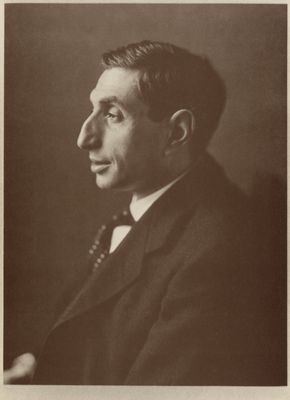
Alfred Flechtheim portrait 1910 by Jacob Hilsdorf
Courtesy Wikipedia

Professor Jen Kreder announced on the Intlawgrrls blog her panel this coming Friday March 26 in Washington DC at the American Society of International Law.

The panel, called "Wrestling the Dead Hand of History: Perspectives on a Proposed State Department Commission on Nazi Looted Art," and features Jen Kreder with Ambassadors Kennedy and Eizenstat, Dr. Lucille A. Roussin (left) of Cardozo School of Law, and New York-based attorney Charles A. Goldstein.

I support the US State Department's proposal to set up a U.S. Commission to return artworks in US museums that were stolen from Jews and never returned.

If the US doesn't take this measure and force our museums to start telling the truth about where the art in their collections come from, we can hardly expect other countries such as Russia, Poland and Austria to return all of the arts stolen from Jews by the Nazis.

I will be attending the panel. Jen is launching a special interest group of the American Society of International Law  on the International Law of Cultural Heritage & the Arts.

Above at top is a photograph of Alfred Flechtheim, the leading contemporary art dealer in the Weimar Republic and reviled in Nazi propaganda as the "Artjew Flechtheim".   You will find practically nothing written about Flechtheim in the English language - the U.S. museums who have the artworks stolen from his Berlin and Dusseldorf galleries would like to write Flechtheim out of history.  Below, Flechtheim's portrait by Otto Dix.  Dix's style shown below was known as "Neue Sachtlicheit" (New Objectivity).

Alfred Flechtheim the Art Dealer - Otto Dix 1926