We recently filed a petition to the U.S. Supreme Court on behalf of the heirs of George Grosz in Grosz v. Museum of Modern Art, accessible by the link below. The certiorari petition describes how in federal courts around the country, museums and holders of artworks taken from Nazi persecutees have successfully advanced doctrines of constructive notice that have eviscerated the right under state law to recover stolen property that Congress thought existed when it enacted the Holocaust Victims Redress Act of 1998. As the cert petition shows, museums told Congress that state law remedies were sufficient for victims and their heirs to recover stolen artworks. After 1998, with Congress off their backs, museums then argued to the courts that no remedies were available under state law to those who actually tried to reclaim artworks. Several museums even retaliated against Jewish heirs by suing them. By filing these pre-emptive strikes, museums successfully avoided scrutiny into the question of whether or not the art was stolen. By leaving potentially looted artworks in our museums, such "quiet title" actions have stained our national conscience.
Unfortunately, very few voices have been heard to draw attention to this tremendous crime. Media coverage is anecdotal. Each time stolen artworks are uncovered in museum collections, the museums feign horror and surprise, but the reality is that in the high-tax Cold War years, laundering stolen art was a major function of the U.S. museum community. We are all now paying for those Cold-war "don't look a gift horse in the mouth" policies. A generation of wealthy Americans dodged taxes by flipping stolen property to museums, thus passing the societal cost of their misdeeds onto the backs of U.S. taxpayers.
In turning their backs on restitution of Nazi-looted artworks after 1998, American museums have betrayed our trust and have become international scofflaws. This is a major problem and inconsistent with the traditions of common law under which no one can take good title from a thief. It is also inconsistent with the traditions of equity, which do not unjustly enrich those with superior knowledge, such as the museums, that should have known better than to profit from the world's worst crime. Everyone in the art community, thanks to U.S. government warnings starting in the 1940's, knew that acquiring an artwork of European provenance that entered the country after 1932 but was created before 1946 was a "red flag". Art historians now pretend to have no knowledge of this and instead play a game of blaming the victims and waiting until enough people die or are discouraged so that they can assert the defense of laches. While museums throw up endless new buildings, they claim they can't even afford to figure out what stolen art is in their collections. And by refusing to share documents and publish provenances, they ensure that no one else can figure out the stolen property trail either.
American museums, having unclean hands, should not be heard to invoke equity. American museums, which should be taking the lead in opposing Holocaust profiteering, have instead set up impenetrable legal defenses and hide the truth behind spurious claims of privilege. This is both morally and legally untenable. If U.S. museums don't do the right thing and show world leadership in returning the property of Holocaust victims, no one will.
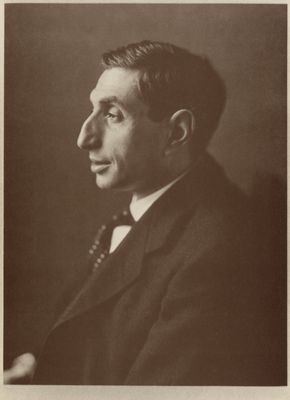
When artist George Grosz fled Nazi Germany in January 1933, he left his artworks in the care of Jewish art dealer Alfred Flechtheim. Flechtheim was the premier contemporary art dealer of the Weimar Republic. You haven't heard his name before and no one in the United States has even cared enough to make a Wikipedia page for him in English, even though our museums are full of works that passed through his hands. My earlier posts on him here . Big article in Welt Online today on Flechtheim here. Use Google Translate to read it if you don't read German, it predicts that the Flechtheim restitution litigation will be the biggest ever filed in Germany.
My firm represents the heirs of George Grosz in trying to obtain restitution of artworks Grosz left with Flechtheim's gallery in 1933. Our complaint was dismissed pursuant to Rule 12 b 6 of the Federal Rules of Civil Procedure as time-barred based on a settlement communication sent by MoMA Director Glenn Lowry to a representative of the Grosz Heirs, which the MoMA claimed, and the district judge accepted, to be a "refusal" for statute of limitations purposes under New York's demand and refusal rule.
I understand that MoMA made an informal presentation of its position to the NY City Bar Association's Art Law Committee, I am hopeful that we will receive equal time.
The Grosz Heirs appealed to the Second Circuit Court of Appeals, the appeal is now pending. An amicus brief was filed in support of our position, a list of the Amici and a copy of the brief below:
American Jewish Congress, Commission for Art Recovery; Filippa Marullo Anzalone, Yehuda Bauer, Michael J. Bazyler, Bernard Dov Beliak, Michael Berenbaum, Donald S. Burris, Judy Chicago and Donald Woodman, Talbert D’Alemberte, Marion F. Desmukh, Hedy Epstein, Hector Feliciano, Irving Greenberg, Grace Cohen Grossman, Marcia Sachs Littell, Hubert G. Locke, Carrie Menkel-Meadow, Arthur R. Miller, Carol Rittner, John K. Roth, Lucille A. Roussin, William L. Shulman, Stephen D. Smith and Fritz Weinschenk, In Support of Plaintiffs-Appellants and Reversal