Showing posts with label rudolph leopold. Show all posts

Sunday, February 27, 2011

Art Litigation: Holocaust for Dummies - The Murder and Spoliation of Fritz Grunbaum at Dachau

Holocaust for Dummies: Murder and Spoliation of Fritz Grunbaum at Dachau

Austria's Leopold Museum has refused to return artworks stolen from Fritz Grunbaum, a famous Jewish cabaret performer.   Grunbaum was arrested in Vienna by the Gestapo on March 22, 1938.   He died penniless in Dachau never having left Nazi custody on January 14, 1941.   His wife Lily was murdered at Minsk - Maly Trostinec after Fritz's death.

Austria is not alone in denying the Holocaust and the return of stolen artworks.   Oberlin College has Egon Schiele's Girl With Black Hair, which was stolen from Fritz Grunbaum


Oberlin's Allen Memorial Art Museum has refused to share its research with the heirs of Fritz Grunbaum or to permit on campus discussions of the work's provenance.  This is a shameful violation of Oberlin's academic mission.   If Oberlin has any Jewish alumni who care about undergraduate studies, I recommend teaching a course there on Fritz Grunbaum studies and demanding that anyone working at the Allen Museum or in the art history department be fired for incompetence.    US museums agreed to research their collections and publish the results under the Washington Principles.  Oberlin's failure to do so is a disgrace.

To assist everyone in understanding how the Holocaust worked and how Fritz Grunbaum's artworks were stolen from him, we have prepared the summary attached in the link above, you can also click here.   

More on Fritz Grunbaum at Art Stolen from Fritz Grunbaum.

More on Fritz Grunbaum here.

 Purchase Copyright Litigation Handbook 2010 by Raymond J. Dowd from West here  

Wednesday, July 21, 2010

Art Litigation: Vienna's Leopold Museum Pays $19 Million For Stolen Schiele Portrait of Wally

Some good reporting on Portrait of Wally from Catherine Hickley of Bloomberg:

Vienna's Leopold Museum Pays $19 Million to Keep Schiele Portrait of Lover - Bloomberg

Piece on Portrait of Wally in the Washington Examiner.

My latest news on Austria buying the stolen Schiele Portrait of Wally here.

Purchase Copyright Litigation Handbook from West here

Tuesday, July 20, 2010

Art Litigation: Leopold Museum Capitulates in Egon Schiele - Portrait of Wally Case - Pays Full Price and Admits Artwork Stolen

Egon Schiele's Portrait of Wally

Chief Judge Loretta Preska approved a settlement in the Portrait of Wally case.  Herrick Feinstein's press release reporting the settlement terms of the Portrait of Wally case here - Portrait of Wally Case Settles

This is good news for heirs of Holocaust victims and a measure of justice.  It also gives a flavor of just how tainted the Leopold Collection is.  Congratulations to all - the courtroom battle started in 1999 has finally ended.

A very nice touch is that Portrait of Wally will be displayed at the Museum of Jewish Heritage in Battery Park City.   This is a very nice vindication for Robert Morgenthau's 1999 seizure of Portrait of Wally at the MoMA.

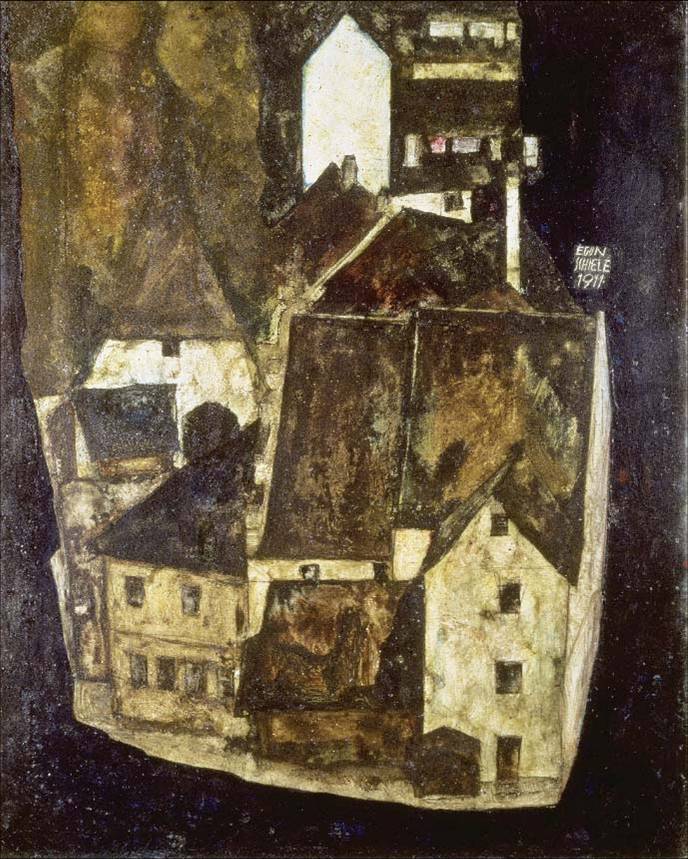
Dead City III, stolen from Fritz Grunbaum, is still hanging in the Leopold Museum.  For more information on Dead City III, go here.   My posts on Egon Schiele here.

If you have an interest in the topic of Nazi art looting, go here.   There is an incredible amount of stolen art remaining in U.S. museums.  Learn about Nazi agent and art dealer Curt Valentin here.

A really huge scandal and breathtaking example of Holocaust denial in the American museum community, the sad story of Alfred Flechtheim here.

I have copied the text of the press release below:

The United States of America, the Estate of Lea Bondi Jaray and the Leopold Museum Settle the Long-Standing Case Involving “Portrait of Wally” by Egon Schiele


New York, NY (July 20, 2010) -- The Estate of Lea Bondi Jaray (the “Estate”) announced today that the United States Government, the Estate and the Leopold Museum Privat-Stiftung (the “Leopold Museum”) have agreed to settle the long-pending case of United States of America v. Portrait of Wally, which was about to go to trial before Chief Judge Loretta Preska in federal court in Manhattan on July 26, 2010.
The case involves Portrait of Wally, a painting by Egon Schiele (the “Painting”), stolen from a Jewish art dealer and collector by a Nazi agent in the late 1930’s in Vienna. The major terms of the settlement agreement, which has been approved by Judge Preska, are as follows:
(a) the Leopold Museum pays the Estate $19 Million;
(b) the Estate releases its claim to the Painting;
(c) the United States Government dismisses the civil forfeiture action it brought against the Leopold Museum and releases the Painting to the Leopold Museum;
(d) the Leopold Museum will permanently display signage next to the Painting at the Leopold Museum, and at all future displays of the Painting of any kind that the Leopold Museum authorizes or allows anywhere in the world, that sets forth the true provenance of the Painting, including Lea Bondi Jaray’s prior ownership of the Painting and its theft from her by a Nazi agent before she fled to London in 1939; and
(e) before it is transported to the Leopold Museum in Vienna, the Painting will be publicly exhibited at the Museum of Jewish Heritage -- A Living Memorial to the Holocaust, in New York, beginning with a ceremony commemorating the legacy of Lea Bondi Jaray and the successful resolution of the lawsuit.

The Painting was the personal property of Lea Bondi Jaray, a Jewish art dealer in Vienna, who fled in 1939 to London, where she died in 1969. The Painting became the subject of court proceedings in New York City, after it was loaned in late 1997 and early 1998 to the Museum of Modern Art in New York by the Leopold Museum as part of an exhibition of Schieles from the Leopold Museum’s collection. In 1998, Robert Morgenthau, Manhattan District Attorney, subpeonaed the Painting in connection with his investigation into whether the Painting was stolen property. After the State Court of Appeals ruled in 1999 that such “seizure” of an artwork loaned for exhibition was prohibited under New York State law, the United States Government immediately commenced a civil forfeiture action in New York, alleging that the Painting was stolen from Lea Bondi Jaray during the Nazi era by a Nazi named Friedrich Welz, and was imported into the United States in 1997 by the Leopold Museum in violation of U.S. law. The Customs Service seized the Painting in connection with that action. The Estate of Lea Bondi Jaray asserted a claim to the Painting in the action, and the U.S. agreed that upon forfeiture of the Painting, it would transfer to the Estate all right and title to the Painting.

Based on the evidence presented during the case, Judge Preska ruled last fall that the Painting was the personal property of Lea Bondi Jaray and that it was stolen from her in Vienna in the late 1930's by Friedrich Welz, who was a member and collaborator of the Nazi party. The Court found that the Painting had been seized from Welz by U.S. Forces in Austria after World War II and delivered in 1947 to the Austrian Federal Office for the Preservation of Historical Monuments (the “Bundesdenkmalamt”), along with paintings Welz had acquired from Dr. Heinrich Rieger, a Jewish art collector who had perished during the Holocaust. In 1950, the Bundesdenkmalamt delivered artworks to an agent for the Rieger heirs and included the Painting in the delivery. Later that year, the Rieger heirs sold their works to the Austrian National Gallery (the “Belvedere”), and the Painting was included in the delivery of the artworks to the Belvedere. In 1954, the Belvedere traded the Painting to Dr. Rudolf Leopold. In 1994, Dr. Leopold transferred the Painting to the Leopold Museum.

In a statement, representatives of the Estate expressed their appreciation at reaching this historic settlement, which reflects the true value of the Painting, and acknowledges Lea Bondi Jaray’s ownership of the Painting and her and her family’s long quest for justice. In addition, they underscored that the public display of the Painting at the Museum of Jewish Heritage in New York will mean that visitors will be able to view the Painting in a setting that memorializes the sufferings of so many in the Holocaust and the resilience and resolve of those who escaped and/or survived. They added that the permanent signage reflecting the Painting’s true provenance will ensure that future generations are told the real story of the Painting’s theft from Lea Bondi Jaray during the Nazi era.

In conclusion, the Estate representatives said: “Justice has been served. Finally, after more than 70 years, the wrongs suffered by Lea Bondi Jaray are at last being acknowledged and, to some degree, corrected. We are grateful to the many people who helped Lea and her family during these many years. We especially thank our attorneys at Herrick, Feinstein, and all the members of the Asset Forfeiture Unit team of the U.S. Attorney’s Office, led by Assistant U.S. Attorney Sharon Cohen Levin, for their unstinting dedication to the pursuit of justice during the long course of this litigation.”


Purchase Copyright Litigation Handbook from West here

Tuesday, July 13, 2010

Art Litigation: Austrian Panel Recommends Return of Four Leopold Foundation Works Stolen From Jews

No Polizei for the Stolen Property of Vienna's Jews (Photo Wikipedia)
Oskar Reichel, a Jewish doctor in Vienna, was forced to give up his artworks by the Nazis, an Austrian panel found, including one work by Egon Schiele.

Jenny Steiner's Schiele "Houses by the Sea" was confiscated and sold through Vienna's infamous Dorotheum in 1941.

All of the works are at the infamous Leopold Museum in Vienna.   Austria used the fiction of creating a "private foundation" so that it could acquire Rudolph Leopold's vast collection of artworks, many looted from Jews.   More on Leopold here.

Of course the recommendations of the panel are non-binding.  No chance that the Bundespolizei will be called in.

From the Dorotheum's self-serving Wikipedia page:

During the Nazi regime important posts within the Dorotheum hierarchy were assigned to supporters of the regime. The institution's infrastructure was used to auction off aryanised property, although the Dorotheum itself was at no time actively involved in Aryanisation.

Link to AP Story:

Austrian Panel Recommends Return of 4 Works - ABC News

Purchase Copyright Litigation Handbook from West here

Sunday, July 11, 2010

Art Litigation: Egon Schiele's Prison Converted To A Museum, Image At Center of Stolen Art Controversy

Egon Schiele's "I Love Antitheses" 1912 (Estee Lauder Trust)

Artkabinett has an article Schiele Prison Attracts Collectors on the prison that housed Egon Schiele in Austria when he was imprisoned for scandalizing public morals.   Today the prison is a museum dedicated to Schiele's works.  Above is an image of one of the works that Schiele created while in prison.  According to Schiele expert Jane Kallir, "I Love Antitheses" was part of the collection of Fritz Grunbaum, a Jewish cabaret performer who was murdered in the Dachau Concentration Camp.  Jane Kallir testified at trial that "I Love Antitheses" was one of the few works that Schiele himself titled, and that the work is documented as belonging to Fritz Grunbaum by a 1925 Wurthle Catalog and a 1928 Hagenbund - Neue Galerie catalog.  Today it is held in an Estee Lauder trust.

Neue Galerie was the name of Otto Kallir's art gallery in Vienna that organized a 1928 exhibition to commemorate the tenth anniversary of Schiele's death.  Otto Kallir borrowed 22 works from Fritz Grunbaum's collection to include in the 1928 exhibition.  The 1928 correspondence shows that Otto Kallir had full access to Fritz Grunbaum's Schiele collection and selected the works that he wanted to borrow.

Grunbaum's collection was stolen by the Nazis and surfaced in Switzerland in 1956 where some of it was sold off by Eberhard Kornfeld of Galerie Kornfeld to Otto Kallir.  Kallir bought 20 of Fritz Grunbaum's Schieles from Kornfeld, including Dead City III
Kornfeld shipped the Grunbaum Schieles to New York and sold them through the Galerie St. Etienne, the gallery today owned by Jane Kallir and named after St. Stephen's Cathedral (Stephansdom)  in Vienna.  Otto Kallir knew that the works had belonged to Fritz Grunbaum and was aware that Fritz and his wife had been murdered by the Nazis.   In the period Kallir was selling the stolen artworks from his gallery on 57th Street in New York, the U.S. State Department had issued warnings to art dealers, museums and collectors not to acquire artworks from Europe that did not have a clear provenance.   Schiele was unknown outside Austria prior to World War II and many of Schiele's top collectors were murdered Jews such as Heinrich ReigerOskar ReichelKarl Maylander and Fritz Grunbaum.


Galerie St. Etienne's Inspiration  -  Stefansdom - Vienna - Image from Wikipedia

Dead City III was seized as stolen property by D.A. Robert Morgenthau in 1998. After Morgenthau's subpoena was quashed, MoMA gave Dead City III to Rudolph Leopold.

A lawsuit alleging that Fritz Grunbaum's art dealer, Otto Kallir (and for a time monarchist supporting the restoration of the Hapsburgs) laundered the Grunbaum collection through Switzerland is still pending. See New York Observer, Dealer with the Devil.   The heirs of Fritz Grunbaum have been battling to regain the artworks stolen from him.  More information at Art Stolen From Fritz Grunbaum.   Museums and private collectors who purchased the stolen works have not returned them and the issue on appeal now to the Court of Appeals for the Second Circuit is whether the 147 days that the stolen artworks passed through Switzerland was sufficient to apply Swiss law to "launder" the title to these stolen works.  Massachusetts collector David Bakalar sued Fritz Grunbaum's heirs to obtain a declaration of title to one of the stolen artworks.   My firm represents Fritz Grunbaum's heirs in the litigation and I was lead trial counsel in the action in the Southern District of New York, story here.

Along with Dead City III in the September 1956 of artworks from Eberhard Kornfeld was the work "I Love Antitheses" and "Girl With Black Hair" that is now at Oberlin College.   Oberlin's Allen Museum has refused to share its research or to publish a full provenance of "Girl With Black Hair" with Fritz Grunbaum's heirs in violation of the Washington Principles on Nazi-Confiscated Art.   The earliest provenance given of Girl with Black Hair by Oberlin College is Switzerland, 1956.

Artkabinett also has a story Infamous Collector Leopold Dies at 85 on Rudolph Leopold, the art collector who amassed a number of stolen artworks that Austria has never returned to the Jewish families from whom they were stolen.


Work stolen from Fritz Grunbaum at Oberlin College here.  More on the battles over Fritz Grunbaum's collection and Oberlin's falsification of the provenance of Girl With Black Hair here.

Watch the Boston College video here.

More information and coverage of the 1928 Hagenbund/Neu Galerie correspondence in the following Powerpoint:

 Purchase Copyright Litigation Handbook from West here  

Friday, July 2, 2010

Art Litigation: Stolen Art and Austria's "Jewish Exception" To the 1955 Austrian State Treaty


Rudolph Leopold's death on the eve of a criminal trial in the U.S. should have brought Austria to its senses.  Instead, yesterday it installed Leopold's family members as part of a continuing charade to conceal Austria's ownership of stolen Jewish property in the Leopold Museum.  More on Rudolph Leopold here.

Dead City III was stolen from Fritz Grunbaum, a Jewish cabaret performer murdered in Dachau in 1941. In violation of Art. 26 of the Austrian State Treaty of 1955, Austria has thus far failed to return the work, although Dr. Christoph Bazil, the head of an Austrian Commission that was founded because of the Dead City III scandal keeps promising me that he is investigating the matter.
This so-called "Commission for Provenance Research" recently came to NY, program here and claimed that they were reviewing every single item in Austrian museums. Apparently they have not reached "S" for Schiele in the alphabet, something that might safely occur in the next century.
This is of course a preposterous sham.

Dr. Bazil, who works for Minister Claudia Schmied, takes the opinion (that he has refused to put in writing) that Art 26 of the Austrian State Treaty does not require Austria to return property stolen from Jews. But it is written in English and is quite clear and unconditional, so there is no reason that the Austrian police should not simply enter the Leopold Museum and secure and restitute the property. In the United States we have police and prosecutors to handle stolen property. The situation is shocking to me because in Austria it appears that police and prosecutors refuse to act when property has been stolen from Jews, and this "Jewish exception" is nowhere in writing.

In contravention of Art 26 of the Austrian State Treaty, Austria has permitted its civil remedies for Jews to recover property to lapse. Additionally, Austria failed to restore property as required by the Austrian State Treaty, instead dragging its feet for 45 years.
I have included below the text of the Austrian State Treaty, you can easily see for yourself that Austria is in gross violation for failing to return the stolen artworks at the Leopold, the Albertina, and in private collections throughout Austria.
The Austrian State Treaty of 1955 was a contract between the English, the Russians, the French and the US, on the one hand, and Austria on the other. Nowhere in our jurisprudence can one find support for Dr. Bazil's "oral" interpretation of this Treaty, and Dr. Bazil's failure to cite any Austrian jurisprudence in support of his view casts doubts on his assertions.

The Austrian State Treaty of 1955 is the equivalent of the U.S. Constitution.   What is the remedy for a breach?  Should we re-occupy Austria?

Emphasis below is mine.

Article 26
PROPERTY, RIGHTS AND INTERESTS OF MINORITY GROUPS
IN AUSTRIA
1. In so far as such action has not already been taken, Austria undertakes that, in all cases where property, legal rights or interests in Austria have since13th March, 1938, been subject of forced transfer or measures of sequestration, confiscation or control on account of the racial origin or religion of the owner, the said property shall be returned and the said legal rights and interests shall be restored together with their accessories. Where return or restoration is impossible, compensation shall be granted for losses incurred by reason of such measures to the same extent as is, or may be, given to Austrian nationals generally in respect of war damage.

2. Austria agrees to take under its control all property, legal rights and interests in Austria of persons, organizations or communities which, individually or as members of groups, were the object of racial, religious or other Nazi measures of persecution where, in the case of persons, such property, rights and interests remain heirless or unclaimed for six months after the coming into force of the present Treaty, or where in the case of organizations and communities such organizations or communities have ceased to exist. Austria shall transfer such property, rights and interests to appropriate agencies or organizations to be designated by the Four Heads of Mission in Vienna by agreement with the Austrian Government to be used for the relief and rehabilitation of victims of persecution by the Axis Powers, it being understood that these provisions do not require Austria to make payments in foreign exchange or other transfers to foreign countries which would constitute a burden on the Austrian economy. Such transfer shall be effected within eighteen months from the coming into force of the present Treaty and shall include property, rights and interests re quired to be restored under paragraph 1 of this Article.

Purchase Copyright Litigation Handbook from West here  

Thursday, July 1, 2010

Art Litigation: Austria to Buy Back Egon Schiele's "Portrait of Wally?"

Die Presse reports today that the Republic of Austria may be preparing to try to purchase the stolen Schiele Portrait of Wally.  German language link:  http://diepresse.com/home/kultur/578029/index.do?_vl_backlink=/home/kultur/577683/index.do&direct=577683

Use Google translate to get an idea of the article.  Background on the story from my past posts here

Purchase Copyright Litigation Handbook from West here  

Wednesday, June 30, 2010

Art Litigation: Will Austria Return Egon Schiele's Portrait of Wally?

Today's New York Times obit of Rudolph Leopold makes passing reference to the fact that he was to stand criminal trial in the United States on July 26 on the issue of whether he knew that "Portrait of Wally" (above) - was stolen.  After the Justice Department seized the work, my understanding is that it's been sitting in a warehouse in Long Island City, unseen by the public for over a decade.   So Austria will now have to decide whether it wishes to continue to fight the US government or to throw in the towel and give Portrait of Wally back to the family of the art dealer from whom it was stolen.

I understand that an Austrian paper reported yesterday that Austria would have a majority of the Board positions on the Leopold Museum, which makes it much tougher for Austria to continue to pretend that the Leopold Museum is a "private" institution, the fiction it has used to avoid returning stolen property up until now.

Readers of Austrian tea leaves predict that the death of Hans Dichand, Austria's most powerful man and long-term Nazi sympathizer and anti-Semite, is more significant in determining Austria's approach to the problem.   Leopold was under Dichand's political protection in Austria - he was an extremely powerful media mogul who made and broke politicians daily.  Now that Dichand is dead, there is a much greater likelihood that many of the stolen artworks in the Leopold Museum will be restituted.   Apparently, Dichand had a vast art collection that is not free of controversy.

My previous posts on Rudoph Leopold, the Leopold Museum, and Austria's dithering here.  Perhaps the New York Times will show a renewed interest in the topic of Nazi art looting.   If U.S. papers like the New York Times cover these issues, it has a major impact in Austria.    When U.S. papers ignore the topic, Germany and Austria seem to lose any momentum towards restitution.

Rudolf Leopold, Art Collector, Dies at 85 - Obituary (Obit) - NYTimes.com

Purchase Copyright Litigation Handbook from West here

Tuesday, June 29, 2010

On the Eve of Criminal Trial in U.S., Rudolph Leopold, Collector of Artworks Stolen from Jews, Dies in Vienna

Egon Schiele's Dead City

Art collector Rudolph Leopold died today in Vienna, Austria.

In 1998, D.A. Robert Morgenthau seized two stolen artworks at the Museum of Modern Art that Leopold had loaned to the MoMA:  Egon Schiele's Dead City and Schiele's Portrait of Wally.

Leopold was scheduled to stand criminal trial this summer before the Hon. Loretta A. Preska in the U.S. District Court for the Southern District of New York after Judge Preska determined that Portrait of Wally was stolen.

But MoMA returned the stolen Dead City to the Leopold Museum in Austria.  The Austrian Provenance Commission's head Dr. Christoph Bazil, has repeatedly promised to investigate Dead City's provenance and those of other Schiele's stolen from Fritz Grunbaum that are in the Leopold and Albertina Museums in Vienna, but after 11 years, no report has issued.

Austria purchased Leopold's collection and made Leopold director of the Leopold Museum for life.  It remains to be seen whether Austria will carry through on its promises to investigate and return the stolen works in Leopold's collection.

Article 26 of the 1955 Austrian State Treaty requires Austria to return all property stolen from Nazi persecutees.  Yet Austria has not only failed to return the property, but repeatedly set up enabling legislation designed to frustrate claims and then let the legislation lapse.

 Purchase Copyright Litigation Handbook from West here  

Thursday, June 10, 2010

Austria Returns Stolen and Extorted Altar Panels to Jewish Heir

According to the article linked below, Austria's Provenance Commission has recommended the return of artwork stolen by the Nazis, but then blocked in Austria by a post-War export ban.  After World War II, Austrian museums used the export ban to systematically extort Jews of their property.

Today, American museums that hold property stolen from Jews systematically extort them in one-sided "settlements" wrapped in great confidentiality, and bury the research to conceal the wrongdoing of the museum's former trustees and employees.   History will view this practice of systematic extortion by the members of the American Association of Museums with the same horror that we view the post-War extortion practices of the Austrian museums.

Austria also let the Leopold Museum keep an extorted work on the false pretext that the government of Austria doesn't own the Leopold Museum, so a law covering "federal museums" doesn't cover it.   This is a scandalous lie, since the government of Austria purchased Leopold's collection and will assume complete control of it on the death of Leopold and his wife.

Leopold brought the stolen Schiele Portrait of Wally into the United States and is supposed to stand trial this summer on the issue of whether or not he knew it was stolen when he brought it here.

Austria Urges Return of Altar Panels to Jewish Heir (Update1)

Purchase Copyright Litigation Handbook from West here

Sunday, March 7, 2010

Lovely Strudel from Demel: Austria's Continuing Extortion of Jews Dispossed of Artworks


Austrian Cultural Forum (thin gray building third from the left) image here.

On March 4-5 the Austrian Cultural Forum in New York City held a forum on "Art Restitution in Austria".  I previously wrote about stolen Schieles in Austria's Leopold and Albertina collections here.   You can listen to my presentation at Yad Vashem on the problems of proving the Holocaust in a U.S. court of law and view the corresponding Powerpoint here.


The ACF event was clearly envisioned as a propaganda exercise by the Austrian government.   Here is the press release from the Austrian Embassy in Washington.   For no apparent reason, Austria used an image of Klimt's The Kiss to illustrate its press release.  Morton Maneker's Art Market Monitor covers the event here.

I attended and distributed a document titled "Fritz Grunbaum's Schieles:  Stolen Artworks in the Albertina and Leopold Museums."   You can find the document (a Powerpoint) here.   I asked why the heirs of Fritz Grunbaum had not received a response to their claims in 11 years, despite having been told by the Austrian Commission that a report would be issued - we were told to be patient.   We were also told that there is no legal recourse when decisions don't issue, no judicial oversight of the process, and no right of appeal.


We were served lovely coffee and dainty treats from Demel, for which we were all thankful.

When moderator Marc Masurovsky asked Christoph Bazil whether there was any right of appeal to Austria's decisions not to return stolen art, Bazil had a choking fit.  The choking fit recurred anytime the Leopold Foundation was discussed.

Bazil was utterly confused when Prof. Ed Gaffney suggested that Austria pass a law giving compensation to Jews who'd lost property and had it withheld for decades. Gaffney also suggested passing a law providing for attorneys fees for successful claimants.

A highlight:

Christoph Bazil "No one owns the Leopold Collection"


Andreas Stadler  "Austria purchased the Leopold Collection"

I explained that District Attorney Robert Morgenthau seized Fritz Grunbaum's Dead City as stolen in 1998 and asked why the Austrians didn't just send in a prosecutor and the police to grab the stolen works and give them back.

I got no understandable answer.   If an Austrian's car is stolen, the police get it back.  If a Jew's painting is stolen, there are no police.

It is clear that Austria continues to do everything in its power to frustrate the rights of Jews to property stolen from them during the Holocaust.  Instead of sending the police into the museums to investigate allegations of stolen property and take sworn statements, Austria has set up a Kafkaesque system of provenance researchers who are counting every artwork in every museum and creating lots of files.   This response is akin to someone saying that every grain of sand on the beach must be counted before returning a stolen diamond ring that was found on the beach.   Fritz Grunbaum's stolen Schieles should have been returned long ago.

Austria's position is that if there is property stolen from Jews in private hands, there is no legal remedy.  A Dorotheum representative explained that when the Dorotheum finds stolen property coming up for auction, the Dorotheum explains to the Jews who have been looted that since they have no rights, they must come to a "just and fair solution".   She explained that this makes no one happy, but everyone must reach a compromise.   Imagine the unhappiness of the poor ex-Nazis and their children learning that they can't keep their stolen loot!

Making someone give up their property rights by telling them that if they don't accept they will have no legal recourse is simple extortion.

Privatizing the Dorotheum and institutionalizing this form of coercion just means that Austria has privatized its continuing extortion of Jews, rather than honoring Article 26 of the Austrian State Treaty which requires Austria to give back all such stolen property.   U.S. museums and private collectors routinely extort Jews in similar ways (relying on statutes of limitations and laches defenses), which has led the U.S. State Department to support the creation of a U.S. Art Restitution Commission.

Minister Claudia Schmid should take immediate and serious measures to return all stolen artworks and to promulgate laws permitting Jews to recover stolen artworks now in private hands.

Owners of stolen art will not be content with apfelstrudel from Demel and a pat on the head.

The program below:

Art Restitution in Austria


(Restitutions from the Federal Collections)

Conference

(March 4-5, 2010, Austrian Cultural Forum, New York)

DAY 1, THURSDAY, MARCH 4: 10.00 A.M. – 5.00 P.M. – SPECIAL EVENT FOR EXPERTS IN THE FIELD OF ART RESTITUTION

9.30 a.m. Welcome Table

9.45 a.m. Introduction by Andreas Stadler, Director of the Austrian Cultural Forum, New York

10.00 a.m. – 10.45 a.m.

Looting of art during the Nazi era in Austria (1938-1945) - Historical and political outline

Presentation by Michael John, Historian and Political Scientist, University of Linz

Followed by Discussion and Q&A (Moderator: Marc Masurovsky, Historian)

11.15 a.m. – 12.00 a.m.

The Austrian Art Restitution Law (”Kunstrückgabegesetz 1998”) as the legal basis of art restitution from the Federal Collections against the background of private and international law. The origins of this bill as well as its amendment in 2009

Presentation by Georg Graf, Vienna Wiesenthal Institute for Holocaust Studies

Followed by a Discussion and Q&A (Moderator: Marc Masurovsky, Historian)

Lunchbreak

2.00 p.m. – 2.45 p.m.

The Commission for Provenance Research – its activities since 1998: from its origin to an established research facility

Presentation by Leonhard Weidinger, Historian, Museum of Applied Arts, Vienna (MAK)

2.45 p.m. – 3.30 p.m.

The Art Restitution Advisory Board – outline of its functions and decisions

Presentation by Christoph Bazil, Austrian Federal Ministry for Education, Arts and Culture (BMUKK)

Coffee Break

4.00 p.m.

Panel Discussion

“Austrian Art Restitution”; Marc Masurovsky in conversation with Michael John, Georg Graf, Leonhard Weidinger, Christoph Bazil, Steven Beller.

Christoph Bazil studied law in Vienna and has worked for the Austrian Federal Ministry for Culture since 1994. He was Deputy Head of the Department for Cultural Heritage, before becoming Head of the Department of Restitution in 2008. He is also administrative Co-Chair of the Commission for Provenance Research. Steven Beller was born in London and educated in Cambridge, England. He currently works in Washington DC as an independent scholar. He has written on various topics of modern Central European and modern Jewish history, including books on “Vienna and the Jews, 1867-1938: A Cultural History” (1989); “Herzl” (1991); and “Francis Joseph” (1996). He also edited and introduced “Rethinking Vienna 1900” (2001). His book “A Concise History of Austria” was published by Cambridge University Press, followed by his book “Antisemitism” in 2007. Georg Graf has been Professor for Private Law at the University of Salzburg since 2001; he is Head of the Department for Private Law. From 1999 to 2003, he was a member of the Austrian Historical Commission with the mandate to investigate and report on the whole complex of expropriations in Austria during the Nazi era and on restitution and/or compensation (including other financial or social benefits) after 1945 by the Republic of Austria. Since 2009, he has been the chairman of the board of directors of the Vienna Wiesenthal Institute for Holocaust Studies. Michael John studied History and Political Science at the University of Vienna. He worked as a historian in Vienna, and is since 2001 Professor of Social and Economic History at the Johannes Kepler University in Linz, Austria. His research interests include: migration and ethnicity in Austria, biographical research, oral/video history, history of minorities, and Jewish history. He has served as director of the projects “Jews in Upper Austria” and „Aryanization and Restitution in Upper Austria, Salzburg and Burgenland” as part of the Historical Commission of the Republic of Austria (2000-2004) and was the head of the Commission for Provenance Research of Art Objects of the Regional Government of Upper Austria (2000 – 2007). He is the author of six books, five editions, and numerous contributions to scientific journals, anthologies, books, including several articles on “looted art”. He was guest professor at the University of Salzburg, and lecturer at the Central European University, Budapest, the University of Nova Gorica and the Academy of Sciences, Ljubljana, Slovenia. Marc Masurovsky has investigated and studied since 1980 the thefts and outflows of assets looted during the Holocaust and World War II. In September 1997, he co-founded the Holocaust Art Restitution Project (HARP) and served as its Director of Research. In 1999 and 2000, he spent 15 months as Director of Research for Monetary Gold at the Presidential Advisory Commission on Holocaust Assets in the United States. Masurovsky produced an unpublished final report on the wartime and post-war fate of gold bars and coins looted by the Nazis. From 2001 to 2004, he worked on a pilot project to create a database focused on the spoliated Jewish community of Vienna, Austria, based in part on the records of the Bundesdenkmalamt in Vienna. From 2004 to 2006, he oversaw the design, construction, and execution of a looted art database for the Conference on Jewish Material Claims Against Germany (Claims Conference). Its exclusive focus centered on the estimated 20,000 highly-prized works and objets d'art removed by the Nazis from leading Jewish and non-Jewish families and businesses in France and Belgium. In the fall of 2006, he co-authored in French a book on the economic plunder of France during the Vichy years. Masurovsky is currently finishing a book in French with Fabrizio Calvi on the Holocaust, the mechanics of the art market, and the destruction of Europe's Jewish artists, scheduled for publication in 2011. Leonhard Weidinger is a historian and multimedia producer. Since 2005 he has been a member of the Austrian Commission for Provenance Research and oversees the collection of the Austrian Museum for Applied Arts in Vienna (MAK). He was Co-Producer of a video documentary about the concentration camp Steyr-Muenichholz, Co-Editor of the volume "… wesentlich mehr Faelle als angenommen”, which presents the first ten years of the work of the Austrian Commission for Provenance Research, and author of the upcoming book “Schneidern und Sammeln”, a study of the Viennese Rothberger family.

DAY 2, FRIDAY, MARCH 5: 10.00 A.M. – 1.00 P.M. – PUBLIC EVENT “AUSTRIAN ART RESTITUTION”

Presenters: Christoph Bazil, Leonhard Weidinger

The meeting aims to inform about the Republic of Austria’s actions and measures. After an overview about looting of art during the Nazi era in Austria (1938-1945) and the art restitution since 1945 there will be a focus on the art restitution law of 1998, on its origins as well as on its amendment in 2009. The experts will inform about the work of the Commission for Provenance Research whose members inspect systematically and consistently the Austrian federal museums and collections and about the Art Restitution Advisory Board and its functions and decisions. The practice of art restitution in Austria will be shown with recent examples. Christoph Bazil studied law in Vienna and has worked for the Austrian Federal Ministry for Culture since 1994. He was Deputy Head of the Department for Cultural Heritage, before becoming Head of the Department of Restitution in 2008. He is also administrative Co-Chair of the Commission for Provenance Research. Leonhard Weidinger is a historian and multimedia producer. Since 2005 he has been a member of the Austrian Commission for Provenance Research and oversees the collection of the Austrian Museum for Applied Arts in Vienna (MAK). He was Co-Producer of a video documentary about the concentration camp Steyr-Muenichholz, Co-Editor of the volume "… wesentlich mehr Faelle als angenommen”, which presents the first ten years of the work of the Austrian Commission for Provenance Research, and author of the upcoming book “Schneidern und Sammeln”, a study of the Viennese Rothberger family.

Coffeebreak

Followed by a Discussion and Q&A

RSVP please to Alexander Bogner for reservations: alexander.bogner@bmeia.gv.at – limited seats available!