Showing posts with label fritz grunbaum. Show all posts

Sunday, February 27, 2011

Art Litigation: Holocaust for Dummies - The Murder and Spoliation of Fritz Grunbaum at Dachau

Holocaust for Dummies: Murder and Spoliation of Fritz Grunbaum at Dachau

Austria's Leopold Museum has refused to return artworks stolen from Fritz Grunbaum, a famous Jewish cabaret performer.   Grunbaum was arrested in Vienna by the Gestapo on March 22, 1938.   He died penniless in Dachau never having left Nazi custody on January 14, 1941.   His wife Lily was murdered at Minsk - Maly Trostinec after Fritz's death.

Austria is not alone in denying the Holocaust and the return of stolen artworks.   Oberlin College has Egon Schiele's Girl With Black Hair, which was stolen from Fritz Grunbaum


Oberlin's Allen Memorial Art Museum has refused to share its research with the heirs of Fritz Grunbaum or to permit on campus discussions of the work's provenance.  This is a shameful violation of Oberlin's academic mission.   If Oberlin has any Jewish alumni who care about undergraduate studies, I recommend teaching a course there on Fritz Grunbaum studies and demanding that anyone working at the Allen Museum or in the art history department be fired for incompetence.    US museums agreed to research their collections and publish the results under the Washington Principles.  Oberlin's failure to do so is a disgrace.

To assist everyone in understanding how the Holocaust worked and how Fritz Grunbaum's artworks were stolen from him, we have prepared the summary attached in the link above, you can also click here.   

More on Fritz Grunbaum at Art Stolen from Fritz Grunbaum.

More on Fritz Grunbaum here.

 Purchase Copyright Litigation Handbook 2010 by Raymond J. Dowd from West here  

Monday, September 20, 2010

A Thief Cannot Pass Good Title: Research Tips on West Reference Attorney Blog

How does one research a Nazi art looting case?

Coverage of the Bakalar v. Vavra case and interview with me in the wake of my victory for the heirs of Fritz Grunbaum at the Second Circuit at the West Reference Attorney Blog under the heading "A Thief Cannot Pass Good Title" here.

I met a number of West Reference Attorneys when I took a tour of the West HQ and printing plant in Eagan, MN.  They are a great group, check out their blog for the latest topics in legal research/news.

 More on Fritz Grunbaum and the theft of artworks from him when he was in the Dachau concentration camp here.

For a translation of the Second Circuit's Bakalar v. Vavra decision into German, go here.


Purchase Copyright Litigation Handbook from West here  

Thursday, September 9, 2010

Art Litigation: Second Circuit Sends Art Ownership Dispute Back to the Drawing Board


Egon Schiele's Seated Woman With Bent Left Leg (Torso)

The headless woman who invaded my life five years ago, a well-known fixation of mine known to readers of the Copyright Litigation Blog.  She is pretty much single handedly responsible for me learning a great deal about Nazi art looting and adding that dimension to a blog that started out with other intentions.  People seem to like the mix!

Article from NYLJ on Second Circuit reversal in Bakalar v. Vavra here.

More on the litigation and Bakalar v. Vavra decision here.

More on Nazi art looting here.

More on Fritz Grunbaum and other artworks stolen from him here.

 Purchase Copyright Litigation Handbook from West here  

Tuesday, July 20, 2010

Art Litigation: Leopold Museum Capitulates in Egon Schiele - Portrait of Wally Case - Pays Full Price and Admits Artwork Stolen

Egon Schiele's Portrait of Wally

Chief Judge Loretta Preska approved a settlement in the Portrait of Wally case.  Herrick Feinstein's press release reporting the settlement terms of the Portrait of Wally case here - Portrait of Wally Case Settles

This is good news for heirs of Holocaust victims and a measure of justice.  It also gives a flavor of just how tainted the Leopold Collection is.  Congratulations to all - the courtroom battle started in 1999 has finally ended.

A very nice touch is that Portrait of Wally will be displayed at the Museum of Jewish Heritage in Battery Park City.   This is a very nice vindication for Robert Morgenthau's 1999 seizure of Portrait of Wally at the MoMA.

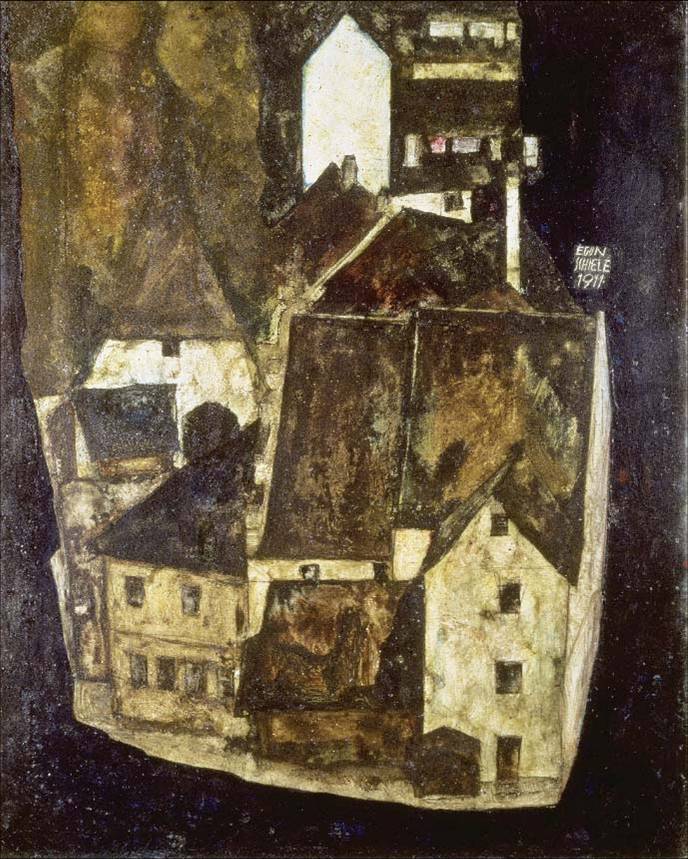
Dead City III, stolen from Fritz Grunbaum, is still hanging in the Leopold Museum.  For more information on Dead City III, go here.   My posts on Egon Schiele here.

If you have an interest in the topic of Nazi art looting, go here.   There is an incredible amount of stolen art remaining in U.S. museums.  Learn about Nazi agent and art dealer Curt Valentin here.

A really huge scandal and breathtaking example of Holocaust denial in the American museum community, the sad story of Alfred Flechtheim here.

I have copied the text of the press release below:

The United States of America, the Estate of Lea Bondi Jaray and the Leopold Museum Settle the Long-Standing Case Involving “Portrait of Wally” by Egon Schiele


New York, NY (July 20, 2010) -- The Estate of Lea Bondi Jaray (the “Estate”) announced today that the United States Government, the Estate and the Leopold Museum Privat-Stiftung (the “Leopold Museum”) have agreed to settle the long-pending case of United States of America v. Portrait of Wally, which was about to go to trial before Chief Judge Loretta Preska in federal court in Manhattan on July 26, 2010.
The case involves Portrait of Wally, a painting by Egon Schiele (the “Painting”), stolen from a Jewish art dealer and collector by a Nazi agent in the late 1930’s in Vienna. The major terms of the settlement agreement, which has been approved by Judge Preska, are as follows:
(a) the Leopold Museum pays the Estate $19 Million;
(b) the Estate releases its claim to the Painting;
(c) the United States Government dismisses the civil forfeiture action it brought against the Leopold Museum and releases the Painting to the Leopold Museum;
(d) the Leopold Museum will permanently display signage next to the Painting at the Leopold Museum, and at all future displays of the Painting of any kind that the Leopold Museum authorizes or allows anywhere in the world, that sets forth the true provenance of the Painting, including Lea Bondi Jaray’s prior ownership of the Painting and its theft from her by a Nazi agent before she fled to London in 1939; and
(e) before it is transported to the Leopold Museum in Vienna, the Painting will be publicly exhibited at the Museum of Jewish Heritage -- A Living Memorial to the Holocaust, in New York, beginning with a ceremony commemorating the legacy of Lea Bondi Jaray and the successful resolution of the lawsuit.

The Painting was the personal property of Lea Bondi Jaray, a Jewish art dealer in Vienna, who fled in 1939 to London, where she died in 1969. The Painting became the subject of court proceedings in New York City, after it was loaned in late 1997 and early 1998 to the Museum of Modern Art in New York by the Leopold Museum as part of an exhibition of Schieles from the Leopold Museum’s collection. In 1998, Robert Morgenthau, Manhattan District Attorney, subpeonaed the Painting in connection with his investigation into whether the Painting was stolen property. After the State Court of Appeals ruled in 1999 that such “seizure” of an artwork loaned for exhibition was prohibited under New York State law, the United States Government immediately commenced a civil forfeiture action in New York, alleging that the Painting was stolen from Lea Bondi Jaray during the Nazi era by a Nazi named Friedrich Welz, and was imported into the United States in 1997 by the Leopold Museum in violation of U.S. law. The Customs Service seized the Painting in connection with that action. The Estate of Lea Bondi Jaray asserted a claim to the Painting in the action, and the U.S. agreed that upon forfeiture of the Painting, it would transfer to the Estate all right and title to the Painting.

Based on the evidence presented during the case, Judge Preska ruled last fall that the Painting was the personal property of Lea Bondi Jaray and that it was stolen from her in Vienna in the late 1930's by Friedrich Welz, who was a member and collaborator of the Nazi party. The Court found that the Painting had been seized from Welz by U.S. Forces in Austria after World War II and delivered in 1947 to the Austrian Federal Office for the Preservation of Historical Monuments (the “Bundesdenkmalamt”), along with paintings Welz had acquired from Dr. Heinrich Rieger, a Jewish art collector who had perished during the Holocaust. In 1950, the Bundesdenkmalamt delivered artworks to an agent for the Rieger heirs and included the Painting in the delivery. Later that year, the Rieger heirs sold their works to the Austrian National Gallery (the “Belvedere”), and the Painting was included in the delivery of the artworks to the Belvedere. In 1954, the Belvedere traded the Painting to Dr. Rudolf Leopold. In 1994, Dr. Leopold transferred the Painting to the Leopold Museum.

In a statement, representatives of the Estate expressed their appreciation at reaching this historic settlement, which reflects the true value of the Painting, and acknowledges Lea Bondi Jaray’s ownership of the Painting and her and her family’s long quest for justice. In addition, they underscored that the public display of the Painting at the Museum of Jewish Heritage in New York will mean that visitors will be able to view the Painting in a setting that memorializes the sufferings of so many in the Holocaust and the resilience and resolve of those who escaped and/or survived. They added that the permanent signage reflecting the Painting’s true provenance will ensure that future generations are told the real story of the Painting’s theft from Lea Bondi Jaray during the Nazi era.

In conclusion, the Estate representatives said: “Justice has been served. Finally, after more than 70 years, the wrongs suffered by Lea Bondi Jaray are at last being acknowledged and, to some degree, corrected. We are grateful to the many people who helped Lea and her family during these many years. We especially thank our attorneys at Herrick, Feinstein, and all the members of the Asset Forfeiture Unit team of the U.S. Attorney’s Office, led by Assistant U.S. Attorney Sharon Cohen Levin, for their unstinting dedication to the pursuit of justice during the long course of this litigation.”


Purchase Copyright Litigation Handbook from West here

Sunday, July 11, 2010

Art Litigation: Egon Schiele's Prison Converted To A Museum, Image At Center of Stolen Art Controversy

Egon Schiele's "I Love Antitheses" 1912 (Estee Lauder Trust)

Artkabinett has an article Schiele Prison Attracts Collectors on the prison that housed Egon Schiele in Austria when he was imprisoned for scandalizing public morals.   Today the prison is a museum dedicated to Schiele's works.  Above is an image of one of the works that Schiele created while in prison.  According to Schiele expert Jane Kallir, "I Love Antitheses" was part of the collection of Fritz Grunbaum, a Jewish cabaret performer who was murdered in the Dachau Concentration Camp.  Jane Kallir testified at trial that "I Love Antitheses" was one of the few works that Schiele himself titled, and that the work is documented as belonging to Fritz Grunbaum by a 1925 Wurthle Catalog and a 1928 Hagenbund - Neue Galerie catalog.  Today it is held in an Estee Lauder trust.

Neue Galerie was the name of Otto Kallir's art gallery in Vienna that organized a 1928 exhibition to commemorate the tenth anniversary of Schiele's death.  Otto Kallir borrowed 22 works from Fritz Grunbaum's collection to include in the 1928 exhibition.  The 1928 correspondence shows that Otto Kallir had full access to Fritz Grunbaum's Schiele collection and selected the works that he wanted to borrow.

Grunbaum's collection was stolen by the Nazis and surfaced in Switzerland in 1956 where some of it was sold off by Eberhard Kornfeld of Galerie Kornfeld to Otto Kallir.  Kallir bought 20 of Fritz Grunbaum's Schieles from Kornfeld, including Dead City III
Kornfeld shipped the Grunbaum Schieles to New York and sold them through the Galerie St. Etienne, the gallery today owned by Jane Kallir and named after St. Stephen's Cathedral (Stephansdom)  in Vienna.  Otto Kallir knew that the works had belonged to Fritz Grunbaum and was aware that Fritz and his wife had been murdered by the Nazis.   In the period Kallir was selling the stolen artworks from his gallery on 57th Street in New York, the U.S. State Department had issued warnings to art dealers, museums and collectors not to acquire artworks from Europe that did not have a clear provenance.   Schiele was unknown outside Austria prior to World War II and many of Schiele's top collectors were murdered Jews such as Heinrich ReigerOskar ReichelKarl Maylander and Fritz Grunbaum.


Galerie St. Etienne's Inspiration  -  Stefansdom - Vienna - Image from Wikipedia

Dead City III was seized as stolen property by D.A. Robert Morgenthau in 1998. After Morgenthau's subpoena was quashed, MoMA gave Dead City III to Rudolph Leopold.

A lawsuit alleging that Fritz Grunbaum's art dealer, Otto Kallir (and for a time monarchist supporting the restoration of the Hapsburgs) laundered the Grunbaum collection through Switzerland is still pending. See New York Observer, Dealer with the Devil.   The heirs of Fritz Grunbaum have been battling to regain the artworks stolen from him.  More information at Art Stolen From Fritz Grunbaum.   Museums and private collectors who purchased the stolen works have not returned them and the issue on appeal now to the Court of Appeals for the Second Circuit is whether the 147 days that the stolen artworks passed through Switzerland was sufficient to apply Swiss law to "launder" the title to these stolen works.  Massachusetts collector David Bakalar sued Fritz Grunbaum's heirs to obtain a declaration of title to one of the stolen artworks.   My firm represents Fritz Grunbaum's heirs in the litigation and I was lead trial counsel in the action in the Southern District of New York, story here.

Along with Dead City III in the September 1956 of artworks from Eberhard Kornfeld was the work "I Love Antitheses" and "Girl With Black Hair" that is now at Oberlin College.   Oberlin's Allen Museum has refused to share its research or to publish a full provenance of "Girl With Black Hair" with Fritz Grunbaum's heirs in violation of the Washington Principles on Nazi-Confiscated Art.   The earliest provenance given of Girl with Black Hair by Oberlin College is Switzerland, 1956.

Artkabinett also has a story Infamous Collector Leopold Dies at 85 on Rudolph Leopold, the art collector who amassed a number of stolen artworks that Austria has never returned to the Jewish families from whom they were stolen.


Work stolen from Fritz Grunbaum at Oberlin College here.  More on the battles over Fritz Grunbaum's collection and Oberlin's falsification of the provenance of Girl With Black Hair here.

Watch the Boston College video here.

More information and coverage of the 1928 Hagenbund/Neu Galerie correspondence in the following Powerpoint:

 Purchase Copyright Litigation Handbook from West here  

Friday, July 2, 2010

Art Litigation: Stolen Art and Austria's "Jewish Exception" To the 1955 Austrian State Treaty


Rudolph Leopold's death on the eve of a criminal trial in the U.S. should have brought Austria to its senses.  Instead, yesterday it installed Leopold's family members as part of a continuing charade to conceal Austria's ownership of stolen Jewish property in the Leopold Museum.  More on Rudolph Leopold here.

Dead City III was stolen from Fritz Grunbaum, a Jewish cabaret performer murdered in Dachau in 1941. In violation of Art. 26 of the Austrian State Treaty of 1955, Austria has thus far failed to return the work, although Dr. Christoph Bazil, the head of an Austrian Commission that was founded because of the Dead City III scandal keeps promising me that he is investigating the matter.
This so-called "Commission for Provenance Research" recently came to NY, program here and claimed that they were reviewing every single item in Austrian museums. Apparently they have not reached "S" for Schiele in the alphabet, something that might safely occur in the next century.
This is of course a preposterous sham.

Dr. Bazil, who works for Minister Claudia Schmied, takes the opinion (that he has refused to put in writing) that Art 26 of the Austrian State Treaty does not require Austria to return property stolen from Jews. But it is written in English and is quite clear and unconditional, so there is no reason that the Austrian police should not simply enter the Leopold Museum and secure and restitute the property. In the United States we have police and prosecutors to handle stolen property. The situation is shocking to me because in Austria it appears that police and prosecutors refuse to act when property has been stolen from Jews, and this "Jewish exception" is nowhere in writing.

In contravention of Art 26 of the Austrian State Treaty, Austria has permitted its civil remedies for Jews to recover property to lapse. Additionally, Austria failed to restore property as required by the Austrian State Treaty, instead dragging its feet for 45 years.
I have included below the text of the Austrian State Treaty, you can easily see for yourself that Austria is in gross violation for failing to return the stolen artworks at the Leopold, the Albertina, and in private collections throughout Austria.
The Austrian State Treaty of 1955 was a contract between the English, the Russians, the French and the US, on the one hand, and Austria on the other. Nowhere in our jurisprudence can one find support for Dr. Bazil's "oral" interpretation of this Treaty, and Dr. Bazil's failure to cite any Austrian jurisprudence in support of his view casts doubts on his assertions.

The Austrian State Treaty of 1955 is the equivalent of the U.S. Constitution.   What is the remedy for a breach?  Should we re-occupy Austria?

Emphasis below is mine.

Article 26
PROPERTY, RIGHTS AND INTERESTS OF MINORITY GROUPS
IN AUSTRIA
1. In so far as such action has not already been taken, Austria undertakes that, in all cases where property, legal rights or interests in Austria have since13th March, 1938, been subject of forced transfer or measures of sequestration, confiscation or control on account of the racial origin or religion of the owner, the said property shall be returned and the said legal rights and interests shall be restored together with their accessories. Where return or restoration is impossible, compensation shall be granted for losses incurred by reason of such measures to the same extent as is, or may be, given to Austrian nationals generally in respect of war damage.

2. Austria agrees to take under its control all property, legal rights and interests in Austria of persons, organizations or communities which, individually or as members of groups, were the object of racial, religious or other Nazi measures of persecution where, in the case of persons, such property, rights and interests remain heirless or unclaimed for six months after the coming into force of the present Treaty, or where in the case of organizations and communities such organizations or communities have ceased to exist. Austria shall transfer such property, rights and interests to appropriate agencies or organizations to be designated by the Four Heads of Mission in Vienna by agreement with the Austrian Government to be used for the relief and rehabilitation of victims of persecution by the Axis Powers, it being understood that these provisions do not require Austria to make payments in foreign exchange or other transfers to foreign countries which would constitute a burden on the Austrian economy. Such transfer shall be effected within eighteen months from the coming into force of the present Treaty and shall include property, rights and interests re quired to be restored under paragraph 1 of this Article.

Purchase Copyright Litigation Handbook from West here  

Tuesday, June 1, 2010

June 15 Cocktails and Dinner - Murder, Mystery and Egon Schiele's Dead City Dinner at the Harmonie Club NYC


 Egon Schiele's Dead City - Stolen from Fritz Grunbaum

Murder, Mystery and Egon Schiele's Dead City


Cocktails: 6:30 Dinner and Speaker to Follow
When:  Tuesday June 15, 2010
Where:  Harmonie Club
4 East 60th Street (212) 355-7400
Cost:  $150
NYS Medical Defense Bar Association $125
Payment:  Check to "New York State Medical Defense Bar Association"

RSVP  Andrew M. Neubardt
Rende, Ryan & Downes LLP
(914)  681-0444

In 1998 D.A. Robert Morgenthau created worldwide headlines when he entered the Museum of Modern Art and seized two stolen artworks, Egon Schiele's Portrait of Wally and Egon Schiele's Dead City. After more than a decade, litigation surrounding both artworks is still raging, with Dead City at the center of an appeal to the first Holocaust-era art trial ever in a U.S. federal court. Ray Dowd of Dunnington Bartholow & Miller LLP represents the heirs of Fritz Grunbaum, the Jewish cabaret performer and owner of Dead City when he died in the Dachau Concentration Camp. He will take us on a visually-compelling tour of Nazi art looting and discuss its implications for U.S. museums today.

Praise for Murder, Mystery and Egon Schiele's Dead City

The program was outstanding and participants offered many positive comments on their evaluations, including the following: “Better than excellent; Hauntingly brilliant in every way! Extraordinary research and amazing cadence in relating it; Subtly spellbinding, no speaker more thorough!; Nice guy; Wonderful!; Fascinating; Very knowledgeable—impressive; Very interesting; Very well done, detailed explanation of subject.”


Mindy Blechman, Continuing Legal Education Director, Gratz College

The thoroughness with which you presented the diabolically methodical process that the Third Reich used to despoil Jews of their property kept the class riveted during your lecture. The horror of the Nazi art looting came to life for the audience as you presented the evidentiary issues and the legal problems associated with restitution litigation for holocaust victims and families. Since your presentation, many of the attendees have contacted me and commented on how astonished they were after your lecture. It is chilling to realize how methodical and relentless the Third Reich was in their pillaging operations.

Filippa Marullo Anzalone
Assoc. Dean, Boston College Law School

Ray's presentation was dynamic and deeply moving. He is an entertaining speaker, and supremely knowledgeable about Holocaust art recovery and the legal and ethical issues associated with this complex topic. He presented before a Bar Association audience of judges and lawyers in Cincinnati, and gave a second presentation at the Cincinnati Museum Center. His talk was compelling and very well received.

Michael Newman
Federal Bar Association, Vice President for the Sixth Circuit


Purchase Copyright Litigation Handbook from West here  

Thursday, May 6, 2010

Traffickers in Stolen Schieles: U.S. Museum Directors Warned Not To Act As Receivers of Stolen Goods

Egon Schiele Self-Portrait - Stolen from Fritz Grunbaum when he was deported to Dachau, now at the Morgan Library (Bequest of Fred Ebb)

The Morgan Library claims that the Berne gallery Gutekunst & Klipstein purchased this artwork directly from the estate of Egon Schiele.  Source: From Berlin to Broadway:  The Ebb Bequest of Modern German and Austrian Drawings (2007).

Gutekunst & Klipstein (now owned by Eberhard Kornfeld) claims that the work belonged to Fritz Grunbaum and that it bought the work in 1956 through Grunbaum's sister in law.

Why would the Morgan Library tell a different story?

The late Francis Henry Taylor, former Director of the Metropolitan Museum of Art, warned U.S. museums not to act as receivers of stolen goods in 1943...


We know that the Nazis have carried off virtually all of the movable works of art in private possession.

                                                           ***
The methods by which these properties are acquired have an ingenious quality of wickedness bordering on the naïve. The Nazis resort to the strictest legal fictions to justify their operations. …The laws regarding ownership of property by Jews have been invoked at every turn…. They were easy victims.


                                                            ***

… their personal possessions --- particularly works of art --- were sold at public auction where German officials directly, or indirectly through local Quislings, bought in the objects with the worthless paper currency … . Then in turn the money realized by the original owner was taxed 100 percent and passed directly to the Nazi treasury.


                                                     ***
Not since the time of Napoleon Bonaparte has there been the wholesale looting and destruction of art property that is going on today in the occupied countries. The Nazis have either confiscated or acquired by fictitious purchase the most important masterpieces of both public and private collections.

                                                  ***

…after a fugitive existence [the artworks] will inevitably find their way to the free markets of neutral countries. In Buenos Aires and Madrid, in Stockholm, Berne and Lisbon, in Istanbul and Cairo we will see come out of hiding in the years immediately following the war objects of great intrinsic worth, held for the most part under fictitious names, and representing the real assets of the Nazi officials who are lucky enough to escape. These works will be offered primarily in the Western Hemisphere. How can we prevent this from happening and becoming ourselves party to the looting of Europe?

                                                          ***


Private individuals might continue to operate in a “black market” of antiquities in which no questions would be asked, but public institutions disposing of trust funds could not very well connive in the liquidation of the artistic patrimony of Europe and act as public receivers of stolen goods.


Taylor, Francis Henry, Europe’s Looted Art: Can It Be Recovered? New York Times, September 19, 1943

Why is it that only today's American museum directors seem to believe that Jews voluntarily sold artworks under the Nazi reign of terror?   And that they have a fiduciary duty to conceal stolen property? 

Francis Henry Taylor knew that people in Berne would be selling artworks using fake names and he warned the art market.  In 1943.

Thursday, March 25, 2010

April 16 2010 Art Litigation - Nazi Art Looting - Following the Trail To Egon Schiele's Dead City

Egon Schiele's Dead City III (1911)


April 16, 2010 lecture at Gratz College - more information:  www.gratzcollege.edu/cle

Full brochure here

Program description:

Following the Trail to Dead City

Raymond J. Dowd, Esquire
1:00 pm – 4:30 pm

This course presents the intriguing story of Egon Schiele’s painting, Dead City, after it was stolen by the Nazis and legal efforts to bring it back into the Grunbaum family.

Mr. Dowd will discuss how Fritz Grunbaum’s art collection surfaced in Switzerland in 1956 under disputed
circumstances and was later found in the Leopold and Albertina museums in Austria. In 1998, District Attorney Robert Morgenthau seized Dead City (along with Portrait of Wally) at the Museum of Modern Art in New York City and unleashed an international debate over what countries should be doing to return art to Jewish heirs. Mr. Dowd will underscore the role of the Swiss in laundering Nazi looted art; the response of the Austrian government, which has been somewhat less than cooperative; and the new commission the U.S. may establish to assist Holocaust victims and their heirs. Mr. Dowd has spoken on this topic at the Jewish Museum in Berlin and at Yad Vashem in Jerusalem. A terrific companion to last year’s popular course on “Reclaiming Nazi Looted Art.”

Three (3) substantive credits: $100

Tuesday, March 23, 2010

Nazi Art Looting: Egon Schiele's Dead City Tomorrow Night 3/24 At Sotheby's Institute NYC

Egon Schiele - Dead City III 1911

LAST CHANCE THE EVENT IS SELLING OUT

NYSBASections


Entertainment, Arts & Sports and Law EASL Section
Events
Section Publications
http://www.nysba.org/

Egon Schiele's Dead City: Current Issues In Nazi Art Looting and Recovery

March 24, 2010
6:00 to 8:00 p.m.
Sotheby's Institute of Art
570 Lexington Ave., NYC

1.5 MCLE credits in Professional Practice
Register online > www.nysba.org/deadcity

SEATING IS LIMITED PLEASE REGISTER EARLY

Speaker:
Raymond Dowd, Esq.
Dunnington, Bartholow & Miller LLP
Sponsored by the Entertainment, Arts & Sports Law Section's Committee on Fine Arts

Program Description:

In 1998, Manhattan District Attorney Robert Morgenthau seized Egon Schiele's Dead City and Portrait of Wally at the Museum of Modern Art, creating a scandal that changed the legal landscape of Europe and the United States for victims of Nazi persecution and their survivors. Ray Dowd represents the heirs of Fritz Grunbaum, a Jewish cabaret performer murdered in the Dachau Concentration Camp. Fritz's wife Lily died in the Minsk Death Camp. Grunbaum's art collection surfaced in Switzerland in 1956 under disputed circumstances, and in the first Holocaust-era art recovery trial in U.S. history, Bakalar v. Vavra, the District Court found that passing the artwork through Switzerland gave it clean title. The case is now on appeal to the Second Circuit. This presentation will cover the legal and evidentiary obstacles to litigating Holocaust-era expropriation and provide legal practitioners with basic tools to assemble evidence and prove Nazi property looting.

Pricing:

$25.00 for Members

$35.00 for non-members

$15.00 for students

For more information contact: Carolyn Clayton at 518-487-5596 or cclayton@nysba.org

Register online > www.nysba.org/deadcity

Monday, March 8, 2010

Following the Trail to "Dead City" at Gratz College in Philadelphia - April 16


Egon Schiele's Dead City III - Now at the Leopold Museum


On April 16, Gratz College in Philadelphia is hosting a continuing legal education program called "Following the Trail to "Dead City" that will discuss the Egon Schiele oil Dead City III stolen from Fritz Grunbaum while he was in the Dachau Concentration Camp.   Austria recently appointed a commission to investigate the provenance of Dead City and is expected to issue a report in the next few months.   The decision will have repercussions on institutions such as Oberlin College, the Morgan Library, the Art Institute of Chicago, the Carnegie Institute, Harvard's Fogg Museum and the Museum of Modern Art, all of which have artworks that followed the same provenance path as Dead City - through an art gallery in Switzerland called Gutekunst & Klipstein that is today Galerie Kornfeld run by Eberhard Kornfeld through Galerie St. Etienne in New York City.


If you would like to make a full day of it, the morning session features IBM and the Holocaust: Legal and Ethical Implications by Edwin Black (I included the information below).

The link is here.

Raymond J. Dowd, Esquire

April 16, 2010

Event Categories: Continuing Legal Education at Gratz College

This course presents the intriguing story of Egon Schiele’s painting, Dead City, after it was stolen by the Nazis and legal efforts to bring it back into the Grunbaum family.

Mr. Dowd will discuss how Fritz Grunbaum’s art collection surfaced in Switzerland in 1956 under disputed circumstances and was later found in the Leopold and Albertina museums in Austria. In 1998, District Attorney Robert Morgenthau seized Dead City (along with Portrait of Wally) at the Museum of Modern Art in New York City and unleashed an international debate over what countries should be doing to return art to Jewish heirs. Mr. Dowd will underscore the role of the Swiss in laundering Nazi-looted art; the response of the Austrian government, which has been somewhat less than cooperative; and the new commission the U.S. may establish to assist Holocaust victims and their heirs. Mr. Dowd has spoken on this topic at the Jewish Museum in Berlin and at Yad Vashem in Jerusalem. A terrific companion to last year’s popular course on “Reclaiming Nazi Looted Art.”

1:00 pm - 4:30 pm

Three (3) substantive credits: $100

Discount for full day: $185. Contact Mindy Blechman for discount: mblechman@gratz.edu; 215-635-7300 x 154

Lunch included for participants who attend both classes.

Cost: $100.00

MORNING PROGRAM

CLE: IBM and the Holocaust: Legal and Ethical Implications


Mr. Edwin Black

April 16, 2010


Event Categories: Continuing Legal Education at Gratz College
As the Third Reich embarked upon its plan of conquest and genocide, IBM and its subsidiaries helped create enabling technologies, step-by-step, from the identification and cataloging programs of the 1930s to the selections of the 1940s, all for the sake of profit. Mr. Black will review the carefully crafted corporate collusion with the Third Reich as well as the structured deniability of oral agreements, undated letters, and Geneva intermediaries. This was undertaken as the newspapers blazed with accounts of persecution and destruction.

Mr. Black will then broaden his discussion on corporate complicity in the Holocaust to the Ford Motor Company, General Motors, Carnegie and Rockefeller.

One (1) ethics and two (2) substantive credits: $100

Breakfast included; dietary laws observed.

Doors open at 8:30 am; course starts promptly at 9:00 am.

Speaker’s publications available for purchase and signing.


Cost: $100.00

Wednesday, March 3, 2010

Audio Recording and Powerpoint of Nazi Art Looting Presentation at Yad Vashem

Egon Schiele's Self-Seers - Stolen from Fritz Grunbaum and Still Missing

Last week I gave a lecture at Yad Vashem International Institute for Holocaust Research in Jerusalem.   I dealt with the problems faced by attorneys who need to prove that the Holocaust happened and to prove that transactions involving Nazi persecutees during the period 1933-1945 were presumptively duress transactions.

If you would like to listen to my presentation, the link is here.   The Powerpoint presentation that illustrates the audio is here.  The invitation reproduced below.

The International Institute for Holocaust Research-Yad Vashem


cordially invites you to attend the lecture

Egon Schiele's Dead City

Current Issues In Nazi Art Looting and Recovery
Raymond Dowd, Esq.

Partner - Dunnington, Bartholow & Miller LLP New York

Wednesday, 24 February 2010

10:00-12:00

Lecture Hall, Room 223, Administration and Research Building

Yad Vashem, Mount of Remembrance

In 1998, Manhattan District Attorney Robert Morgenthau seized Egon Schiele's Dead City and Portrait of Wally at New York's Museum of Modern Art, creating a scandal that changed the legal landscape of Europe and the United States for victims of Nazi persecution and their survivors. Ray Dowd represents the heirs of Fritz Grunbaum, a Jewish cabaret performer murdered in the Dachau Concentration Camp. Fritz's wife Lily died in the Minsk Death Camp. Grunbaum's art collection surfaced in Switzerland in 1956 under disputed circumstances, and in the first Holocaust-era art recovery trial in U.S. history, Bakalar v. Vavra, the District Court found that passing the artwork through Switzerland gave it clean title. The case is on appeal. Many of Fritz's artworks are in the Leopold Museum and the Albertina Museum in Austria. In over ten years, Austria has not even bothered to respond to the heirs' claims.

Tuesday, March 2, 2010

Austria and Fritz Grunbaum's Stolen Schieles at the Albertina Museum

In 1955, Austria signed a treaty with the United States promising to give back all of the property it stole from Jews during the period of Nazi "occupation" of Austria.   Ever since, Austria has treated this obligation largely as a joke, thumbing its nose at Jews who attempted to get their property back.  Only in the 1990's through a combination of class action lawsuits and the actions of the Clinton Administration spearheaded by Amb. Stuart Eizenstat, did Austria instead agree to pay pittances to Jewish persecutees in lieu of giving them their property back.   The sad tale is well told in Eizenstat's book Imperfect Justice.

But the class action settlements did not cover stolen artworks in Austria.  In 1998, in reaction to D.A. Morgenthau's seizure of Egon Schiele's Portrait of Wally and Dead City (Dead City belonged to Fritz Grunbaum), Austria passed an Art Restitution Law that permitted claims to be made against artworks in Austria's federal museum collections.  On April 13, 1999, the heirs of Fritz Grunbaum made claims to the following works by Egon Schiele that were stolen from Grunbaum while he was in the Dachau Concentration Camp:


Egon Schiele, Female Nude Seated on Red Drape, Back View
Sitzender weiblicher Rückenakt mit rotem Rock

Jane Kallir: Egon Schiele, The Complete Works 1998, New York №:1504
Gouache, watercolor, and pencil. Signed and dated, lower right. (48.2 x 31.8 cm).
Gutekunst & Klipstein, Nov. 24, 1955, lot 107 1

Exhibitions: London, 1964, no. 67, ill.; Hamburg, 1981, no. 214, ill.
Inventorylist Albertina: 39.931


Jane Kallier: Egon Schiele, The Complete Works 1998, New York №:1797: Heinrich Rieger; Gutekunst & Klipstein, Bern; Galerie St. Etienne, New York; Rudolf Leopold;

Provenance as per Catalog: "Egon Schiele" Würthle Gallery, Vienna 1925:
"Mutter und Kind", sign Egon Schiele 1915 Sammlung Fritz Grünbaum
Austria never responded to the claims of Fritz Grunbaum's heirs.  From 2000 through 2009, Austria claimed that it was "investigating" the status of the works.  In 2006, Mag. Eva Blimlinger was called in to oversee the investigation together with Mag. Annaliese Schallmeiner.


 Blimlinger is a respected Austrian historian and oversaw the Austrian Historian Commission's report found at http://www.provenienzforschung.gv.at/    The Blimlinger and Schallmeiner Report, which was supposed to have issued in the fall of 2009, never has seen the light of day, apparently the victim of the Austrian Federal Ministry for Education, Arts and Culture.   Why was that report killed and what did it say?
 
In the summer of 2009, at the Prague Conference on Holocaust Era Assets, Minister Claudia Schmid promised Congressman Wexler that she would investigate the status of the Grunbaum works at the Albertina.  I spoke to Dr. Christophe Bazil and Dr. Thomas Baier, who reassured me that they would investigate the issue and be in contact.   I wrote to them and never got any response.
 
In February, a client alerted me to a forum to take place in New York on Austrian Restitution.  The program is here.    I was rather shocked that the very Austrian officials who had promised to look into the Grunbaum affair and who did not have the time to answer my communications were to be speaking in New York City.
 
By failing to return property belonging to Jews, Austria has breached its obligations under the Austrian State Treaty of 1955.  This treaty was a condition of Austria's existence, like our Constitution.  The Allies - Russians, French, British and Americans - pulled out of Austria on the promise that all property would be returned to Jews.   Instead, Austrians continue to live in homes stolen from Jews, operate businesses stolen from Jews, and to buy, sell and enjoy art stolen from Jews.
 
Since the Allies left Austria, Austria has enacted successively a system of inadequate and insulting postwar laws that failed to restore property to Jews.   To understand Austria's obligations clearly (the treaty is written in plain English), we look to the actual writing. Article 26 of the 1955 Austrian State Treaty states as follows:

PROPERTY, RIGHTS AND INTERESTS OF MINORITY GROUPS IN AUSTRIA

1. In so far as such action has not already been taken, Austria undertakes that, in all cases where property, legal rights or interests in Austria have since 13th March, 1938, been subject of forced transfer or measures of sequestration, confiscation or control on account of the racial origin or religion of the owner, the said property shall be returned and the said legal rights and interests shall be restored together with their accessories. Where return or restoration is impossible, compensation shall be granted for losses incurred by reason of such measures to the same extent as is, or may be, given to Austrian nationals generally in respect of war damage.

The full text of the Austria is found here, courtesy Wikipedia.  You will see that there are no "if's" ands or "buts" in the Treaty.  Its language is unconditional and does not depend on enabling legislation.  Indeed, any enabling legislation that fell short of the absolute terms of the Treaty would be unconstitutional in Austria.

It is to be hoped that the U.S. State Department will assist the heirs of Fritz Grunbaum in obtaining a copy of the Blimlinger/Schallmeiner Report and in facilitating conversations through the U.S. Embassy in Vienna, consistent with the Washington Principles on Holocaust-Era Assets.   It is to be hoped that President Obama's Ambassador to Austria, Amb. William Eacho will take a personal interest in the plight of Jews dispossessed in the Holocaust.

Wednesday, February 3, 2010

Egon Schiele's Dead City: Current Issues In Nazi Art Looting and Recovery


Egon Schiele's Dead City III, from the collection of Fritz Grunbaum when he was arrested by the Gestapo in 1938 and then died penniless in Dachau, currently at the Leopold Museum in Vienna, Austria

NYSBA Sections: Entertainment, Arts & Sports and Law (EASL) Section  Events

http://www.nysba.org/

Egon Schiele's Dead City: Current Issues In Nazi Art Looting and Recovery

March 24, 2010
6:00 to 8:00 p.m.
Sotheby's Institute of Art

570 Lexington Ave., NYC
1.5 MCLE credits in Professional Practice

Register online > www.nysba.org/deadcity
SEATING IS LIMITED PLEASE REGISTER EARLY
Speaker:

Raymond Dowd, Esq.
Dunnington, Bartholow & Miller LLP

Sponsored by the Entertainment, Arts & Sports Law Section's Committee on Fine Arts

Program Description:

In 1998, Manhattan District Attorney Robert Morgenthau seized Egon Schiele's Dead City and Portrait of Wally at the Museum of Modern Art, creating a scandal that changed the legal landscape of Europe and the United States for victims of Nazi persecution and their survivors. Ray Dowd represents the heirs of Fritz Grunbaum, a Jewish cabaret performer murdered in the Dachau Concentration Camp. Fritz's wife Lily died in the Minsk Death Camp. Grunbaum's art collection surfaced in Switzerland in 1956 under disputed circumstances, and in the first Holocaust-era art recovery trial in U.S. history, Bakalar v. Vavra, the District Court found that passing the artwork through Switzerland gave it clean title. The case is now on appeal to the Second Circuit. This presentation will cover the legal and evidentiary obstacles to litigating Holocaust-era expropriation and provide legal practitioners with basic tools to assemble evidence and prove Nazi property looting.

Pricing:

$25.00 for Members
$35.00 for non-members
$15.00 for students

For more information contact: Carolyn Clayton at 518-487-5596 or cclayton@nysba.org

Register online > www.nysba.org/deadcity

Go to http://www.nysba.org/ to see upcoming events,

access section publications, blogs and much more.

NEW YORK STATE BAR ASSOCIATION, ONE ELK STREET, ALBANY, NY 12207 • PH: (518) 463-3200 FX: (518) 487-5517

Sunday, January 17, 2010

Looting and Exploitation in Nazi-Occupied Europe by Dr. Jonathan Petropoulos


Dr. Jonathan Petropoulos delivered a lecture on Nazi art looting in Vienna last fall, focusing on the case studies of art dealers Curt Valentin and Otto Kallir, both of whom moved large quantities of artworks from Nazi Germany into the United States during and after World War II.   A link to Dr. Petropoulos' lecture on video is here at the Art Stolen from Fritz Grunbaum blog.

Dr. Petropoulos' studies on Curt Valentin and Otto Kallir are extremely important for those trying to track artworks looted by the Nazis that are now in museums and private collections in the United States and abroad.

According to a newly-released study prepared for the Swiss government by Laurie Stein, former founding director of the Pulitzer Foundation, the Museum of Modern Art in New York was the largest recipient of artworks from Curt Valentin.   Other than Dr. Petropoulos, art historians have completely ignored Curt Valentin, whose clients included a Who's Who of American art museums, colleges and wealthy collectors who snapped up modern artworks as the Nazi terror forced Jews to sell the works at fire-sale prices.   Alfred Barr, the MoMA's first director, was said to be in Curt Valentin's gallery on 57th Street on a weekly basis.

Above is an image of Egon Schiele's Girl with Black Hair, you can see her image at Oberlin College's website hereIn 1998, Oberlin College's then-President Nancy Dye promised the Cleveland Plain Dealer that she would investigate Schiele expert Rudolph Leopold's claim that Girl with Black Hair, along with sixteen other Schieles in American museums, belonged to Fritz Grunbaum.  Dye never published any results from her research.  In 2009, the Cleveland Jewish News reported evidence of Grunbaum's prior ownership, the article is here. 

Art catalogues show that this artwork was in the collection of Fritz Grunbaum before he died at the Dachau Concentration Camp.  The work is at the Allen Museum at Oberlin College, which refuses to document or share its research into the work's provenance prior to its acquisition in Switzerland in 1956 by Otto Kallir.  Kallir purchased it from Gutekunst & Klipstein, a clearinghouse for Nazi-looted art in Berne, Switzerland.  Oberlin's President Marvin Krislov has refused to permit me to meet with Oberlin's art historians to discuss the matter on campus.

Oberlin College has both music and Jewish studies programs.  It is shameful that they do not study the life, career, and art collection of Fritz Grunbaum, considered Austria's greatest cabaret performer and comedian of all time, celebrated by the Viennese with Karl Farkas as inventors of the "Doppelconference" a sort of Abbot & Costello routine.

As one account of Fritz's death at Dachau has it:

It was on New Year’s Eve, 1940, that Grünbaum gave his last performance. Gravely ill with tuberculosis, he decided to put on a show for the entertainment of prisoners in the camp infirmary. Despite his sickly appearance, one of the prisoners recognised him from his glory days in Vienna. Grünbaum pleaded:


I beg of you, Fritz Grünbaum is not performing for you, but instead it is the number [and recited his camp number], who just wants to spread a little happiness on the last day of the year.

Soon after this final show he attempted suicide, but was 'saved' by the SS officers. Just two weeks later, on 14 January 1941, a death certificate was made up for him. He had succumbed, according to the Nazis, to a weak heart.

Wednesday, February 11, 2009

Berlin Court Returns Poster Collection to Jewish Heir


A Berlin administrative court has ruled in favor of Peter Sachs, an heir of a victim of Nazi art looting. Article here.
The decision requires the German History Museum to return thousands of posters, including one of Simplicissimus's Red Bulldog.
According to the Kulturkampf blog:
Simplicissimus was a German magazine that began in 1896 and ran until 1967. It was characterized by a sharp, satirical style that was enhanced by its stylish imagery. The paper's mascot, the red bulldog by Thomas Theodore Heine, is an almost iconic image, and its original is at MoMA in New York.
It is good to see the anti-fascist bulldog's return to its Jewish owner after so many years.
Austrian Jewish comedian Fritz Grunbaum founded an antifascist political cabaret called Simplicissimus in Vienna. When Hitler invaded Austria on March 12, 1938, Grunbaum was arrested by the Gestapo and put in the first transport to Auschwitz. Today the Vienna cabaret is known as Kabarett Simpl.
Simple justice can take a long, long time.

Sunday, July 1, 2007

German Copyright in US Courts


I am leaving shortly to go to Germany. I will give a joint lecture at the University of Konstanz's law school with Prof. Dr. Axel Nordemann of Boehmert & Boehmert on July 6. On July 9, I will be giving a lecture in Berlin to the Berlin Chapter of the German Intellectual Property Law Association.(DEUTSCHE VEREINIGUNG FÜR GEWERBLICHEN RECHTSSCHUTZ UND URHEBERRECHT).

In preparation, I have been thinking about what copyrights would be of interest to German students and attorneys. Judge Alex Kozinsky noted in Mattel Inc. v. MCA Records, Inc., 296 F.3d 894 (9th Cir. 2002) that Mattel's Barbie Doll was originally a "German street walker". In that case, the court found that trademark infringement and dilution claims asserted against the Danish band Acqua and their song "Barbie Girl" failed because a trademark owner doesn't have the right to control public discourse when the public imbues a mark beyond its source-identifying function. Barbie has spawned enormous litigation. For example, artist Tom Forsythe was awarded $1.8 milllion in attorneys fees and damages because of Mattel's meritless litigation against him for his "Food Chain Barbie" series of photographs. Mattel Inc. v. Walking Mountain Productions, 353 F.3d 792 (9th Cir. 2003).


One of my favorite German copyright disputes didn't involve a German copyright. The Copyright Office's Board of Appeals rejected Christo and Jean-Claude's application to register their wrapping of the Reichstag in Berlin as a "sculptural work". Re: Wrapped Reichstag, Berlin, 1971-1995 Control No. 60-504-9973 Decision of Appeals Board, U.S. Copyright Office, October 1, 1997. The image appears above. Christo and Jean-Claude own the copyright in the photograph shown above, but they do not have a copyright in the sculptural aspects of the wrapped Reichstag. A copy of this decision may be found at Franklin Pierce Law School's IP Mall.
Dr. Nordemann and I will discuss two cases in depth. One, Twin Books Corporation v. The Walt Disney Corporation, 83 F.3d 1162 (9th Cir. 1996), involves the initial publication in Germany in 1923 of the classic children's tale "Bambi, A Life in the Woods" without a US copyright notice.
The second, Blanch v. Koons, 467 F.3d 244 (2d Cir. 2006) involved a fashion photographer named Andrea Blanch visiting the Deutsche Guggenheim in Berlin and noticing that a photograph she'd taken had been painted into the latest work of the artist Jeff Koons (Koons and Barbie are jointly responsible for a good chunk of U.S. copyright law). Ms. Blanch returned from Berlin and sued Jeff Koons in New York, rather than in Berlin. Dr. Nordemann and I will discuss whether Germany might not have been a friendlier forum for her, and why.
A Westlaw search of "German copyright law" turned up only five cases in the ALLFEDS database. "German copyright" turned up only ten. "germany w/5 copyright" yielded 18 results, including the famous Wheaton v. Peters, 33 U.S. 591 (1834)("In Germany, where a free, perpetual copyright exists, books are cheaper than any where else in the world.")
But I think that we are going to see many more German copyrights exploited in the United States. I recently had the pleasure of watching Fritz Lang's "M" (1931) - a Criterion collection release. An amazing film.
And two years ago, I started representing the heirs of Fritz Grunbaum. Grunbaum was a Jewish cabaret performer and film star in Berlin who mocked Hitler mercilessly. He was one of the founders and stars of Vienna's Kabarett Simpl. Christopher Isherwood's "Berlin Stories" are said to be based on Fritz Grunbaum and his world, which in turn formed the basis for Kander & Ebb's "Cabaret". Grunbaum and many member of his family were murdered by the Nazis. His art collection, like the collections of so many victims of the Holocaust, ended up with a Nazi-owned Austrian transport and storage company called Schenker & Co AG that has never accounted for it. What happened to the artworks after they left Schenker and made their way to the walls of the world's museums is now a hotly disputed matter. According to Eberhard Kornfeld, owner of Galerie Kornfeld in Bern, Switzerland, the Egon Schiele self-portrait hanging in the Morgan Library belonged to Fritz Grunbaum. The Morgan Library's catalog From Berlin to Broadway: The Ebb Bequest of Modern German and Austrian Drawings claims that Kornfeld acquired it from Egon Schiele's estate.
Two years ago, when I googled Fritz Grunbaum I found very little on him. I did it again recently and found blog posts, a museum in Vienna devoted to him, a very respectable Wikipedia entry, and an IMDB filmography of his works. Checking out his film "The Theft of the Mona Lisa" (Der Raub der Mona Lisa) (1931), I discovered that he played the role "Adolph G" to make fun of Hitler and that the New York Times gave the film an amazing review in 1932, which I got to read.
Although Grunbaum's artworks vanished, his copyrighted celluloid image survived, his musical copyrights endured, and the German collecting societies steadily credited his estate with royalties over the years for his famous musical compositions.
Hollywood is hungry for remakes, and the appetite is only growing. Someone is going to want to remake the "Theft of the Mona Lisa" which was based on an actual incident in 1911.
As German films of the twentieth century become better known, catalogued, distributed and affordable, the market for and interest in German copyrights in the United States should grow.