Showing posts with label scenes a faire doctrine. Show all posts

Wednesday, August 25, 2010

Copyright and Fine Art: Sept 14 CLE Program at New York County Lawyers' Association


Sept 14:  Copyright and Fine Art Continuing Legal Education Program

Location:
New York County Lawyers' Association
14 Vesey Street, 2nd Floor Auditorium

Course ID: C091410
Number of Sessions: 1
Credits: 3 MCLE Credits
3 MCLE Credits (NY and NJ*): 3 Professional Practice; Transitional and Non-transitional

Course Description:
Today's digital world relies increasingly on works of fine art. Fine art and the creative process relies on appropriation, mimicry, satire, parody and collage. How does the Copyright Act and the Visual Artists Rights Act fit in? What materials can an artist use? To what degree may an artist protect the integrity of artworks? How does anyone make money?

This lively and entertaining program considers case law involving works of fine art to illustrate current controversies in copyright law that affect painting, sculpture, architecture, photography and video. The principles considered, such as "work for hire" and the "fair use doctrine" apply to all creative and commercial endeavors that use copyrighted materials and should be of interest to those in intellectual property, business law, employment law and litigation.

Faculty:
Program Chair & Faculty: Raymond J. Dowd, Dunnington Bartholow & Miller LLP
Moderator: Hon Stephen G. Crane (Ret.), JAMS Mediator

Raymond Dowd is a member of Dunnington Bartholow & Miller's intellectual property, art law, corporate, litigation and arbitration practice groups. He has broad commercial litigation experience in both federal and state courts, and has represented copyright, trademark and domain name owners, broadcasters, distributors and content providers in transactions and litigation, representing both plaintiffs and defendants. Mr. Dowd represents collectors and dealers of fine art and has litigated disputes involving authenticity, forgery, ownership and provenance. Mr. Dowd regularly speaks to trade associations on copyright, fine art, trademark and litigation issues, and participates in organizing continuing legal education programs. His 2009, Copyright Litigation Handbook (West 2010), was called "an indispensable guide" by The New York Law Journal.

Purchase Copyright Litigation Handbook from West here  

Saturday, June 5, 2010

9th Cir: Hollywood Creative Pitches Ghostbusted By Preemption Under Copyright Act

If you "pitch" a "concept" for a film or television show to a Hollywood producer, can you protect yourself? The general question of whether you can get paid for pitching an idea is impossible to answer in the abstract, some of the factors are: who are you, what is the industry, how concrete is the "concept", is the recipient of the pitch already secretly working on the same thing. A general answer is that if you can get the recipient of the pitch to sign a non-disclosure/non-compete OR if you can create a pre- and post-meeting paper trail, then MAYBE, depending on a wide range of factors, such as who you are, is the idea or an aspect of it original, and the circumstances/industry in which the pitch occurred. Litigation over these matters is notoriously tricky and if you wait too long, your leverage and chances of success drop dramatically.


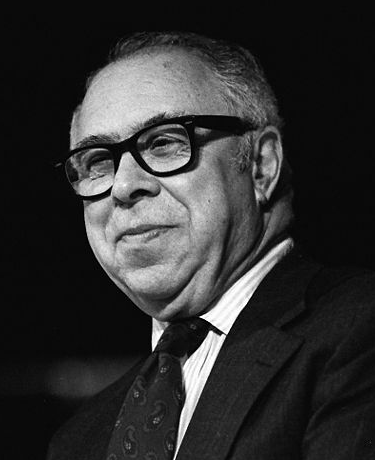
R.I.P. - Art Buchwald - Hollywood Concept Pitch Man

Photo: Wikimedia Commons - Art Buchwald, Miami Book Fair International, 1989  Date 17 November 1989(1989-11-17) MDCarchives (cropped)

But the general wisdom has been that if you were going to make a pitch and had to rely on a handshake, fly to Los Angeles because under California law, you had a better shot at getting paid and finding an implied contract, since entire industries and professions are founded on pitching ideas, even dumb ones, even recycled ones whose time has come, and that California law was somehow more friendly to creatives.

The Ninth Circuit's decision in Montz v. Pilgrim Films & Television, 2010 WL 2197421 (May 4, 2010) puts the old wisdom, such that it was, in jeopardy.


Montz's facts are as follows:  Plaintiff parapsychologist and a publicist conceive of idea for reality show featuring "paranormal investigators".   Each hour long show would feature a team going out and using science to investigate and maybe debunk reports of paranormal activity.

Plaintiffs wanted to partner and co-produce.  NOT sell.

(Ok, Mr. Ghostbuster,  I didn't say "original").

Plaintiffs pitched NBC, Pilgrim and the Sci Fi (now SyFy) Channel.  Defendants were not interested.  Shortly thereafter, Defendants launched Ghost Hunters.

Plaintiffs sued on copyright law and California law of implied contracts.  Plaintiffs lost on copyright claims. So the issue is whether there was an implied contract under California state law.  Under Desny v. Wilder, 299 P.2d 257 (Cal. 1956), to state a claim, plaintiff must:

1. prepare the work at issue;
2. disclose the work for sale;
3. do so under conditions showing that offeree voluntarily accepted disclosure knowing conditions on which it was tendered and the reasonable value of the work.

Rather than find that the complaint didn't state a cause of action under California law, or that since there was no federal question remaining there was lack of supplemental jurisdiction, the Ninth Circuit decided that the Plaintiff's implied-in-fact contract claim was preempted by the Copyright Act.

This decision is clearly incorrect.  The Ninth Circuit's discussion of copyright law is incorrect because copyright related only to the tangible expression in the works of authorship created by the Plaintiffs.  Plaintiffs clearly alleged that they tried to pitch a "concept" for a television show.

The Ninth Circuit reasoned that since the pitch was for a kind of partnership, rather than a "sale", Plaintiffs had not stated a Desny claim.

This is a very strange decision, a strange result, and it is a troubling overreaching by a federal court into traditional state contract law.  If California wishes to modify its law of implied-in-fact contracts involving ideas to embrace idea pitches involving partnerships rather than sales, it should be free to do so.  The decision that the Copyright Act preempts state law in this area means that California is POWERLESS to do so.  The preemption statute 17 USC 301 states:

§ 301. Preemption with respect to other laws2


(a) On and after January 1, 1978, all legal or equitable rights that are equivalent to any of the exclusive rights within the general scope of copyright as specified by section 106 in works of authorship that are fixed in a tangible medium of expression and come within the subject matter of copyright as specified by sections 102 and 103, whether created before or after that date and whether published or unpublished, are governed exclusively by this title. Thereafter, no person is entitled to any such right or equivalent right in any such work under the common law or statutes of any State.

Here, the Plaintiffs clearly allege an attempt to monetize an "idea" - not necessarily copyrightable subject matter, although that was part of the proffered package.

Since the lifeblood of Silicon Valley and Hollywood is the ability to buy, sell, partner, traffic in and otherwise sell and be compensated for ideas, this decision should be deeply troubling to my West Coast confreres.

So if you want to sell an idea, come back to New York, my friends, and I'll lend you a conference room and we have better subways.  Your ideas are not welcome in California.

I discuss the scope of copyright law and the fact that ideas, concepts and scenes a faire are not protectable under copyright law in Chapter 1 of Copyright Litigation Handbook and I discuss the marvelous workings of the preemption doctrine in Chapter 10:  Removal From State Court and Preemption.

For a peek at the full contents of Copyright Litigation Handbook, go here.

 Purchase Copyright Litigation Handbook from West here  

Thursday, May 20, 2010

CAD Computer Software: No Artistic Sizzle, But After Filtration - Still Copyrightable Under Feist


Do you see anything copyrightable in the image that appears above?   This is the question that was faced by the Massachusetts court in Real View LLC v. 20-20 Technologies, Inc. 683 F.Supp.2d 147.   What do you think?

This image is a classic example of the merger doctrine and the scenes a faire doctrine in the computeer software context.  Here is how the court analyzed the image above under the merger doctrine, the scenes a faire doctrine and then as a compilation.

One kitchen modeling software maker ripped of another's software.  But was it copyrightable?


Copyright conquered.  And this decision vindicates an old theory of mine that the case law of the future will look like a comic book.  Read this one, lots of helpful pictures.  

Usually computer software decisions are unreadable.  But this one is readable because THANK GOD the judge put in lots of images so we can see what is being analyzed.  Below, application of the "filtration" test in which the court filters out uncopyrightable elements:

When considered in isolation, Real View is correct to suggest that most of these elements should be filtered out. Many of the icons at issue are “standard Microsoft Windows icons” or “industry-standard” icons used routinely in CAD software. (Real View Br. 19.) It is also standard for CAD software to feature screen displays dominated by large work areas that may contain grids. See MiTek, 89 F.3d at 1557 n.20 (“The look of the ACES program is basically industry standard for computer aided-design (“CAD”) programs, with the menu bars running across the top and the right, and the large work area occupying most of the screen.”). (See also 20-20 Ex. 3 at 5 (Chief Architect).)


Further, there are very few locations on the screen that could accommodate the horizontal and vertical toolbars: the horizontal toolbar could only be placed above or below the work area, and the vertical tool bar could be placed to the right of the work area or on either the right or left side of the hierarchy of boxes. The doctrine of merger would therefore dictate that this Court filter out any claim of copyrightability based on the position of the toolbars. See Productivity Software Int'l v. Healthcare Techs., Inc., No. 93-6949, 1995 U.S. Dist. LEXIS 10381, at *15 (S.D.N.Y. July 24, 1995) (“[T]here are only two locations where a menu bar may be logically placed on a computer screen, the top and the bottom . . . . The limited alternatives available do not permit Plaintiff to claim copyright protection for its placement of the menu bar.”).
The doctrines of merger and scenes a faire also preclude a finding of copyrightability with respect to the function and location of the hierarchy of boxes in the side bar. 20-20's own exhibit indicates that the screen displays of both Chief Architect and Planit contain similar stacks of boxes on one side of the screen. Since most of the screens are filled by the work area, the stacked boxes could only be positioned to the left or right of the work area. Thus merger denies copyright protection to 20-20's decision to position the boxes to the left of the work area. Moreover, since CAD software containing a sales component typically includes a product selection box (or boxes) along with a box that illustrates the item a user wishes to place in the kitchen, these features fall within the scenes a faire doctrine.

This analysis, however, proves too much. Both the case law and the leading commentary warn against losing sight of the forest for the trees. See, e.g., Nimmer on Copyright § 13.03 (“In performing the filtering . . . the analysis should not proceed mechanically simply by isolating physical elements out of the copyrightable work.”); id. (“Although each geometric form in isolation might be subject to exclusion from the court’s calculus, the conceptual interrelationship of shapes should remain present for the court’s analysis even after filtering out particular concrete objects, thus subjecting the defendant to potential liability should copying of those elements be proven.”); Arnstein v. Porter, 154 F.2d 464, 477 (2d Cir. 1946) (Clark, J., dissenting) (“It is as though we found Shakespeare a plagiarist on the basis of his use of articles, pronouns, prepositions, and adjectives also used by others.”); Boisson v. Banian, Ltd., 273 F.3d 262, 272 (2d Cir. 2001) (“[A] court is not to dissect the works at issue into separate components and compare only the copyrightable elements. To do so would . .. result in almost nothing being copyrightable because original works broken down into their composite parts would usually be little more than basic unprotectible elements like letters, colors and symbols.”) (internal citation omitted). The fact that each individual icon or feature on a screen cannot necessarily be copyrighted does not deny the screen itself, as the sum of those icons or features, copyright protection. Thus the critical question becomes whether the screen display and graphical user interface are protectable as a compilation: whether the selection and arrangement of the icons, the layouts of the windows on the screen, and the dialog boxes which comprise the graphical user interface are themselves protectable as expression.


In most cases, while the constituent elements of the user interface or screen display are not independently protectable, the user interface is protectable as a compilation with respect to its “unique selection and arrangement of all these features.” See Apple Computer Inc. v. Microsoft Corporation, 35 F.3d 1435, 1446 (9th Cir. 1994); Mitek Holdings, Inc. v. Arce Eng’g Co. Inc., 89 F.3d 1548, 1554 (11th Cir. 1996) (holding that “a user interface, here a screen display (itself an audiovisual work),may be entitled to copyright protection as a compilation.”); Engineering Dynamics, Inc. v. Structural Software, Inc., 26 F.3d 1135, 1346 (holding screen displays and input-output formats copyrightable and noting that their selection and arrangement contained enough originality under Feist to warrant protection). Cf. Feist Publ'ns, Inc. v. Rural Tel. Serv. Co., 499 U.S. 340, 348 (1991) (“[A] directory that contains absolutely no protectible written expression, only facts, meets the constitutional minimum for copyright protection if it features an original selection or arrangement.”). For example, one court protected the screen display, including the coordination,selection, and arrangement of fields, as a compilation even though the individual elements within the screen were unprotectable as unoriginal. See O.P. Solutions, Inc. v. Intellectual Prop. Network, Ltd., No. 96-7952, 1999 WL 47191, at *11-12, 20 (S.D.N.Y. Feb. 2, 1999).

The inquiry must then turn to whether the screen display and user interface of 20-20 Design exhibit sufficient originality to be protectable under Feist. They do. The creators of 20-20 made numerous creative and expressive choices in developing the screen display and user interface. 20-20 selected certain functions to be represented by icons; certain icons to be represented in certain toolbars; certain toolbars to occupy certain spaces; and certain features to be housed in certain boxes stacked in a particular order. These may not have been decisions with much artistic sizzle, but they contain sufficient originality so that the screen display is copyrightable as a compilation.

Real View v 20-20 Techologies: Scenes a Faire and Merger Doctrines Made Easy!


Saturday, March 6, 2010

Sculpture, History, Copyright Infringement and Fair Use of the Korean War Veteran's Memorial


In Gaylord v. United States, February 25, 2010, the U.S. Court of Appeals for the Federal Circuit upheld a sculptor's right to sue the U.S. government for copyright infringement for unauthorized use of the sculptures on a postage stamp.  The Federal Circuit reversed a decision of the Federal Court of Claims that found that the U.S. government use of Gaylord's sculptures that were made for the Korean War Veteran's Memorial were "fair use".   You can visit the decision here and I recommend that you do so even if just to view the images appearing in the court's opinion.   The Court inserted the images in the body of the text of the opinion in color.  Despite the low image quality, inclusion of the images really gives the reader an opportunity to compare the images and really see what the court is talking about, which is a terrific development in technology and an outgrowth of federal courts going digital.  It is annoying to read a 20-page decision comparing images that one can't see, and we can hope that those days will soon be past.

The Gaylord case involves the United States licensing a photograph of a sculpture to use the photograph on a postage stamp.   Although the photograph was properly registered as a derivative work of Gaylord's sculpture, the U.S.P.S. neglected to license the right to use the underlying sculpture itself.

So the photographer got paid $1,500 for the photograph of the Memorial (snowy scene, great camera angle).

The Federal Circuit conducted a fair use analysis that I found problematic, and concluded that the U.S. government's use of the underlying sculptural work was not fair.

While I support a sculptor's right to commercialize his images, stopping the U.S.P.S. from issuing a stamp featuring the Korean War Veteran's Memorial without paying the sculptor again - or each time - gives the sculptor a monopoly on a work that he has made an icon of a tragic historical moment at taxpayer expense. U.S. government works of this type should be in the public domain, and the government contracting process should be fixed to ensure that taxpayers don't get soaked every time the government wishes to publish or sell images of a property like a monument symbolizing the war dead.  The sculptor dotted his copyright ps and qs, but as a matter of public policy, any of us should be able to go to any public park, take photographs and sell images of what we see, at least permanent installations.   I would thin the copyright out further to subtract all non-copyrightable elements:  government-issue ponchos, helmets, etc., apply the scenes-a-fair doctrine (there are only so many ways to depict the Korean War Veteran's Memorial).

It was not smart to commission a monument that is not a work-for-hire, or at least that permitted the government a non-exclusive license.  But the Federal Circuit didn't get the "purpose" of the work right.  If a Korean Vet's group wanted to print t-shirts with an image of the Memorial for their friends, loved ones, fundraising purposes, etc., I'd say those are all fair uses, too.  The image is of the Memorial, not the sculptures.

I have a problem, too, with giving an AP photographer a monopoly over a Presidential candidate's image -- it is too uncomfortably close to handing out a monopoly on historical facts.


Saturday, April 18, 2009

Puerto Rican Frog Doll Knock-Offs: Interlocutory Appeal of Preliminary Injunction

In Coquico, Inc. v. Rodriguez-Miranda, 2009 WL 903954 (1st Cir. April 6, 2009) , the First Circuit Court of Appeals tackled in a copyright infringement action the important issue of whether a preliminary injunction stopping the distribution of stuffed plush dolls depicting the coqui comun - a common brown frog in Puerto Rico - should be upheld.   [A coqui is a frog (anuran) - this is not to be confused with the Puerto-Rican coquito, my favorite Christmas cocktail made from fresh coconuts].

When attorneys are asked to discuss the difference between the federal and state forums in New York, the availability of interlocutory appeals is usually cited as a difference.  An "interlocutory" appeal is one brought prior to the conclusion of the litigation (final judgment).  In litigation practice in the courts of New York State, many of the trial court's interlocutory rulings may be appealed to the Appellate Division.   In federal practice, appeals ordinarily lie only from final judgments.  28 U.S.C. 1291. That means if a U.S. District Court judge makes a series of adverse rulings, one may be forced to try an entire case before appealing any particular adverse ruling.

But certain interlocutory appeals are permitted.  For example, Rule 23(f) of the Federal Rules of Civil Procedure permits federal courts of appeals to consider interlocutory orders granting or denying class action certifications.   28 U.S.C. 1292(a)(1) authorizes interlocutory appeals from grants, continuances, modifications, refusals or dissolving injunctions, or refusals to dissolve or modify injunctions.

In Coquico, the First Circuit reviewed the decision from the District Court of Puerto Rico granting a preliminary injunction against a producer of stuffed frogs that produced coqui comun frogs substantially similar to those of Coquico's copyrighted frogs.   The defendant argued that since the coqui comun is found in nature, the only "original" elements were a brass ring, a Puerto-Rican flag on the coqui's underbelly, and a hang tag.   The defendant relied on the merger and scenes-a-fair doctrines.

The First Circuit rejected the defendant's arguments.  It found that the following element were protected:  1. distinctive stitching pattern; 2. idiosyncratic color combination; 3. pose; 4. placement of Puerto Rican flag on underbelly; 5. dimensions (combined with other elements).

The court was persuaded by the plethora of plush frogs produced by plaintiff.   The poor defendant did not even get its frog nature photos into evidence to support its claims that its coqui comun was just art imitating nature.