In Barclay's Capital Inc. v. TheFlyontheWall.com, (10-1372-CV June 20, 2011), the Second Circuit found that publishing brief factual summaries of investment recommendations was not the basis for a misappropriation claim under New York law.
The defendant had already been enjoined from republishing investment reports in their entirety, this issue was not part of the appeal. The defendant continued, however, to publish very brief factual summaries of the recommendations in the investment reports. The district court's injunction blocked republication of this information for a period ranging from 30 minutes to several hours. The investment banks claimed that the information was valuable only for the morning trading and that its proprietary nature incentivated their respective clients to trade through the firm issuing the report.
Google and Twitter appeared as amici and asked the Second Circuit to repudiate the "hot news" misappropriation tort in its entirety. The Second Circuit declined to do so expressly, but reached a similar result by applying the preemption doctrine.
We conclude that in this case, a Firm's ability to make news -- by issuing a Recommendation that is likely to affect the market price of a security -- does not give rise to a right for it to control who breaks that news and how. We therefore reverse the judgment of the district court to that extent and remand with instructions to dismiss the Firms' misappropriation claim.
The case is a very important one for the future of the internet and such services as Google and Twitter. It also has strong philosophical implications with a section on the "moral dimensions" of the question replete with footnotes about the bible's competing views on reaping where one has not sown, and on the other hand, being forbidden to reap even where one has sown (see P 43 and FN 27 in the embedded opinion below).
Barclays v wall 10-1372_both
http://www.dunnington.com/rdowd_bio.html
Purchase Copyright Litigation Handbook 2010 by Raymond J. Dowd from West here
Showing posts with label preemption. Show all posts
Showing posts with label preemption. Show all posts
Tuesday, June 21, 2011

Thursday, May 5, 2011
Ninth Circuit Reverses Panel in Landmark Hollywood Theft of Ideas Case
If you submit a script to a Hollywood producer who doesn't buy it, but uses the concept, do you have a claim?
On May 4, 2010, a panel of the Ninth Circuit Court of Appeals killed Hollywood by holding that implied contracts for the sale of ideas that were previously protected under California state law (pitch meetings for films) were preempted by the Copyright Act. My post here.
The Ninth Circuit granted rehearing en banc (before every judge on the court). My post linking to the video of the hearing en banc here.
Yesterday, in Montz v. Pilgrim (9th Cir. May 4, 2011) one year after the original Ninth Circuit three-year panel killed the Hollywood pitch claim, the full Ninth Circuit reversed the panel and held that implied contracts for the sale of ideas under California state law are not preempted by the Copyright Act. Decision below, with two dissents, required reading.
If you care about this area of law, watch the video of oral argument before the Ninth Circuit, it is excellent.
If you want to learn about how Hollywood really works, read one of the great American novels: What Makes Sammy Run? by Budd Schulberg. They say that the novel is so true to life that Hollywood will never make the film. It of course involves theft of ideas, exploitation of writers, unbridled ambition and chicanery.
Montz v Pilgrim Films
http://www.dunnington.com/rdowd_bio.html
Purchase Copyright Litigation Handbook 2010 by Raymond J. Dowd from West here
On May 4, 2010, a panel of the Ninth Circuit Court of Appeals killed Hollywood by holding that implied contracts for the sale of ideas that were previously protected under California state law (pitch meetings for films) were preempted by the Copyright Act. My post here.
The Ninth Circuit granted rehearing en banc (before every judge on the court). My post linking to the video of the hearing en banc here.
Yesterday, in Montz v. Pilgrim (9th Cir. May 4, 2011) one year after the original Ninth Circuit three-year panel killed the Hollywood pitch claim, the full Ninth Circuit reversed the panel and held that implied contracts for the sale of ideas under California state law are not preempted by the Copyright Act. Decision below, with two dissents, required reading.
If you care about this area of law, watch the video of oral argument before the Ninth Circuit, it is excellent.
If you want to learn about how Hollywood really works, read one of the great American novels: What Makes Sammy Run? by Budd Schulberg. They say that the novel is so true to life that Hollywood will never make the film. It of course involves theft of ideas, exploitation of writers, unbridled ambition and chicanery.
Montz v Pilgrim Films
http://www.dunnington.com/rdowd_bio.html
Purchase Copyright Litigation Handbook 2010 by Raymond J. Dowd from West here
Monday, April 18, 2011
Trade Secrets and Copyright Infringement

In ATPAC Inc. v. Aptitude Solutions, Inc., (EDCA April 12, 2011), the court considered the issue of whether computer source code that had been registered with the copyright office could be considered a trade secret. Plaintiff ATPAC creates software and imaging solutions for county clerks. Under Section 301 of the Copyright Act, any state law claims that are "equivalent" to copyright are preempted by federal law.
Here is the operative language of the Copyright Act:
§ 301. Preemption with respect to other laws
(a) On and after January 1, 1978, all legal or equitable rights that are equivalent to any of the exclusive rights within the general scope of copyright as specified by section 106 in works of authorship that are fixed in a tangible medium of expression and come within the subject matter of copyright as specified by sections 102 and 103, whether created before or after that date and whether published or unpublished, are governed exclusively by this title. Thereafter, no person is entitled to any such right or equivalent right in any such work under the common law or statutes of any State.
(b) Nothing in this title annuls or limits any rights or remedies under the common law or statutes of any State with respect to —
(1) subject matter that does not come within the subject matter of copyright as specified by sections 102 and 103, including works of authorship not fixed in any tangible medium of expression; or
(2) any cause of action arising from undertakings commenced before January 1, 1978;
(3) activities violating legal or equitable rights that are not equivalent to any of the exclusive rights within the general scope of copyright as specified by section 106;
17 USC 301.
Under the preemption doctrine, if a claim brought under state law is brought that is "equivalent" to a right or remedy under the Copyright Act, it fails. Thus court look at state law claims and analyze them to see whether the claim adds an "extra element". If so, it may survive a preemption challenge.
In ATPAC, the plaintiff had registered its source code with the copyright office in such a manner as to keep it confidential. This is a special procedure designed to preserve computer code as a potential trade secret.
On a summary judgment motion, the district court permitted the "misappropriation of trade secrets" claim to survive because the "extra element" of the plaintiff preserving the secrecy of the trade secrets is qualitatively different from mere copyright infringement and its application would not conflict with copyright law.
In Chapter 10 of Copyright Litigation Handbook, Removal from State Court and Preemption, I cover the preemption doctrine and how it can be used to remove proceedings from state to federal court.
More on the ATPAC suit here and here.
More on trade secrets here.
http://www.dunnington.com/rdowd_bio.html
Purchase Copyright Litigation Handbook 2010 by Raymond J. Dowd from West here
Wednesday, March 9, 2011
9th Circuit: Contract Battles Copyright in World of Warcraft's Killer 'Bots

World of Warcraft: Contract Battles Copyright Over Killer 'Bots
In copyright cases it is often difficult to tell where copyright law ends and where contract law begins. This has a significant effect on how a case will be litigated and pleaded, it will also have an effect on how copyrighted works may and may not be used. Using contracts to extend the control of a copyright owner over the creativity and commercial freedom of users of the copyrightable works raises First Amendment and antitrust concerns, on the one hand. On the other, following the US Supreme Court’s decision in Feist which rejected the “sweat of the brow” doctrine and which deprived (in that case owners of telephone directories) databases lacking in originality of copyright protection if the databases lacked originality in selection and arrangements. By shrinking the traditional contours of copyright law, the Supreme Court left a greater task to contract law in protecting the rights of database owners or software owners.Thus, copyright law can tell us that material is in the public domain and that we are free to use it. However, if you enter a contract permitting you access to a private database comprised of public domain materials, how many restrictions can be placed on a user? End User License Agreements (EULAs) or Terms of Use (TOU) are the agreements that most of us enter into daily by clicking “I accept”. Although almost no one reads or understands these agreements, courts engage in the legal fiction that we have all entered into contracts that are governed by these agreements. There was a rumor that an early Microsoft WORD EULA asserted Microsoft’s copyright in any document created on Microsoft WORD.
In these swampy precincts where copyright and contract intersect MDY Industries LLC v. Blizzard Entertainment Inc., 629 F.3d 928 (9th Cir. Dec. 14, 2010) emerges. This action was commenced by the plaintiff seeking a declaratory judgment that its software did not infringe Blizzard’s copyright. Blizzard creates and operates a popular multiplayer online game called “World of Warcraft”. This is a world where chubby geeks the world over assume avatars and go on sex, drug and violence-lace rampages from the safety of a home computer. The game has 70 levels and stores where you can buy goods to use in the online world and where you can sell goods that you’ve made online. The game consists of 70 levels.
One entrepreneur decided to make a software or “bot” that plays the first levels of the game, basically letting the player advance levels without having to spend the time, energy or skill to do so. Blizzard initially did not have any rules against this, but then amended the EULA and also started implementing technological anti circumvention measures to detect and eject bots. MDY responded by changing its software to avoid detection by the bots. In a year, MDY was making $3.5 million from the bot software.
The questions are: did MDY breach the contract? Did MDY violate the Copyright Act in some way?
The court found no copyright infringement. The reason is that when someone enters into a licence agreement exceeds the bounds of the agreed use, the court will look to whether the unauthorized use is a breach of a “covenant” of the contract or a “condition” of the contract. If it is a breach of a condition, a copyright infringement claim may be pursued. If the unauthorized use is a breach of a covenant, the copyright owner (licensor) is limited to a breach of contract claim. In this instance, MDY breached a covenant of the license, not a condition.
I cover the case law discussing the distinction between covenants and conditions in Copyright Litigation Handbook (West 5th Ed. 2010).
Additionally, the Copyright Act did not preempt Blizzard’s claims based on the EULA under contract law. Further, although the court did not grant summary on tortious interference with contract, holding that MDY’s improper motive had to be established at trial, that claim was permitted to proceed.
The Court did find a violation of the trafficking in anti-circumvention technology provisions of the Copyright Act. 17 U.S.C. Section 1201. Significantly, the Ninth Circuit declined to adopt the Federal Circuit’s “infringement nexus” test for finding a violation of Section 1201. Compare Chamberlain Group, Inc. v. Skylink Techs., Inc., 381 F.3d 1178 (Fed. Cir. 2004).
This opinion is big, dense, and will give you a headache but is required reading for DMCA mavens.
Purchase Copyright Litigation Handbook 2010 by Raymond J. Dowd from West here
Wednesday, February 16, 2011
9th Circuit en Banc: Preemption of Contracts Involving Ideas, and Judges on YouTube: Gnarly!
The 9th Circuit Court of Appeals has a channel on YouTube. A couple of weeks back, I met Chief Judge Alex Kozinski at a Federal Bar Association cocktail party with the greeting "Hey Judge I saw you on YouTube!" This is the type of greeting that New Yorkers think Californians will enjoy. I survived the greeting to have a good discussion. The Cassirer case, the Ninth Circuit en banc video on YouTube here.
But once again, I am drawn back to YouTube for a wonderful argument on an important case (thank you Anonymous tipster). My initial post on the 9th Circuit's original decision in Montz v. Pilgrim Films here.
I rarely take a position in copyright cases (as opposed to Nazi art looting cases) saying that a case is right or wrong. Sometimes I say that a copyright case is well-reasoned. But Montz v. Pilgrim Films, as you can see from my earlier post here, is a case where I opined that the 9th Circuit was "clearly incorrect".
Now with the argument on YouTube, you too can access the wonderful world of copyright and the cutting-edge issue of preemption. Here, the issue is whether or not a state can regulate contracts governing the buying and selling of ideas. This is big, heady, important stuff and this case is of extraordinary importance. I am happy to see the Ninth Circuit take it en banc.
In Chapter 10 of Copyright Litigation Handbook "Removal from State Court and Preemption" I cover the tension between the Copyright Act and state law.
More Copyright Litigation Blog posts on preemption here.
Purchase Copyright Litigation Handbook 2010 by Raymond J. Dowd from West here
Monday, January 17, 2011
Copyright Litigation: Defamation Claim Based on Copyright Registration Filing Survives Summary Judgment

In Morris v. Atchity, 2010 WL 4181452 (C.D. Cal. Oct. 15, 2010), the court declined to grant a summary judgment motion dismissing a claim for defamation based on statements made in a copyright registration. This is an unusual claim, but the decision does not explain what the allegedly defamatory statement made was.
Any slander of title-type of claim would appear to be preempted by the Copyright Act: anyone can file a competing claim, this is the point of the copyright registration process. I didn't dig into the docket sheet to figure out what possible statement might be defamatory.
In Morris v. Atchity, Plaintiff Margaret Morris alleged that her work "Jesus Augustus: From Imperial Cult to Christianity" was infringed by a novel based on the work "The Ashes of Christ/The August God".
Plaintiff alleged that she submitted the work to defendant and had an implied contract. The court declined summary judgment on the implied contract, finding that material questions of fact precluded a dismissal based on preemption.
Defendants argued that the works share only a similar historical theory. In denying the motion, the court found that "reasonable minds might differ as to whether there are substantial similarities between the two works with respect to the protected expression of ideas contained in Plaintiff's literary work."
Purchase Copyright Litigation Handbook 2010 by Raymond J. Dowd from West here

Monday, September 6, 2010
Copyright Law: Analysts' Opinions Copyrightable, Not "Hot News"

Above - Tipstrader.com is no longer operating
Such was plaintiff's dilemma in Agora Financial LLC v. Samler, ---- F. Supp.2d ---- 2010 WL 2899036 (D. Md. June 17, 2010).
In Agora, a magistrate judge was called to report and recommend after a defendant had defaulted. The facts: investment newsletter publisher sued website that culled all of its recommendations and published them on Tipstrader.com. Claims? "Hot news misappropriation" and Section 43(a) of the Lanham Act.
A nice, lean complaint, just like they tell us to file. Right? Wrong.
In an interesting decision that explained the "hot news" misappropriation claim, the court ruled that the defendants had not violated the "hot news" exception because the analyst recommendations were opinions, not facts, and thus were protectable under copyright law.
"Hot news" misappropriation:
(i) the plaintiff generates or gathers information at some cost or expense ...; (ii) the value of the information is highly time-sensitive ...; (iii) the defendant's use of the information constitutes free-riding on the plaintiff's costly efforts to generate or collect it ...; (iv) the defendant's use of the information is in direct competition with a product or service offered by the plaintiff ...; and (v) the ability of other parties to free-ride on the efforts of the plaintiff or others would so reduce the incentive to produce the product or service that its existence or quality would be substantially threatened....
Since copyright law preempts equivalent state law claims, the "hot news" misappropriation claim was not available. The Lanham Act claim failed as well.
The court, discussing the U.S. Supreme Court's Feist opinion, which rejected the "sweat of the brow" doctrine and required a modicum of originality to qualify for copyright, found the analyst's opinions to satisfiy the originality test and thus be covered by copyright. So the plaintiff lost the application for a default, but was granted the gift of learning that its activities are protected by copyright law.
In Copyright Litigation Handbook, Chapter 7 "Drafting the Infringement Complaint" gives some thoughts on framing copyright pleadings. Chapter 10: "Removal from State Court and Preemption" reviews problems raised by the preemption doctrine and gives guidance in navigating the differences between state and federal claims in the copyright context.
The 2010 Copyright Litigation Handbook just shipped, so now is a good time to get your copy. This year I greatly expanded my treatment of applications for default judgments, which seems to be a growing area of copyright law.
Westlaw users can access Copyright Litigation Handbook through the COPYLITIG database.
More on preemption here.
More on hot news here.
More on default judgments here.
More on Feist here.
Purchase the 2010 Copyright Litigation Handbook from West here
Monday, June 28, 2010
Copyright and The Story of the Long-Armed Buddhist Penguin

If a Penguin gains enlightenment, is he an all-present universal Buddha?
In the first reign of the Lord Obama the Hopeful, Grand Master Dan-Nay set out on the path to bring the power and light of the Master Penguin to the far reaches of the Lord's Empire and even beyond to the barbarian and unenlightened hordes populating the universe.
I wrote on Penguin Group v. American Buddha, 09-1739-cv (June 15, 2010), a case involving New York's long-arm statute and addressing the issue of whether a copyright holder located in New York can sue in Manhattan for an infringement that takes place anywhere in the universe here.
Andy Berger, sympathetic to Penguin, digs in further and has posted Penguin's briefs for easy reading here.
I would appreciate anyone bringing thoughts, articles or posts on this topic to my attention. This is an important and difficult issue involving due process, the Constitution, the essence of a copyright, and the extent to which New York courts will subject the world to its jurisdiction. In a rare area of federal law that completely "preempts" state law, our Second Circuit Court of Appeals has made clear that it will defer to New York State's Court of Appeals. I am curious as to what the really smart law professors will have to say and whether American Buddha will have any amici.
Purchase Copyright Litigation Handbook from West here
Sunday, June 27, 2010
SDNY: Bernie Madoff Videos and the Copyright Act's Preemption of State Law Claims
"...it is virtually impossible for violations to go undetected on Wall Street today..." Bernie Madoff, in the 2007 YouTube interview I posted below. Watching the video is really like a punch in the stomach, and I didn't even lose any money.
Another Bernie Madoff video was at issue in Stadt v. Fox News Network, 2010 WL 2540957 (S.D.N.Y. June 22, 2010)(SAS). Stadt had a 2003 copyrighted video of Madoff on vacation. He licensed it to Fox for a period to be labelled as a "Fox Business Exclusive" for $10K. After the license ran out, he caught Fox still using it and licensed it for an additional $50K. After that license ran out, he caught Fox using it again. After he contacted them, they stopped using it, but wouldn't tell him how many times it was downloaded after the license expired or give any information on how much money they'd made from it. He sued for copyright infringement and the following seven claims.
1. breach of contract;
2. conversion;
3. breach of fiduciary duty and an accounting;
4. deceptive trade practices in violation of section 349 of New York General Business Law
6. unjust enrichment; and
7. unfair competition
Fox moved to dismiss pursuant to Rule 12(b)(6) of the Federal Rules of Civil Procedure, raising the issue of preemption. "Preemption" comes about because the Copyright Act says basically that the Copyright Act exclusively governs copyrights in 17 USC 301. So if the Copyright Act governs copyrights, how can state law govern copyrights?
State law comes up when someone enters into a contract for the sale (assignment) or rent (license) of copyrightable subject matter. So a person's act may be both a copyright infringement AND a breach of contract. Sorting out which state law claims are "equivalent" to copyright infringement claims sounds easy, but in fact requires a careful, fact-based analysis.
Practice Tip: Where a plaintiff has thrown in the kitchen sink in a copyright pleading and realizes that certain state law claims may not be worth fighting for, prior to any answer or summary judgement motion being filed, the plaintiff may simply file a notice of dismissal without prejudice under Rule 41(a) of the Federal Rules of Civil Procedure. This is a good idea in copyright litigations because at the end of the day, if one forces a court to resolve weak claims against you, it may affect/reduce an ultimate assessment of attorneys fees. An alternative, if you see that your Complaint failed to plead necessary elements (your adversary's motion to dismiss is likely to point this out to you, is to cross-move for leave to amend pursuant to Rule 15 of the Federal Rules of Civil Procedure with a Proposed Amended Complaint attached to your papers.
In Stadt v. Fox Network, the district court, Judge Scheindlin considered whether each claim was preempted by copyright or whether Stadt had failed to state a claim:
The Copyright Act expressly provides for preemption of state law.FN29 In Briarpatch Ltd. v. Phoenix Pictures, Inc., the Second Circuit held;
FN29. See 17 U.S.C. § 301(a).
The Copyright Act exclusively governs a claim when: (1) the particular work to which the claim is being applied falls within the type of works protected by the Copyright Act ..., and (2) the claim seeks to vindicate legal or equitable rights that are equivalent to one of the bundle of exclusive rights already protected by copyright law.... The first prong of this test is called the “subject matter requirement,” and the second prong is called the “general scope requirement.” ... The general scope requirement is satisfied only when the state-created right may be abridged by an act that would, by itself, infringe one of the exclusive rights provided by federal copyright law.... [T]he state law claim must not include any extra elements that make it qualitatively different from a copyright infringement claim.... To determine whether a claim is qualitatively different, we look at “what [the] plaintiff seeks to protect, the theories in which the matter is thought to be protected and the rights sought to be enforced.” FN30
FN30. Briarpatch Ltd. v. Pheonix Pictures, Inc., 373 F.3d 296, 305-06 (2d Cir.2004) (emphasis added) (citations omitted).
The court takes a “restrictive view” of what qualifies as an extra element sufficient to shield the claim from copyright preemption.FN31 Nevertheless, “a state law claim is qualitatively different if it requires such elements as breach of fiduciary duty, or possession and control of chattels.” FN32
FN31. Id. at 306. FN32. Id.
Although the court looked only to 17 USC 301(a), let me quote both 301(a) and (b) for you, with screaming loud bold to make reading the statute easier, full statute here:
§ 301. Preemption with respect to other laws:
(a) On and after January 1, 1978, all legal or equitable rights that are equivalent to any of the exclusive rights within the general scope of copyright as specified by section 106 in works of authorship that are fixed in a tangible medium of expression and come within the subject matter of copyright as specified by sections 102 and 103, whether created before or after that date and whether published or unpublished, are governed exclusively by this title. Thereafter, no person is entitled to any such right or equivalent right in any such work under the common law or statutes of any State.
(b) Nothing in this title annuls or limits any rights or remedies under the common law or statutes of any State with respect to —
(1) subject matter that does not come within the subject matter of copyright as specified by sections 102 and 103, including works of authorship not fixed in any tangible medium of expression; or
(2) any cause of action arising from undertakings commenced before January 1, 1978;
(3) activities violating legal or equitable rights that are not equivalent to any of the exclusive rights within the general scope of copyright as specified by section 106; or
(4) State and local landmarks, historic preservation, zoning, or building codes, relating to architectural works protected under section 102(a)(8).
The Judge's conclusion:
IV. CONCLUSION
For the reasons set forth above, Fox's motion to dismiss the breach of contract claim is denied. Fox's motion to dismiss the breach of fiduciary duty and an accounting, section 349, unjust enrichment, and unfair competition claims is granted. These claims are dismissed with prejudice. Fox's motion to dismiss the conversion claim is granted, and this claim is dismissed with leave to replead.
Stadt v. Fox News Network LLC, 2010 WL 2540957, 7 (S.D.N.Y. 2010).
Conversion under New York State law requires a demand for the return of a chattel, and the holder's refusal to return the chattel. The court found that plaintiff's hadn't alleged a demand or refusal, so was granted leave to replead. In copyright cases a conversion claim usually involves something like masters or high quality originals from which copies can be made that the defendant failed or refused to give back.
Chapter 10 of my Copyright Litigation Handbook is titled "Removal from State Court and Preemption". In it I discuss the preemption doctrine and how it applies in litigation involving copyrighted works.
Will plaintiff really demand the return of the Bernie Madoff video? Stay tuned.
Purchase Copyright Litigation Handbook from West here
Another Bernie Madoff video was at issue in Stadt v. Fox News Network, 2010 WL 2540957 (S.D.N.Y. June 22, 2010)(SAS). Stadt had a 2003 copyrighted video of Madoff on vacation. He licensed it to Fox for a period to be labelled as a "Fox Business Exclusive" for $10K. After the license ran out, he caught Fox still using it and licensed it for an additional $50K. After that license ran out, he caught Fox using it again. After he contacted them, they stopped using it, but wouldn't tell him how many times it was downloaded after the license expired or give any information on how much money they'd made from it. He sued for copyright infringement and the following seven claims.
1. breach of contract;
2. conversion;
3. breach of fiduciary duty and an accounting;
4. deceptive trade practices in violation of section 349 of New York General Business Law
6. unjust enrichment; and
7. unfair competition
Fox moved to dismiss pursuant to Rule 12(b)(6) of the Federal Rules of Civil Procedure, raising the issue of preemption. "Preemption" comes about because the Copyright Act says basically that the Copyright Act exclusively governs copyrights in 17 USC 301. So if the Copyright Act governs copyrights, how can state law govern copyrights?
State law comes up when someone enters into a contract for the sale (assignment) or rent (license) of copyrightable subject matter. So a person's act may be both a copyright infringement AND a breach of contract. Sorting out which state law claims are "equivalent" to copyright infringement claims sounds easy, but in fact requires a careful, fact-based analysis.
Practice Tip: Where a plaintiff has thrown in the kitchen sink in a copyright pleading and realizes that certain state law claims may not be worth fighting for, prior to any answer or summary judgement motion being filed, the plaintiff may simply file a notice of dismissal without prejudice under Rule 41(a) of the Federal Rules of Civil Procedure. This is a good idea in copyright litigations because at the end of the day, if one forces a court to resolve weak claims against you, it may affect/reduce an ultimate assessment of attorneys fees. An alternative, if you see that your Complaint failed to plead necessary elements (your adversary's motion to dismiss is likely to point this out to you, is to cross-move for leave to amend pursuant to Rule 15 of the Federal Rules of Civil Procedure with a Proposed Amended Complaint attached to your papers.
In Stadt v. Fox Network, the district court, Judge Scheindlin considered whether each claim was preempted by copyright or whether Stadt had failed to state a claim:
The Copyright Act expressly provides for preemption of state law.FN29 In Briarpatch Ltd. v. Phoenix Pictures, Inc., the Second Circuit held;
FN29. See 17 U.S.C. § 301(a).
The Copyright Act exclusively governs a claim when: (1) the particular work to which the claim is being applied falls within the type of works protected by the Copyright Act ..., and (2) the claim seeks to vindicate legal or equitable rights that are equivalent to one of the bundle of exclusive rights already protected by copyright law.... The first prong of this test is called the “subject matter requirement,” and the second prong is called the “general scope requirement.” ... The general scope requirement is satisfied only when the state-created right may be abridged by an act that would, by itself, infringe one of the exclusive rights provided by federal copyright law.... [T]he state law claim must not include any extra elements that make it qualitatively different from a copyright infringement claim.... To determine whether a claim is qualitatively different, we look at “what [the] plaintiff seeks to protect, the theories in which the matter is thought to be protected and the rights sought to be enforced.” FN30
FN30. Briarpatch Ltd. v. Pheonix Pictures, Inc., 373 F.3d 296, 305-06 (2d Cir.2004) (emphasis added) (citations omitted).
The court takes a “restrictive view” of what qualifies as an extra element sufficient to shield the claim from copyright preemption.FN31 Nevertheless, “a state law claim is qualitatively different if it requires such elements as breach of fiduciary duty, or possession and control of chattels.” FN32
FN31. Id. at 306. FN32. Id.
Although the court looked only to 17 USC 301(a), let me quote both 301(a) and (b) for you, with screaming loud bold to make reading the statute easier, full statute here:
§ 301. Preemption with respect to other laws:
(a) On and after January 1, 1978, all legal or equitable rights that are equivalent to any of the exclusive rights within the general scope of copyright as specified by section 106 in works of authorship that are fixed in a tangible medium of expression and come within the subject matter of copyright as specified by sections 102 and 103, whether created before or after that date and whether published or unpublished, are governed exclusively by this title. Thereafter, no person is entitled to any such right or equivalent right in any such work under the common law or statutes of any State.
(b) Nothing in this title annuls or limits any rights or remedies under the common law or statutes of any State with respect to —
(1) subject matter that does not come within the subject matter of copyright as specified by sections 102 and 103, including works of authorship not fixed in any tangible medium of expression; or
(2) any cause of action arising from undertakings commenced before January 1, 1978;
(3) activities violating legal or equitable rights that are not equivalent to any of the exclusive rights within the general scope of copyright as specified by section 106; or
(4) State and local landmarks, historic preservation, zoning, or building codes, relating to architectural works protected under section 102(a)(8).
The Judge's conclusion:
IV. CONCLUSION
For the reasons set forth above, Fox's motion to dismiss the breach of contract claim is denied. Fox's motion to dismiss the breach of fiduciary duty and an accounting, section 349, unjust enrichment, and unfair competition claims is granted. These claims are dismissed with prejudice. Fox's motion to dismiss the conversion claim is granted, and this claim is dismissed with leave to replead.
Stadt v. Fox News Network LLC, 2010 WL 2540957, 7 (S.D.N.Y. 2010).
Conversion under New York State law requires a demand for the return of a chattel, and the holder's refusal to return the chattel. The court found that plaintiff's hadn't alleged a demand or refusal, so was granted leave to replead. In copyright cases a conversion claim usually involves something like masters or high quality originals from which copies can be made that the defendant failed or refused to give back.
Chapter 10 of my Copyright Litigation Handbook is titled "Removal from State Court and Preemption". In it I discuss the preemption doctrine and how it applies in litigation involving copyrighted works.
Will plaintiff really demand the return of the Bernie Madoff video? Stay tuned.
Purchase Copyright Litigation Handbook from West here
Saturday, June 5, 2010
9th Cir: Hollywood Creative Pitches Ghostbusted By Preemption Under Copyright Act
If you "pitch" a "concept" for a film or television show to a Hollywood producer, can you protect yourself? The general question of whether you can get paid for pitching an idea is impossible to answer in the abstract, some of the factors are: who are you, what is the industry, how concrete is the "concept", is the recipient of the pitch already secretly working on the same thing. A general answer is that if you can get the recipient of the pitch to sign a non-disclosure/non-compete OR if you can create a pre- and post-meeting paper trail, then MAYBE, depending on a wide range of factors, such as who you are, is the idea or an aspect of it original, and the circumstances/industry in which the pitch occurred. Litigation over these matters is notoriously tricky and if you wait too long, your leverage and chances of success drop dramatically.

Photo: Wikimedia Commons - Art Buchwald, Miami Book Fair International, 1989 Date 17 November 1989(1989-11-17) MDCarchives (cropped)
But the general wisdom has been that if you were going to make a pitch and had to rely on a handshake, fly to Los Angeles because under California law, you had a better shot at getting paid and finding an implied contract, since entire industries and professions are founded on pitching ideas, even dumb ones, even recycled ones whose time has come, and that California law was somehow more friendly to creatives.
The Ninth Circuit's decision in Montz v. Pilgrim Films & Television, 2010 WL 2197421 (May 4, 2010) puts the old wisdom, such that it was, in jeopardy.

Montz's facts are as follows: Plaintiff parapsychologist and a publicist conceive of idea for reality show featuring "paranormal investigators". Each hour long show would feature a team going out and using science to investigate and maybe debunk reports of paranormal activity.
Plaintiffs wanted to partner and co-produce. NOT sell.
(Ok, Mr. Ghostbuster, I didn't say "original").
Plaintiffs pitched NBC, Pilgrim and the Sci Fi (now SyFy) Channel. Defendants were not interested. Shortly thereafter, Defendants launched Ghost Hunters.
Plaintiffs sued on copyright law and California law of implied contracts. Plaintiffs lost on copyright claims. So the issue is whether there was an implied contract under California state law. Under Desny v. Wilder, 299 P.2d 257 (Cal. 1956), to state a claim, plaintiff must:
1. prepare the work at issue;
2. disclose the work for sale;
3. do so under conditions showing that offeree voluntarily accepted disclosure knowing conditions on which it was tendered and the reasonable value of the work.
Rather than find that the complaint didn't state a cause of action under California law, or that since there was no federal question remaining there was lack of supplemental jurisdiction, the Ninth Circuit decided that the Plaintiff's implied-in-fact contract claim was preempted by the Copyright Act.
This decision is clearly incorrect. The Ninth Circuit's discussion of copyright law is incorrect because copyright related only to the tangible expression in the works of authorship created by the Plaintiffs. Plaintiffs clearly alleged that they tried to pitch a "concept" for a television show.
The Ninth Circuit reasoned that since the pitch was for a kind of partnership, rather than a "sale", Plaintiffs had not stated a Desny claim.
This is a very strange decision, a strange result, and it is a troubling overreaching by a federal court into traditional state contract law. If California wishes to modify its law of implied-in-fact contracts involving ideas to embrace idea pitches involving partnerships rather than sales, it should be free to do so. The decision that the Copyright Act preempts state law in this area means that California is POWERLESS to do so. The preemption statute 17 USC 301 states:
§ 301. Preemption with respect to other laws2
(a) On and after January 1, 1978, all legal or equitable rights that are equivalent to any of the exclusive rights within the general scope of copyright as specified by section 106 in works of authorship that are fixed in a tangible medium of expression and come within the subject matter of copyright as specified by sections 102 and 103, whether created before or after that date and whether published or unpublished, are governed exclusively by this title. Thereafter, no person is entitled to any such right or equivalent right in any such work under the common law or statutes of any State.
Here, the Plaintiffs clearly allege an attempt to monetize an "idea" - not necessarily copyrightable subject matter, although that was part of the proffered package.
Since the lifeblood of Silicon Valley and Hollywood is the ability to buy, sell, partner, traffic in and otherwise sell and be compensated for ideas, this decision should be deeply troubling to my West Coast confreres.
So if you want to sell an idea, come back to New York, my friends, and I'll lend you a conference room and we have better subways. Your ideas are not welcome in California.
I discuss the scope of copyright law and the fact that ideas, concepts and scenes a faire are not protectable under copyright law in Chapter 1 of Copyright Litigation Handbook and I discuss the marvelous workings of the preemption doctrine in Chapter 10: Removal From State Court and Preemption.
For a peek at the full contents of Copyright Litigation Handbook, go here.
Purchase Copyright Litigation Handbook from West here
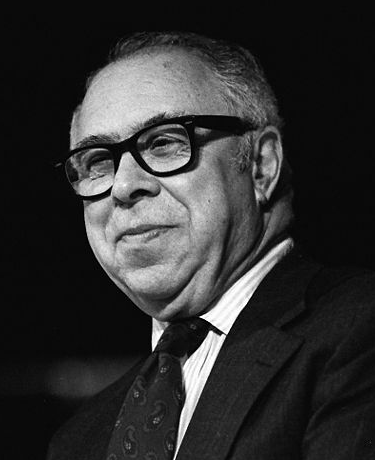
R.I.P. - Art Buchwald - Hollywood Concept Pitch Man
Photo: Wikimedia Commons - Art Buchwald, Miami Book Fair International, 1989 Date 17 November 1989(1989-11-17) MDCarchives (cropped)
But the general wisdom has been that if you were going to make a pitch and had to rely on a handshake, fly to Los Angeles because under California law, you had a better shot at getting paid and finding an implied contract, since entire industries and professions are founded on pitching ideas, even dumb ones, even recycled ones whose time has come, and that California law was somehow more friendly to creatives.
The Ninth Circuit's decision in Montz v. Pilgrim Films & Television, 2010 WL 2197421 (May 4, 2010) puts the old wisdom, such that it was, in jeopardy.

Montz's facts are as follows: Plaintiff parapsychologist and a publicist conceive of idea for reality show featuring "paranormal investigators". Each hour long show would feature a team going out and using science to investigate and maybe debunk reports of paranormal activity.
Plaintiffs wanted to partner and co-produce. NOT sell.
(Ok, Mr. Ghostbuster, I didn't say "original").
Plaintiffs pitched NBC, Pilgrim and the Sci Fi (now SyFy) Channel. Defendants were not interested. Shortly thereafter, Defendants launched Ghost Hunters.
Plaintiffs sued on copyright law and California law of implied contracts. Plaintiffs lost on copyright claims. So the issue is whether there was an implied contract under California state law. Under Desny v. Wilder, 299 P.2d 257 (Cal. 1956), to state a claim, plaintiff must:
1. prepare the work at issue;
2. disclose the work for sale;
3. do so under conditions showing that offeree voluntarily accepted disclosure knowing conditions on which it was tendered and the reasonable value of the work.
Rather than find that the complaint didn't state a cause of action under California law, or that since there was no federal question remaining there was lack of supplemental jurisdiction, the Ninth Circuit decided that the Plaintiff's implied-in-fact contract claim was preempted by the Copyright Act.
This decision is clearly incorrect. The Ninth Circuit's discussion of copyright law is incorrect because copyright related only to the tangible expression in the works of authorship created by the Plaintiffs. Plaintiffs clearly alleged that they tried to pitch a "concept" for a television show.
The Ninth Circuit reasoned that since the pitch was for a kind of partnership, rather than a "sale", Plaintiffs had not stated a Desny claim.
This is a very strange decision, a strange result, and it is a troubling overreaching by a federal court into traditional state contract law. If California wishes to modify its law of implied-in-fact contracts involving ideas to embrace idea pitches involving partnerships rather than sales, it should be free to do so. The decision that the Copyright Act preempts state law in this area means that California is POWERLESS to do so. The preemption statute 17 USC 301 states:
§ 301. Preemption with respect to other laws2
(a) On and after January 1, 1978, all legal or equitable rights that are equivalent to any of the exclusive rights within the general scope of copyright as specified by section 106 in works of authorship that are fixed in a tangible medium of expression and come within the subject matter of copyright as specified by sections 102 and 103, whether created before or after that date and whether published or unpublished, are governed exclusively by this title. Thereafter, no person is entitled to any such right or equivalent right in any such work under the common law or statutes of any State.
Here, the Plaintiffs clearly allege an attempt to monetize an "idea" - not necessarily copyrightable subject matter, although that was part of the proffered package.
Since the lifeblood of Silicon Valley and Hollywood is the ability to buy, sell, partner, traffic in and otherwise sell and be compensated for ideas, this decision should be deeply troubling to my West Coast confreres.
So if you want to sell an idea, come back to New York, my friends, and I'll lend you a conference room and we have better subways. Your ideas are not welcome in California.
I discuss the scope of copyright law and the fact that ideas, concepts and scenes a faire are not protectable under copyright law in Chapter 1 of Copyright Litigation Handbook and I discuss the marvelous workings of the preemption doctrine in Chapter 10: Removal From State Court and Preemption.
For a peek at the full contents of Copyright Litigation Handbook, go here.
Purchase Copyright Litigation Handbook from West here
Monday, May 17, 2010
2d Cir: Tortious Interference and Conversion Claims Preempted By Copyright Act

Miller v. Holtzbrinck Publishers, L.L.C., 2010 WL 1932322, 1 -2 (2d Cir. May 14, 2010):
First, we consider Miller's claims against the third-party defendants. The Copyright Act preempts a state law claim when: “(1) the particular work to which the claim is being applied falls within the type of works protected by the Copyright Act under 17 U.S.C. §§ 102 and 103, and (2) the claim seeks to vindicate legal or equitable rights that are equivalent to one of the bundle of exclusive rights already protected by copyright law under 17 U.S.C. § 106.” Briarpatch Ltd., L.P. v. Phoenix Pictures, Inc., 373 F.3d 296, 305 (2d Cir.2004). State law claims may proceed only if those claims contain “extra elements that make it qualitatively different from a copyright infringement claim.” Id. In applying this standard, “we take a restrictive view of what extra elements transform an otherwise equivalent [state law] claim into one that is qualitatively different from a copyright infringement claim.” Id . at 306; accord Nat'l Basketball Ass'n v. Motorola, Inc., 105 F.3d 841, 851 (2d Cir.1997). More specifically, “[i]f unauthorized publication is the gravamen of [plaintiff's] claim, then it is clear that the right [she] seek[s] to protect is coextensive with an exclusive right already safeguarded by the [Copyright] Act” and thus that state law claim is preempted. Harper & Row Publishers, Inc. v. Nation Enterprises, 723 F.2d 195, 201 (2d Cir.1983), rev'd on other grounds, 471 U.S. 359 (1985) (holding that plaintiff's claims of tortious interference and conversion were preempted by the Copyright Act).
Applying the above framework to this case, we conclude that the Copyright Act preempts Miller's claims of tortious interference and conversion. Here, as in Harper & Row, “unauthorized publication is the gravamen of [her] claim.” Id. As the District Court stated, “[h]er case rests on her theory that [the third-party defendants] tortiously interfered with her business relations and converted her literary work by publishing the book without authorization [by her] or credit [to her].” Miller v. Holtzbrinck Publishers, L.L.C., 2008 U.S. Dist. LEXIS 92038 at *8 (S.D.N.Y. Nov. 12, 2008). For this reason, we conclude that Miller's claims against the third-party defendants are preempted by the Copyright Act.
Sunday, April 11, 2010
The Law of Avatars: Copyright Act Doesn't Preempt State Law Governing Gwen Stefani's Avatar

No Doubt Group Photo - from Nodoubt.com

Band Hero - Courtesy Wikipedia
The law governing the use of a person's image for purposes of trade or advertising is called a "right of publicity" or "right of privacy". It is a body of law governed by state, not federal law. Celebrity-obssessed states like California and New York have statutes governing this right. Other states recognize the right under common law.
No Doubt claimed that the video game Band Hero exceeded the scope of a license agreement and permitted players without authorization to show band members playing individually (rather than as a group) and to create in-game avatars by manipulating and distorting the images of the band members. So the question is: does the Copyright Act preempt state laws of publicity (use of name and likeness), breach of contract, and unfair competition? "Preemption" in this context means completely overriding the state law. Copyright is one of the rare areas of law in which the "complete preemption" doctrine applies.
Backgrouns: Actors in a film lose the publicity right
When an actor appears in a film, he or she loses the right of publicity, which is said to be "preempted" by the Copyright Act. So if an actor is stiffed on a fee for appearing in a film, there is no action for copyright infringement or any alternative theories such as "misappropriation" of the actor's image. The actor must rely on state contract law and must pursue the person who broke the contract. The logic is that the actor's performance is a "copyrightable work" that was captured by a film-maker "author".
No Doubt v. Activision Publishing, Inc., 2010 WL 1387988 (C.D. Cal. Jan. 14, 2010) discusses the situation of actors:
Notably, the actors' “performances in the film were recorded with their active participation and consent.” Id. at 1920 n. 5, 58 Cal.Rptr.2d 645. But after a pay dispute, the actors filed a claim for misappropriation of likeness and violation of their rights of publicity. Id. at 1915, 58 Cal.Rptr.2d 645.
The court held that the actors' claim fell within copyright subject matter. Id. at 1920, 58 Cal.Rptr.2d 645. The court reasoned that once the performances were put on film with the actors' consent, they were “fixed in a tangible medium of expression” that fulfilled the requirements of section 102 of the Copyright Act. Id. at 1919, 58 Cal.Rptr.2d 645. The actors' performances were part of the copyrighted material, and the actors' likenesses could not be detached from the copyrighted performances that were contained in the film. The court concluded that the actors' case “crumbles in the face of one obvious fact: their individual performances in the film ... were copyrightable .” Id. at 1919, 58 Cal.Rptr.2d 645. As a result, the court held that their claims were preempted: “A claim asserted to prevent nothing more than the reproduction, performance, distribution, or display of a dramatic performance captured on film is subsumed by copyright law and preempted.” Id. at 1924, 58 Cal.Rptr.2d 645.
No Doubt v. Activision Publishing, Inc., 2010 WL 1387988 (C.D. Cal. Jan. 14, 2010) on the other hand, dealt with the issue of whether the rock band No Doubt could sue under California law for right of publicity and unfair competition for unauthorized manipulation and distortion of their names and likenesses.
A bit of procedural history is in order. In my Copyright Litigation Handbook (West 4th Ed. 2009), Chapter 10 is titled "Removal from State Court and Preemption. Grossly simplified: if a complaint does not state a "federal question" on its face, it belongs in state court. If a "federal question" appears on the face of a complaint, it can be automatically bounced to federal court by filing a notice of removal. 28 USC 1441 If the person whose case is removed to federal court is unhappy and has grounds to do so, he or she must then make a motion to remand. I quote:
“[A]ny civil action brought in a State court of which the district courts of the United States have original jurisdiction, may be removed by the defendant or the defendants, to the district court of the United States.” 28 U.S.C. § 1441(a). If the federal courts lack subject matter over the action, the case must be remanded to the state court from which it was removed. 28 U.S.C. § 1447(c).
The Ninth Circuit has expressed a “strong presumption against removal.” Gaus v. Miles, Inc., 980 F.2d 564, 567 (9th Cir.1992). The removing party bears the burden of establishing that removal was appropriate, and “the removal statute is strictly construed against removal jurisdiction.” Nishimoto v. Federman-Bachrach & Assoc., 903 F.2d 709, 712 (9th Cir.1990). Federal courts must remand the case “if there is any doubt as to the right of removal.” Gaus v. Miles, Inc., 980 F.2d 564, 566 (9th Cir.1992) (citing Libhart v. Santa Monica Dairy Co., 592 F.2d 1062, 1064 (9th Cir.1979)).
No Doubt v. Activision Publishing, Inc., 2010 WL 1387988, 2 (C.D.Cal. 2010)
Very few people on the face of the earth are fascinated by this pingpong between federal and state courts because the decisions rarely make it to the appellate level where law professors and law reviews concentrate their energies. But as a working litigator, I find an understanding of this game of pingpong to be crucial for strategic reasons at the beginning of a litigation.
No Doubt v. Activision Publishing, Inc., was filed in state court and removed to federal court. So the question before the No Doubt court was whether or not to bounce the case back to state court ("remand").
The court decided that the contract, right of publicity and unfair competition were not preempted, and remanded the case back to a California state court.
The court's reasoning below:
We must first determine whether the “subject matter” of the state law claim falls within the subject matter of copyright as described in 17 U.S.C. §§ 102 and 103. Second, assuming that it does, we must determine whether the rights asserted under state law are equivalent to the rights contained in 17 U.S.C. § 106, which articulates the exclusive rights of copyright holders.Laws, 448 F.3d at 1137-38.
First, Plaintiffs' rights do not fall within the subject matter of copyright. In this case, in contrast to Laws and Fleet, the object that is “fixed in a tangible medium of expression” is the physical likeness and persona of the Plaintiffs. Name, likeness, and persona are not copyrightable subject matter, both under the Copyright Act and the Copyright Clause of the Constitution, because a name, likeness, or persona is not a work of “authorship” entitled to copyright protection. See Downing, 265 F.3d at 1003-05; see also Toney v. L'Oreal USA, Inc., 406 F.3d 905 (7th Cir.2005) (holding no preemption where photo model asserted right of publicity claim against photo copyright holder).
It is true that Defendant's videogame is a work of authorship entitled to copyright protection, see Midway Mfg. Co. v. Arctic Intern., Inc., 704 F.2d 1009, 1012 (7th Cir.1983), and that the musicians' songs incorporated into Defendant's videogame are copyrightable. See 17 U.S.C. §§ 102(a)(2), (7) (listing “musical works” and “sound recordings” as copyrightable works of authorship). Further, live musical recordings that are captured on videotape are also copyrightable. See, e.g., Armstrong v. Eagle Rock Ent., Inc., 655 F.Supp.2d 779, 2009 WL 2923173, at *7-8 (E.D.Mich.2009) (musician's publicity and appropriation claims against music video distributor preempted by Copyright Act where case involved live musical performance recorded on videotape); see also 17 U.S.C. § 102(a)(6) (listing “motion pictures and other audiovisual works” as copyrightable works of authorship). Thus, if Plaintiff were suing on the basis of Defendant's misuse of Plaintiff's songs or videotaped musical performance, its claims would be preempted by the Copyright Act. See, e.g., Laws, 448 F.3d at 1138-43. The same result would occur if Plaintiff were claiming a right in the entire videogame as infringing a similar work of Plaintiff's own authorship. See, e.g., M. Kramer Mfg. Co., Inc. v. Andrews, 783 F.2d 421, 445-46 (4th Cir.1986).
However, Plaintiff does not allege that Defendant misused Plaintiff's copyrighted songs or copyrightable musical performances. Plaintiff alleges that the contents of Defendant's videogame infringes Plaintiff's rights under the parties' contract and under state publicity laws. Specifically, Plaintiff asserts that Defendant's videogame contains cartoon likenesses that resemble Plaintiff. See Kirby v. Sega of America, Inc., 144 Cal.App.4th 47, 55-57, 50 Cal.Rptr.3d 607 (2006) (video game character that resembled plaintiff potentially infringed plaintiff's likeness and identity); see also Wendt v. Host Intern., Inc., 125 F.3d 806, 810-12 (9th Cir.1997) (robot look-alike misappropriated plaintiff's identity); White v. Samsung Electronics America, Inc., 971 F.2d 1395, 1397-99 (9th Cir .1992) (same); Newcombe v. Adolf Coors Co., 157 F.3d 686, 692-94 (9th Cir.1998) (cartoon likeness of baseball player potentially infringed rights of publicity); Cardtoons, L.C. v. Major League Baseball Players Ass'n, 95 F.3d 959, 967-68 (10th Cir.1996) (same).
Even more specifically, Plaintiff asserts that Plaintiff consented to Defendant's use of Plaintiff's name, image, and likeness in the videogame, but only within the well-defined parameters laid out in the parties' contract. Defendant's videogame then included Plaintiff's name, image, and likeness in a manner that was outside the scope of Plaintiff's contractual consent.
This case is exactly what the Laws court had in mind when it suggested that Debra Laws might have a valid cause of action against Elektra Records (with whom she had entered into a recording contract), but not against Sony Records (which had obtained from Elektra licenses to use Laws's songs). The court clearly counseled that artists and entertainers should proceed exactly as Plaintiff has proceeded in this case:
If Laws wished to retain control of her performance, she should (and may) have either retained the copyright or contracted with the copyright holder, Elektra, to give her control over its licensing. Laws, 448 F.3d at 1145. The court added: But if Elektra licensed “Very Special” to Sony in violation of its contract with Laws, her remedy sounds in contract against Elektra, not in tort against Sony. Id. at 1144. Laws's right-of-publicity claims against the copyright licensee were preempted by the Copyright Act; but Laws's claims against the party with whom she contracted would not be preempted.
Here, Plaintiff contracted with the videogame's copyright holder (that is, Defendant) so that the copyright holder would only engage in certain activities. Plaintiff carefully controlled the rights it was allowing Defendant to incorporate into the videogame. Subsequently, Defendant engaged in certain other activities that were not contractually permissible. Thus Plaintiff has a valid breach of contract cause of action. Further, Defendant's alleged breach of contract involved Defendant's impermissible use of Plaintiff name, image, and likeness. Thus Plaintiff also has a valid tort cause of action for violation of Plaintiff's right of publicity. Accord Facenda v. N.F.L. Films, Inc., 542 F.3d 1007, 1031-32 (3d Cir.2008) (sportscaster's breach of contract and right of publicity claims not preempted by copyright where sportcaster's contract allowed defendant to use sportscaster's voice recordings in context of sports broadcasts, not in context of television advertisements for videogame).
In short, the rights asserted by Plaintiff are not copyrightable, see Downing, 265 F.3d 1003-04, and Plaintiff did not agree to Defendant's incorporation of Plaintiff's name, likeness, or image into Defendant's copyrighted work in the manner that Defendant did so, cf. Fleet, 50 Cal.App.4th at 1919, 58 Cal.Rptr.2d 645. Accordingly, Plaintiff's tort and contract claims are not preempted by the Copyright Act.
Sunday, March 7, 2010
 Image via Wikipedia
In Reed Elsevier v. Muchnick, 08-103 (March 2, 2010) the U.S. Supreme Court, in a decision by Justice Clarence Thomas, held that a failure to register a copyright under Section 411 of the Copyright Act did not deprive a District Court of jurisdiction to approve a settlement agreement involving unregistered copyrights. The decision is found here.
The case arose out of Tasini v. New York Times, a claim by freelance authors against the New York Times and other publishers, alleging that publishers infringed copyrights by including articles in which freelancers retained copyrights in electronic databases. Irving Muchnik objected to a settlement in the wake of Tasini (affirming the claim of copyright infringement). The Second Circuit vacated that portion of the settlement relating to unregistered copyrights, claiming that the district court lacked jurisdiction over the controversy (over the dissent of Judge Walker). I agreed with Judge Walker's dissent in my blog post of December 2, 2007.
The language from the Court:
Subject to certain exceptions, the Copyright Act requires copyright holders to register their works before suing for copyright infringement. 17 U. S. C. A. §411(a) (Supp. 2009). In this case, the Court of Appeals for the Second Circuit held that a copyright holder’s failure to comply with §411(a)’s registration requirement deprives afederal court of jurisdiction to adjudicate his copyrightinfringement claim. We disagree. Section 411(a)’s regis-tration requirement is a precondition to filing a claimthat does not restrict a federal court’s subject-matterjurisdiction.
Importantly for copyright litigators, the Supreme Court did NOT address the split between the Circuits over whether judges may or are required to sua sponte dismiss copyright actions where a copyright registration certificate was not obtained prior to the filing date of the action.
Becase the subject matter of copyright is completely preempted by federal law, I think that the result is a correct one in the class action context.
Friday, February 12, 2010
Fifth Circuit on Corporate Logos, First Amendment, VARA and Copyright, Utilitarian Objects and Ralph the Cactus Planter


In Kleinman v. City of San Marcos, --- F.3d ----, 2010 WL 447894 (5th Cir. 2010 Feb. 10, 2010), the Fifth Circuit decided the question of whether Ralph the Cactus Planter, a junked Oldsmobile '88 filled with dirt, planted with cactus and covered with paintings by artists commissioned to include the message "make love not war" was protected by the First Amendment or a work covered by the Visual Artists Rights Act ("VARA").
The Fifth Circuit looked to the Second Circuit's analysis in Bery v. Bery, 97 F.3d 689 (2d Cir. 1996) and adopted Bery's distinction between works of fine art and works of decorative art. The court found the Junked Vehicle statute to survive intermediate scrutiny under a First Amendment analysis.
The court found that VARA did not apply, since Ralph was a distinctive corporate symbol of the Planet K business (novelty shops). VARA excludes "any merchandising item or advertising, promotional, descriptive, covering, packaging material or container." The court upheld the district court's finding that Ralph was "promotional material" and thus VARA did not apply.
In the court's words:
Irrespective of the intentions of its creators or Planet K's owner, the car-planter is a utilitarian device, an advertisement, and ultimately a “junked vehicle.” These qualities objectively dominate any expressive component of its exterior painting. Appellants concede that the car falls within the definition of the San Marcos ordinance. Moreover, the Eighth Circuit, confronted before Hurley with a wrecked auto that was displayed streetside to remind the public how the owner's son had been killed, had no difficulty finding that the auto's removal under a junked-vehicle ordinance survived intermediate scrutiny. Davis v. Norman, 555 F.2d 189 (8th Cir.1977). When the “expressive” component of an object, considered objectively in light of its function and utility, is at best secondary, the public display of the object is conduct subject to reasonable state regulation. We therefore pretermit “recourse to principles of aesthetics.”
The decision is problematic for artists and lacking in copyright analysis. A chassis of an car that has been almost completely transformed is not at all a "utilitarian object".
 Marcel Duchamp Fountain, 1917 photo Alfred Steiglitz
(courtesy Wikipedia).
The artwork would appear to be a sculptural work and have sufficient copyrightable elements to be protected as such under federal law. Two painters were commissioned to paint the work. The court's VARA analysis seems problematic, compare the First Circuit's thoughtful analysis in Buchel v. Mass MoCA, discussed here. Query also how narrowly tailored the junk vehicle statute really is.
Why put a fence around Ralph? Can the state really put a fence around every art installation that contains part of an old car?
Saturday, February 6, 2010
Oral Termination of License Agreements, Jury Instructions and the Copyright Act

Caballo Viejo - image courtesy Wikipedia - the song by Simon Diaz that inspired the Gypsy Kings' Bamboleo featured in a recent decision by the First Circuit Court of Appeals Latin American Music Company v. ASCAP, 2010 WL 324526 (1st Cir. 2010).

At issue: we all know that Section 204 of the Copyright Act requires transfers of copyright ownership to be in writing, signed by the transferor. Section 204 provides:
§ 204. Execution of transfers of copyright ownership
(a) A transfer of copyright ownership, other than by operation of law, is not valid unless an instrument of conveyance, or a note or memorandum of the transfer, is in writing and signed by the owner of the rights conveyed or such owner's duly authorized agent.
(b) A certificate of acknowledgment is not required for the validity of a transfer, but is prima facie evidence of the execution of the transfer if —
(1) in the case of a transfer executed in the United States, the certificate is issued by a person authorized to administer oaths within the United States; or
(2) in the case of a transfer executed in a foreign country, the certificate is issued by a diplomatic or consular officer of the United States, or by a person authorized to administer oaths whose authority is proved by a certificate of such an officer.
In Latin American Music, the First Circuit considered the question of whether an exclusive license for a song, where the license agreement was silent on the duration of the license and how it would be terminated, could be terminated orally?
The case came before the First Circuit on appeal following a jury trial. The court found that Section 204 of the Copyright Act did not apply to terminations of license agreements. The court considered Section 203 (requiring that certain terminations of author's rights be in writing) and found that the Copyright Act was silent on the point. The court rejected the argument that the Copyright Act preempted state contract law, and upheld the application of New York contract law to determine whether "reasonable notice" under New York law was given. The court upheld the admissibility of a videotaped deposition at trial where an unavailable witness testified that he had orally terminated the license.
The decision also considered the propriety of jury instructions and evidence cited in a closing argument. The court reiterated that if attorneys have a problem with a court's jury instructions or with an adversary's closing, they must preserve their objections on the record.
Sunday, March 1, 2009
Hot News Misappropriation and Copyright Law
In  Associated Press v. All Headline News Corp., 2009 WL 382690 (S.D.N.Y. Feb. 17, 2009), Judge Castel considered a Rule 12(b)(6) motion to dismiss AP's complaint alleging (1) violations of the Copyright Act 17 U.S.C. 106 (2) violations of the DMCA 17 U.S.C. 1202, the Lanham Act Sections 1114 and 1125(a) and New York common law.
AHN, found here was sued by AP, found here. It was alleged that poorly-paid Florida employees took AP content, removed copyright notices, reworked it and republished it as their own.
The court denied the bulk of the motion to dismiss, finding that AP's claims for misappropriation and unfair competition under New York law are not preempted by the Copyright Act. The court dismissed the Lanham Act claims, finding that AHN did not infringe AP's trademark by wrongfully deleting its trademark from its news reports.
The decision finds the "hot news" misappropriation theory under New York law still viable. Along the way, the court performs a nice conflict of laws analysis between Florida and New York law. Quoting NBA v. Motorola, Inc., 105 F.3d 841 (2d Cir. 1997) the court found:
under New York law, a valid, non-preempted claim for misappropriation arises when:
(i) a plaintiff generates or gathers information at a cost; (ii) the information is time-sensitive; (iii) a defendant's use of the information constitutes free riding on the plaintiff's efforts; (iv) the defendant is in direct competition with a product or service offered by the plaintiffs; and (v) the ability of other parties to free-ride on the efforts of the plaintiff or others would so reduce the incentive to produce the product or service that its existence or quality would be substantially threatened.
The court applied New York - the law of the "place of injury" - that is, the place where the plaintiff suffered economic loss because of the misappropriation of its ideas.
The court also permitted the DMCA claim to proceed - holding that removing copyright notices from published articles violates the statute's clear language and rejecting the defendants' arguments that DMCA violations are limited to removing encryption and other digital coding.
This is a case that is likely to be cited for its conflict of laws analysis.
 Associated Press v. All Headline News Corp., 2009 WL 382690 (S.D.N.Y. Feb. 17, 2009), Judge Castel considered a Rule 12(b)(6) motion to dismiss AP's complaint alleging (1) violations of the Copyright Act 17 U.S.C. 106 (2) violations of the DMCA 17 U.S.C. 1202, the Lanham Act Sections 1114 and 1125(a) and New York common law.
AHN, found here was sued by AP, found here. It was alleged that poorly-paid Florida employees took AP content, removed copyright notices, reworked it and republished it as their own.
The court denied the bulk of the motion to dismiss, finding that AP's claims for misappropriation and unfair competition under New York law are not preempted by the Copyright Act. The court dismissed the Lanham Act claims, finding that AHN did not infringe AP's trademark by wrongfully deleting its trademark from its news reports.
The decision finds the "hot news" misappropriation theory under New York law still viable. Along the way, the court performs a nice conflict of laws analysis between Florida and New York law. Quoting NBA v. Motorola, Inc., 105 F.3d 841 (2d Cir. 1997) the court found:
under New York law, a valid, non-preempted claim for misappropriation arises when:
(i) a plaintiff generates or gathers information at a cost; (ii) the information is time-sensitive; (iii) a defendant's use of the information constitutes free riding on the plaintiff's efforts; (iv) the defendant is in direct competition with a product or service offered by the plaintiffs; and (v) the ability of other parties to free-ride on the efforts of the plaintiff or others would so reduce the incentive to produce the product or service that its existence or quality would be substantially threatened.
The court applied New York - the law of the "place of injury" - that is, the place where the plaintiff suffered economic loss because of the misappropriation of its ideas.
The court also permitted the DMCA claim to proceed - holding that removing copyright notices from published articles violates the statute's clear language and rejecting the defendants' arguments that DMCA violations are limited to removing encryption and other digital coding.
This is a case that is likely to be cited for its conflict of laws analysis.
Sunday, February 25, 2007
Contracts Involving Uncopyrightable Ideas
Copyright does not protect "ideas". It also doesn't protect facts. But if parties agree by contract that one is going to pay another for an idea, that contract may be enforceable. In my mind, prior to doing any research, the lead case on contracts involving ideas is Buchwald v. Paramount Pictures, 1990 WL 357611 (Cal. Superior), 13 U.S.P.Q.2d 1497, 17 Media L. Rep 1257 (Cal. Super. L.A. Co. 1990)(not reported in Cal. Rptr.). When I say "in my mind" - the story of columnist Art Buchwald submitting a 2.5 page treatment to Paramount Pictures, Paramount agreeing to pay him for the idea, and then reneging by making a film called "Coming to America" starring Eddie Murphy based on that idea without paying Buchwald is so memorable.
But when I conducted an "ALLFEDS" search on Westlaw, I found only one case citing the Buchwald case. Beal v. Paramount Pictures Corp., 20 F.3d 454 (11th Cir. 1994). I didn't check the state database. But there were 68 secondary sources citing Buchwald. So it's a case in which the peanut gallery of legal commentators have great interest, but in which the courts have no interest. Over the last month I read Fatal Subtraction: How Hollywood Really Does Business (The Inside Story of Buchwald v. Paramount) by Pierce O'Donnell and Dennis McDougal (Doubleday 1992). It's a pretty good story for a lawyer to read in terms of case strategy, not giving up, and taking risks on some long shot legal theories where a client has really been wronged. O'Donnell had Buchwald's contract involving the story idea upheld and enforced, then turned around and invalidated its "industry standard" net profits provisions as unconscionable (there is a Buchwald II decision).
Arthur Miller, in Common Law Protection for Products of the Mind: An "Idea" Whose Time Has Come, 119 Harv. L. Rev. 703 (January 2006) argues that courts generally require "concreteness" and "novelty" to enforce agreements involving ideas. He provides a good survey of the case law in the area and argues for more federal protection. He claims a gestation period for the article of 56 years - since he was a 2L.
In Cavagnuolo v. Rudin, 1996 WL 79861 (S.D.N.Y.) the court observed that California has no novelty requirement for contracts involving ideas (citing Desny v. Wilder, 299 P.2d 257 (Cal. 1956) nor does New York (citing Apfel v. Prudential-Bach Securities Inc., 81 N.Y.2d 470 (1993).
Where owners of a database used a "shrink-wrap" license to bar licensees from using the database for commercial mailings, the provision was upheld. ProCD Incorporated v. Zeidenberg, 86 F.3d 1447 (7th Cir. 1996). Michigan law doesn't require novelty in contract to submit ideas. Wrench LLC v. Taco Bell, 256 F.3d 446 (6th Cir. 2001). In a case criticized by Miller, at least one court let a contract block reverse-engineering because it was forbidden by the license agreement. Bowers v. Baystate Technologies, Inc., 320 F.3d 1317 (Fed. Cir. 2003)(permitting a party to "contract away" a fair use defense of reverse engineering).
California law will create an implied in fact contract in idea submission cases. Levin v. The Gap, 1998 WL 915897 (S.D.N.Y.). But California will require evidence of industry custom to pay for ideas before doing so. Dallier v. Levi Straus & Co., 86 F.3d 1149 (4th Cir. 1996)(unpublished). But for a court to let a plaintiff pursue an implied-in-fact contract, it should be set forth in the complaint. Willis v. Home Box Office, 57 Fed. Appx. 902 (2d Cir. 2003)(unpublished summary order).
Courts struggle with the problem of preemption: the extent to which Copyright law supplants state law in the area of protecting ideas. The law of trade secrets is a related area -protecting "ideas" unprotectable by copyright by keeping them secret or binding a select few through confidentiality agreements.
But when I conducted an "ALLFEDS" search on Westlaw, I found only one case citing the Buchwald case. Beal v. Paramount Pictures Corp., 20 F.3d 454 (11th Cir. 1994). I didn't check the state database. But there were 68 secondary sources citing Buchwald. So it's a case in which the peanut gallery of legal commentators have great interest, but in which the courts have no interest. Over the last month I read Fatal Subtraction: How Hollywood Really Does Business (The Inside Story of Buchwald v. Paramount) by Pierce O'Donnell and Dennis McDougal (Doubleday 1992). It's a pretty good story for a lawyer to read in terms of case strategy, not giving up, and taking risks on some long shot legal theories where a client has really been wronged. O'Donnell had Buchwald's contract involving the story idea upheld and enforced, then turned around and invalidated its "industry standard" net profits provisions as unconscionable (there is a Buchwald II decision).
Arthur Miller, in Common Law Protection for Products of the Mind: An "Idea" Whose Time Has Come, 119 Harv. L. Rev. 703 (January 2006) argues that courts generally require "concreteness" and "novelty" to enforce agreements involving ideas. He provides a good survey of the case law in the area and argues for more federal protection. He claims a gestation period for the article of 56 years - since he was a 2L.
In Cavagnuolo v. Rudin, 1996 WL 79861 (S.D.N.Y.) the court observed that California has no novelty requirement for contracts involving ideas (citing Desny v. Wilder, 299 P.2d 257 (Cal. 1956) nor does New York (citing Apfel v. Prudential-Bach Securities Inc., 81 N.Y.2d 470 (1993).
Where owners of a database used a "shrink-wrap" license to bar licensees from using the database for commercial mailings, the provision was upheld. ProCD Incorporated v. Zeidenberg, 86 F.3d 1447 (7th Cir. 1996). Michigan law doesn't require novelty in contract to submit ideas. Wrench LLC v. Taco Bell, 256 F.3d 446 (6th Cir. 2001). In a case criticized by Miller, at least one court let a contract block reverse-engineering because it was forbidden by the license agreement. Bowers v. Baystate Technologies, Inc., 320 F.3d 1317 (Fed. Cir. 2003)(permitting a party to "contract away" a fair use defense of reverse engineering).
California law will create an implied in fact contract in idea submission cases. Levin v. The Gap, 1998 WL 915897 (S.D.N.Y.). But California will require evidence of industry custom to pay for ideas before doing so. Dallier v. Levi Straus & Co., 86 F.3d 1149 (4th Cir. 1996)(unpublished). But for a court to let a plaintiff pursue an implied-in-fact contract, it should be set forth in the complaint. Willis v. Home Box Office, 57 Fed. Appx. 902 (2d Cir. 2003)(unpublished summary order).
Courts struggle with the problem of preemption: the extent to which Copyright law supplants state law in the area of protecting ideas. The law of trade secrets is a related area -protecting "ideas" unprotectable by copyright by keeping them secret or binding a select few through confidentiality agreements.
Subscribe to:
Posts (Atom)